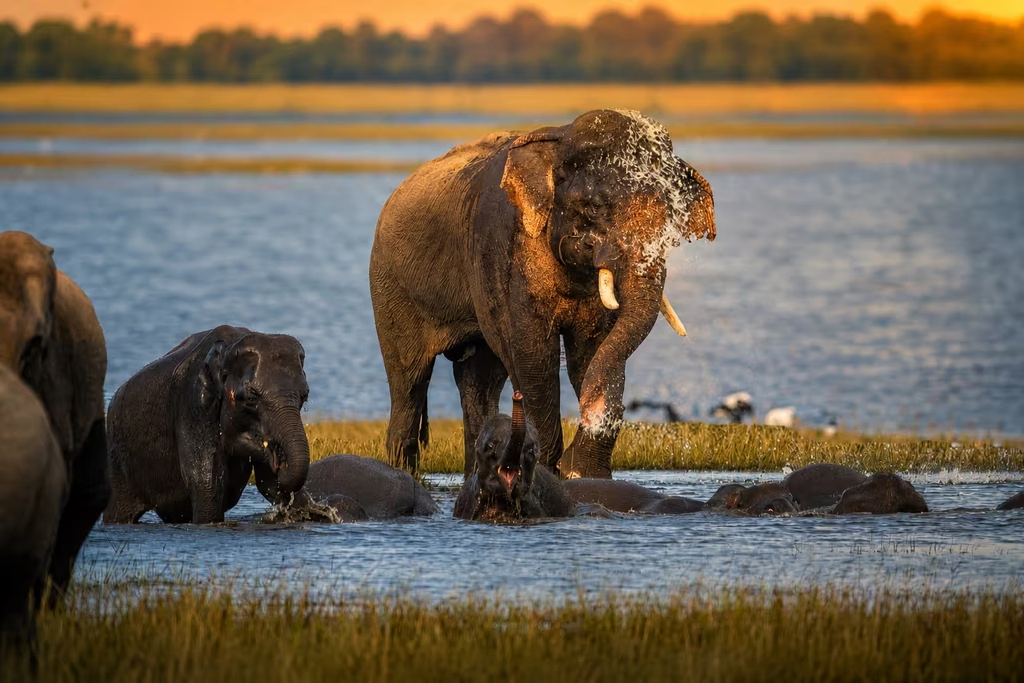
Minneriya National Park is one of Sri Lanka’s best-known destinations for observing wild Asian elephants. Located between Habarana and Polonnaruwa in the Cultural Triangle, the park combines dry-zone forest, grassland and the historic Minneriya reservoir, creating an important seasonal refuge for wildlife.
Sri Lanka Tourism describes large numbers of elephants moving toward the reservoir’s grasslands during the dry season. This seasonal congregation is popularly known as “the Gathering” and has become one of the country’s signature wildlife experiences.
Where is Minneriya?
The park lies in North Central Province within easy reach of Habarana, Sigiriya and Polonnaruwa. This makes it unusually easy to combine an elephant safari with UNESCO heritage sites.
Many travelers stay in Habarana or Sigiriya and enter the park later in the day.
Minneriya Tank
The ancient reservoir is central to the park’s ecology. As water levels fall during drier periods, fresh grass grows around exposed margins, attracting elephants and other animals.
The reservoir also supports waterbirds, crocodiles and a wider wetland ecosystem.
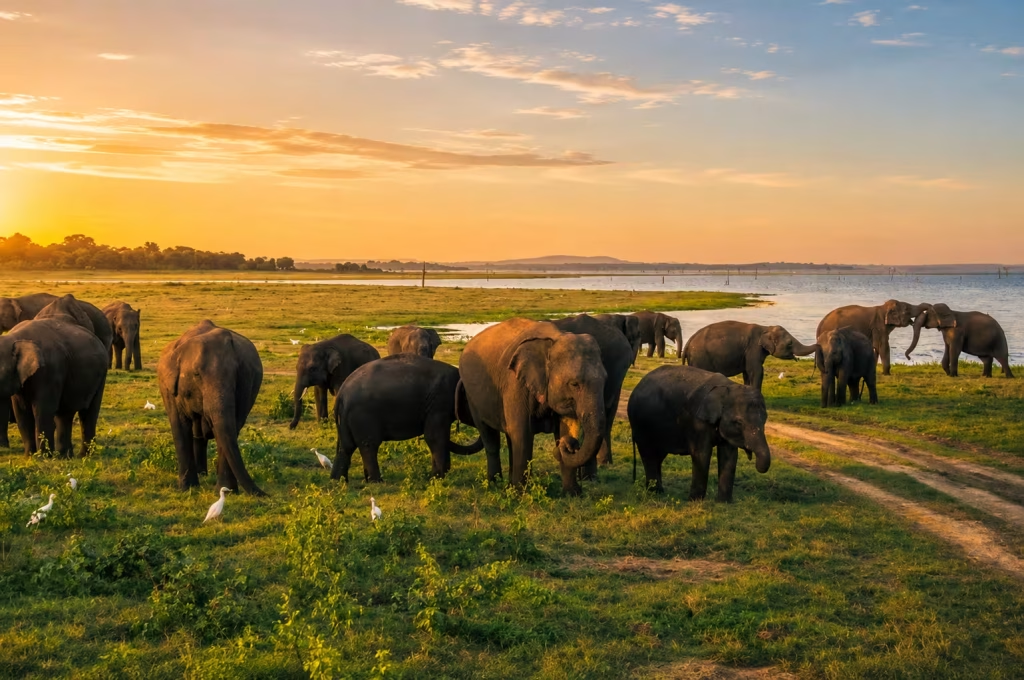
The elephant Gathering
The Gathering is not a fixed show. Elephant numbers vary according to rainfall, water and food availability across Minneriya, Kaudulla and surrounding forest corridors.
A responsible operator should check where elephants are currently concentrating instead of promising that Minneriya will always have the largest herd.
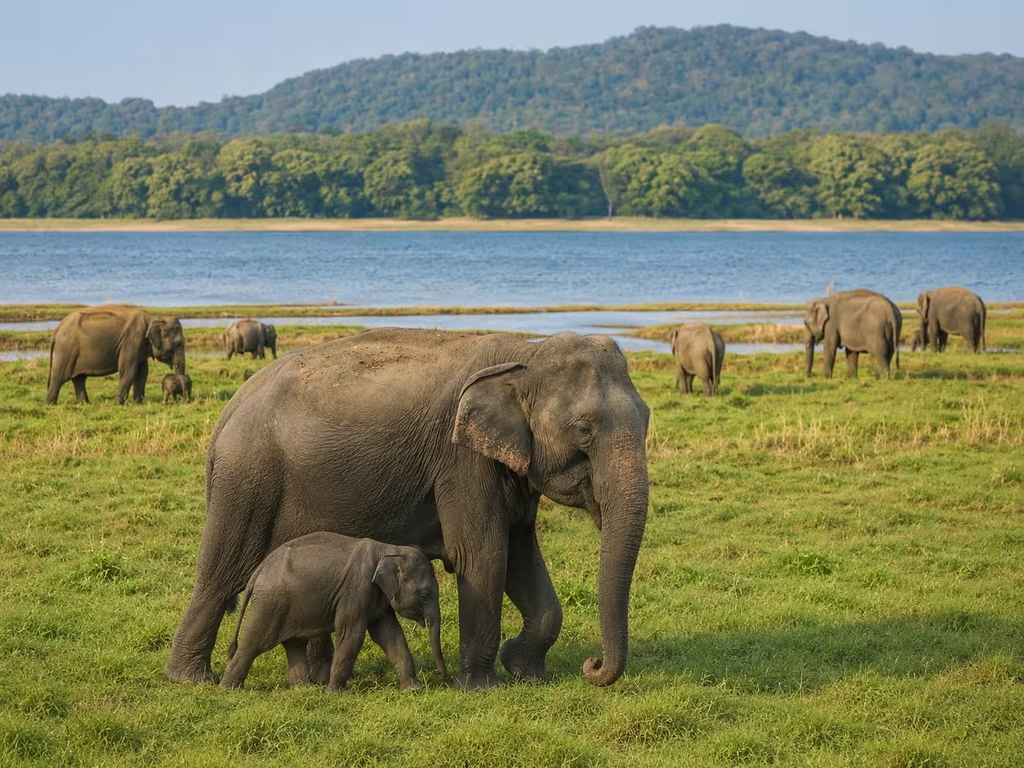
Minneriya, Kaudulla or Hurulu?
Elephants move between protected areas and forest landscapes according to seasonal conditions. At some times, Kaudulla or the Hurulu area may provide better sightings.
Ask locally on the day of your safari rather than booking based only on a park name months in advance.
Understanding seasonal elephant movement
Minneriya’s elephants are part of a larger landscape and move across park boundaries and forest corridors. Their movements show why connected habitat matters: animals do not recognize the administrative line between one park and another.
For travelers, flexibility is a strength. A responsible local operator may recommend changing parks close to the safari date if recent rainfall has shifted elephant concentrations.
Other wildlife
The park supports deer, monkeys, reptiles and many bird species. Sri Lanka Tourism also notes endemic monkeys and resident and migratory birds.
Even when elephants are the main goal, take time to appreciate other wildlife.
Best time of day
Afternoon is popular because elephants may emerge toward open grasslands as temperatures fall. Morning can still be rewarding for birds and other wildlife.
Seasonal conditions matter more than a rigid rule.
Minneriya Weather: 7-Day Forecast
Updated automatically with the latest available forecast for Minneriya, Sri Lanka.
- Rain chance
- 94%
- Rainfall
- 6.9 mm
- Wind
- 8 km/h
- UV index
- 7.9
- Sunrise
- 6:00 AM
- Sunset
- 5:44 PM
- Rain chance
- 84%
- Rainfall
- 5.1 mm
- Wind
- 14 km/h
- UV index
- 7.8
- Sunrise
- 6:00 AM
- Sunset
- 5:44 PM
- Rain chance
- 98%
- Rainfall
- 12.2 mm
- Wind
- 12 km/h
- UV index
- 7.1
- Sunrise
- 6:01 AM
- Sunset
- 5:44 PM
- Rain chance
- 100%
- Rainfall
- 14.4 mm
- Wind
- 9 km/h
- UV index
- 7.0
- Sunrise
- 6:01 AM
- Sunset
- 5:44 PM
- Rain chance
- 95%
- Rainfall
- 34.5 mm
- Wind
- 11 km/h
- UV index
- 7.5
- Sunrise
- 6:01 AM
- Sunset
- 5:45 PM
- Rain chance
- 95%
- Rainfall
- 18.9 mm
- Wind
- 19 km/h
- UV index
- 6.8
- Sunrise
- 6:02 AM
- Sunset
- 5:45 PM
- Rain chance
- 90%
- Rainfall
- 10.8 mm
- Wind
- 5 km/h
- UV index
- 7.7
- Sunrise
- 6:02 AM
- Sunset
- 5:45 PM
Jeep safaris
Visitors normally explore by safari jeep. Choose an operator who avoids racing between sightings and gives animals room to move.
Several jeeps may gather around elephants during busy periods. Ethical drivers should maintain distance rather than creating a wall of vehicles.
Elephant behavior
Watching a herd is more interesting when you observe behavior: feeding, social interactions, calves staying close to adults and groups moving between forest and open ground.
Do not shout, clap or ask the driver to move closer for a photograph.
Photography
A moderate telephoto lens is useful, but huge lenses are not essential because elephants can sometimes be visible across open ground. Keep your equipment inside the vehicle.
Photograph behavior and habitat rather than only tight portraits.
What to bring
Carry water, sun protection and a light dust cover for cameras. Neutral clothing is comfortable, though there is no need to dress in camouflage.
A small pair of binoculars helps with birds and distant animals.
Combining Minneriya with Sigiriya
A classic itinerary is Sigiriya in the morning and a safari later in the day. This can work well, but remember that climbing Sigiriya is physically demanding.
Have lunch and rest between the two activities rather than scheduling them back-to-back.
Combining Minneriya with Polonnaruwa
Polonnaruwa is also close enough for a heritage-and-wildlife day, though the ancient city deserves several hours.
If possible, use separate days so both experiences are enjoyed without rushing.
Responsible elephant tourism
Wild elephants should be observed from vehicles at an appropriate distance. Do not feed them and never attempt to leave the jeep to approach a herd.
Choose safari companies that openly support distance, quiet behavior and responsible vehicle positioning.
How long should you stay?
One safari is usually sufficient for casual visitors. Wildlife enthusiasts may want a second safari in a neighboring park if elephant movements change.
Frequently asked questions
Is the Gathering guaranteed?
No. Elephant movements depend on rainfall and food availability, so numbers vary.
Should I book Minneriya far in advance?
You can arrange accommodation and a safari operator early, but the best park for elephants may be decided closer to the day.
Where should I stay?
Habarana and Sigiriya are popular bases, with Polonnaruwa also practical for some itineraries.
Is Minneriya only about elephants?
No. Birds, reptiles, monkeys, deer and the reservoir landscape add depth to the safari.
Final planning advice
Check current access, weather, local regulations and transport shortly before your visit because protected areas, religious sites and marine activities can change their visitor arrangements. Avoid building a schedule with no margin for delays or unsuitable conditions.
A better Sri Lanka itinerary allows enough time to observe, rest and respond to local advice. Spending longer at one destination generally creates a more meaningful experience than rushing through several places simply to collect photographs.