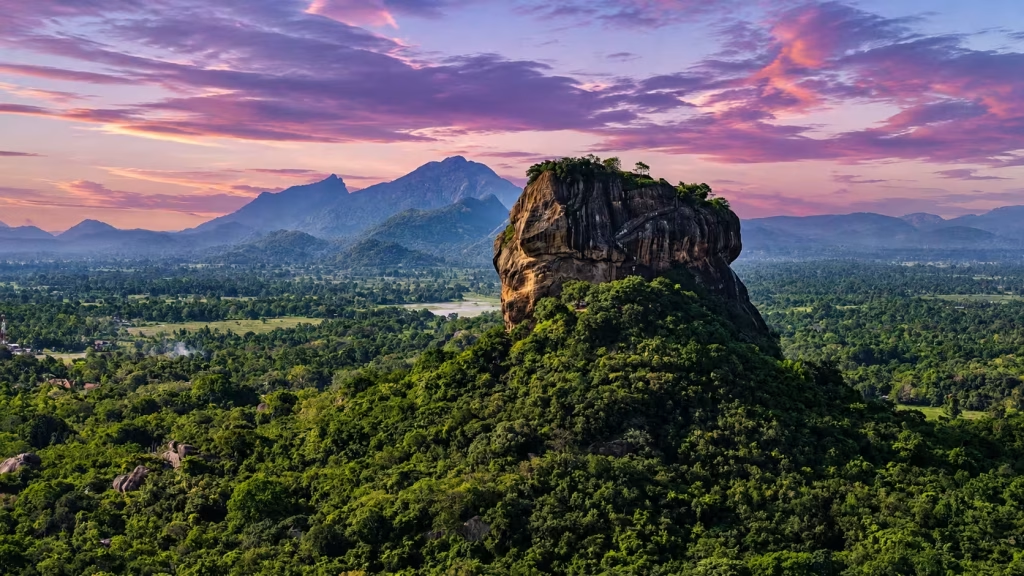
Sigiriya is one of Sri Lanka’s most recognizable landmarks: a massive rock rising about 180 meters above the surrounding plains, crowned by the remains of a fifth-century royal complex. UNESCO identifies the site as the capital built by King Kassapa I, who ruled from 477 to 495 CE, and highlights the galleries and staircases once connected with a monumental lion gateway.
The summit attracts most attention, but Sigiriya is much more than a climb. Water gardens, moats, boulder gardens, frescoes, inscriptions and sophisticated landscape planning make the entire archaeological complex important.
Why Sigiriya is a UNESCO World Heritage Site
UNESCO inscribed the Ancient City of Sigiriya in 1982 for its exceptional combination of architecture, urban planning, art and landscape design.
The rock and surrounding gardens were planned as one integrated royal environment rather than separate attractions.
King Kassapa
The palace complex is associated with King Kassapa I. Historical chronicles describe a violent succession struggle and the king’s decision to establish his capital at Sigiriya.
The story is dramatic, but visitors should distinguish chronicle traditions from later legends that have grown around the site.
The water gardens
The lower gardens demonstrate remarkable hydraulic planning. Pools, channels, fountains and symmetrical layouts create one of the oldest surviving landscaped garden systems in Asia.
Visit slowly before beginning the climb; many travelers rush through these features and miss some of Sigiriya’s most important design.
Boulder gardens
Paths then pass between enormous natural boulders incorporated into the royal and defensive landscape.
Look for cut surfaces and architectural traces showing where structures once connected with the rocks.
The frescoes
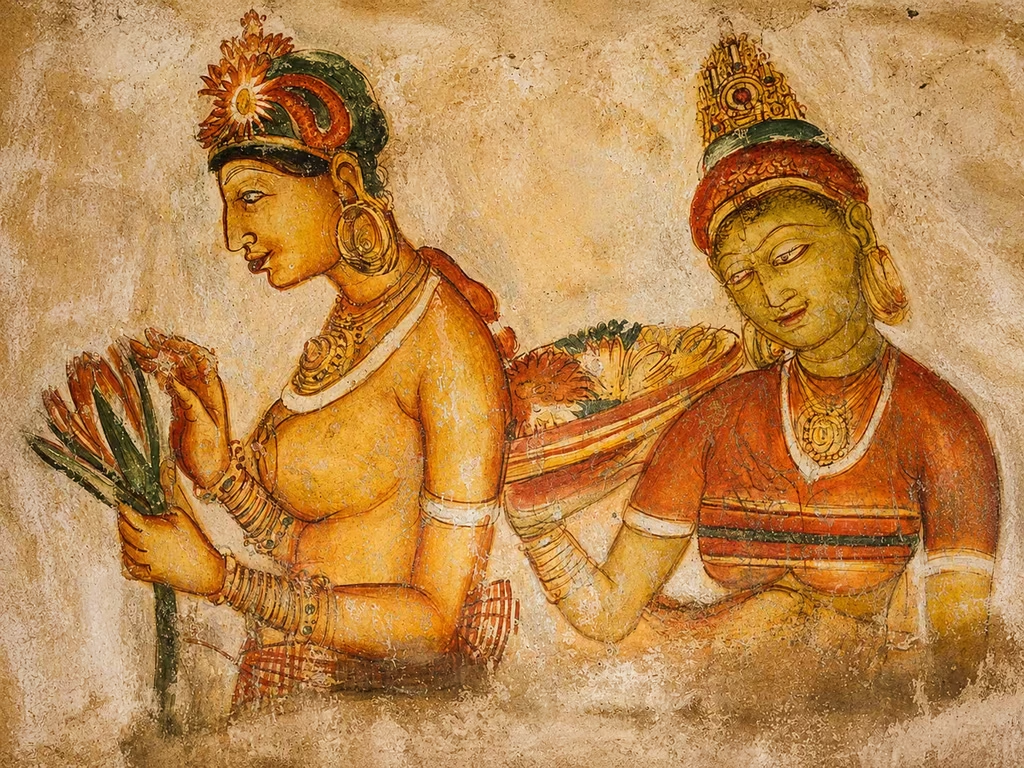
Sigiriya’s famous paintings survive in a sheltered section of the rock. Photography rules can change and should be followed exactly.
The figures are among the site’s most celebrated artistic remains and deserve quiet viewing rather than a rushed stop.
Mirror Wall
The polished wall became famous for ancient visitor graffiti written over centuries. These inscriptions provide rare evidence of how earlier travelers responded to Sigiriya’s paintings and landscape.
Modern visitors must never add marks or touch the historic surface.
Lion Paws
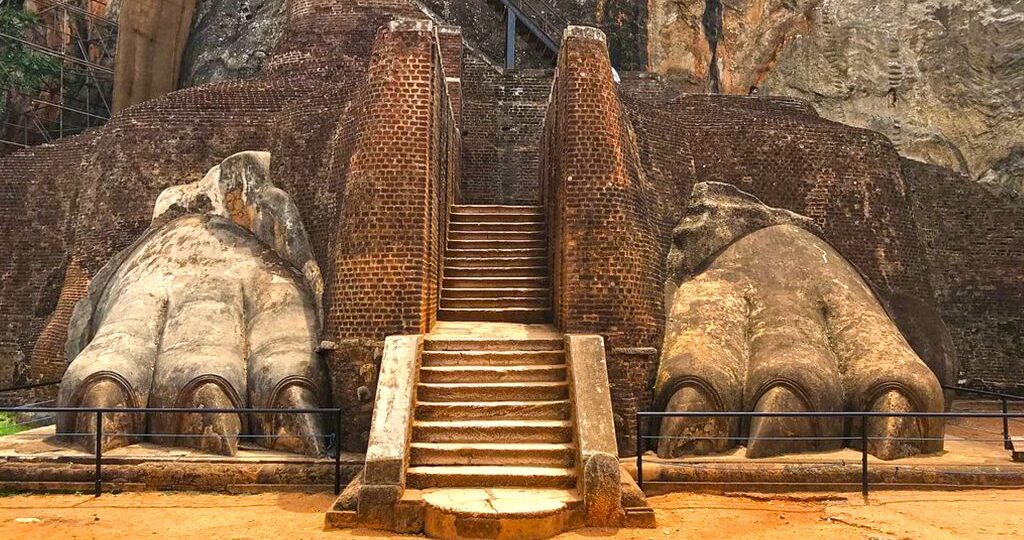
The surviving giant paws mark the location of the monumental lion gateway that once formed the dramatic final approach to the summit.
This area provides a useful rest point before the exposed upper staircases.
The summit
At the top are foundations, pools and remains associated with the royal complex. The view extends across forest, reservoirs and distant hills.
Take time to explore the summit rather than immediately descending after one photograph.
The climb
The climb involves many stairs, including exposed metal sections near the upper rock. Travelers with severe fear of heights, mobility limitations or certain medical conditions should assess whether the full ascent is appropriate.
There is still much to see in the lower gardens without reaching the summit.
Best time of day
Early morning is generally the best choice for cooler temperatures and smaller crowds. Late afternoon can also be attractive but leaves less time before closing.
Midday heat makes the climb more tiring.
Sigiriya Weather: 7-Day Forecast
Updated automatically with the latest available forecast for Sigiriya, Sri Lanka.
- Rain chance
- 37%
- Rainfall
- 1.2 mm
- Wind
- 11 km/h
- UV index
- 7.7
- Sunrise
- 6:00 AM
- Sunset
- 5:44 PM
- Rain chance
- 83%
- Rainfall
- 4.6 mm
- Wind
- 16 km/h
- UV index
- 7.9
- Sunrise
- 6:00 AM
- Sunset
- 5:44 PM
- Rain chance
- 76%
- Rainfall
- 1.0 mm
- Wind
- 14 km/h
- UV index
- 8.0
- Sunrise
- 6:01 AM
- Sunset
- 5:44 PM
- Rain chance
- 95%
- Rainfall
- 4.9 mm
- Wind
- 10 km/h
- UV index
- 7.0
- Sunrise
- 6:01 AM
- Sunset
- 5:44 PM
- Rain chance
- 98%
- Rainfall
- 37.8 mm
- Wind
- 6 km/h
- UV index
- 7.6
- Sunrise
- 6:01 AM
- Sunset
- 5:45 PM
- Rain chance
- 96%
- Rainfall
- 1.5 mm
- Wind
- 5 km/h
- UV index
- 8.2
- Sunrise
- 6:02 AM
- Sunset
- 5:45 PM
- Rain chance
- 90%
- Rainfall
- 11.4 mm
- Wind
- 4 km/h
- UV index
- 8.1
- Sunrise
- 6:02 AM
- Sunset
- 5:45 PM
Planning for crowds
Sigiriya is one of Sri Lanka’s busiest heritage attractions. Arriving near opening time can reduce both heat and congestion on narrow staircases. If large tour groups arrive, slow down rather than trying to overtake people on exposed sections.
Visitors who dislike crowds may enjoy spending extra time in the lower gardens after the summit, where people often spread out more widely.
What to bring
Carry water, sun protection and secure footwear. Keep hands free for stair rails on exposed sections.
A lightweight camera setup is easier than carrying a large backpack.
Wasps
Wasp activity can occasionally affect access on parts of the rock. Follow official warnings immediately and never provoke nests.
Pidurangala
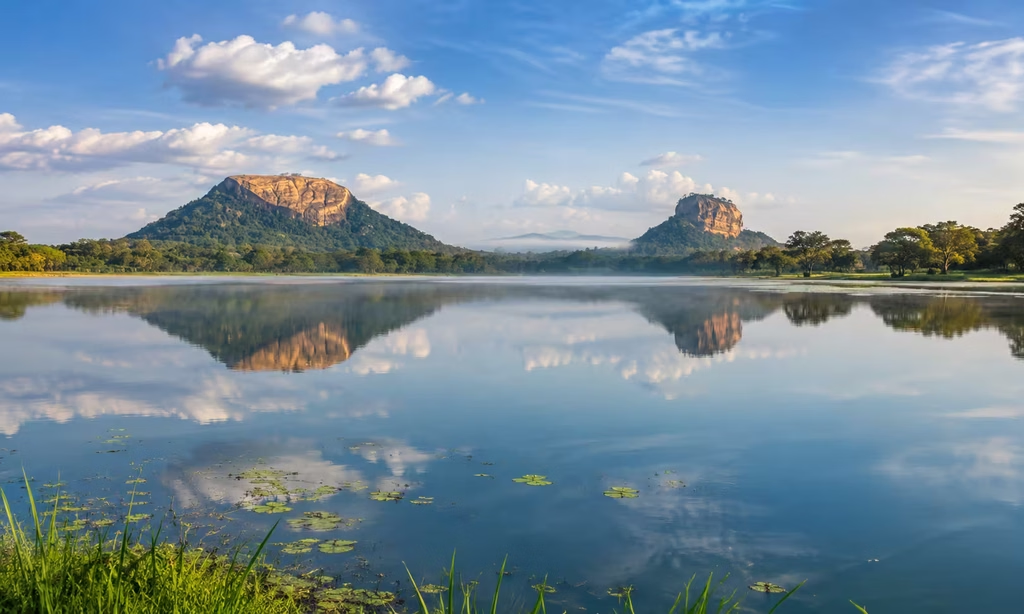
Nearby Pidurangala is popular for views toward Sigiriya and offers a more rugged hike with religious remains along the route.
The two experiences complement each other but require considerable walking if attempted on the same day.
Combining Sigiriya with Dambulla
Dambulla Cave Temple is close enough to combine with Sigiriya. Both involve climbing, so schedule breaks and avoid the hottest hours.
Responsible heritage travel
Do not touch paintings, graffiti or archaeological surfaces. Stay within barriers and follow staff instructions.
Respect nearby religious areas and wildlife.
How long should you allow?
Three to four hours is comfortable for the full site and summit at a relaxed pace. Serious history or photography visitors may want longer.
Frequently asked questions
How high is Sigiriya?
UNESCO describes the rock as rising about 180 meters above the surrounding landscape.
Do I need to climb to enjoy Sigiriya?
No. The water gardens, boulder gardens and lower archaeological landscape are valuable even without the summit.
Is Sigiriya a UNESCO site?
Yes. The Ancient City of Sigiriya was inscribed in 1982.
How long should I spend?
Allow around three to four hours for a comfortable full visit.
Final planning advice
Check current access, weather, local regulations and transport shortly before your visit because protected areas, heritage sites and marine activities can change their visitor arrangements. Avoid building a schedule with no margin for delays or unsuitable conditions.
A better Sri Lanka itinerary allows enough time to observe, rest and respond to local advice. Spending longer at one destination generally creates a more meaningful experience than rushing through several places simply to collect photographs.