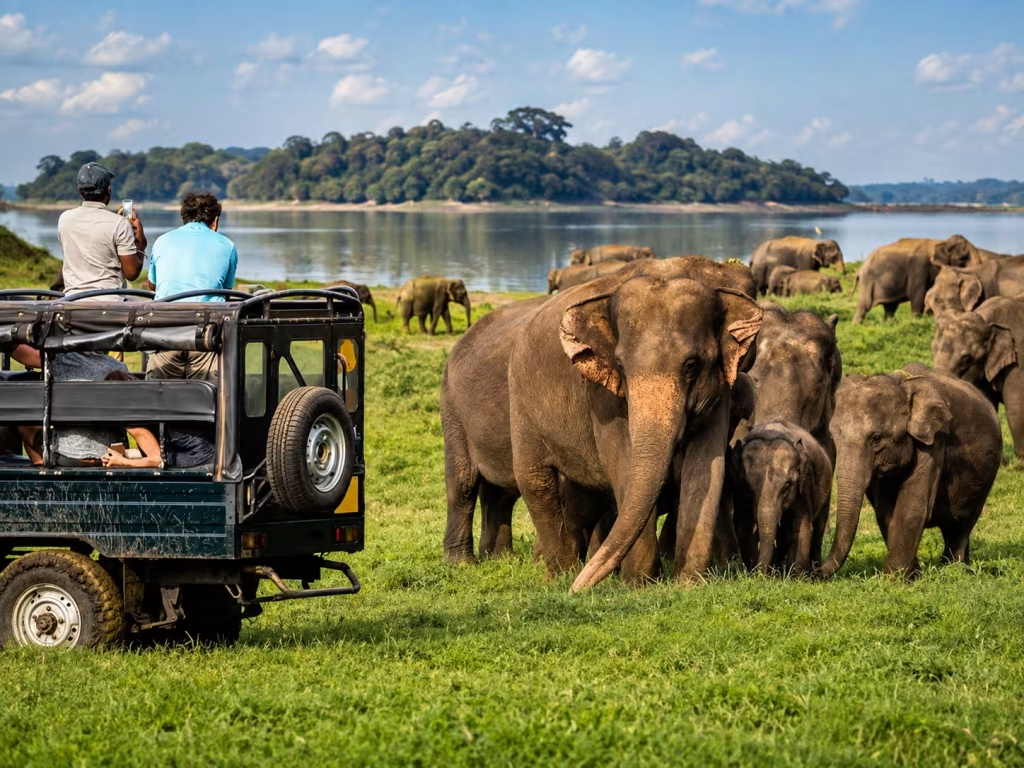
Udawalawe National Park is one of Sri Lanka’s most reliable destinations for observing wild Asian elephants in open dry-zone habitat. The park developed around the Udawalawe Reservoir and protects a landscape of grassland, scrub, forest and wetland that supports elephants throughout the year.
Sri Lanka Tourism describes Udawalawe as one of the country’s most visited national parks and highlights its substantial resident elephant population, along with birds, reptiles, amphibians and mammals. The open terrain often makes wildlife easier to observe than in dense forest.
Where is Udawalawe?
The park lies in southern Sri Lanka between the central highlands and the deeper south coast. It is commonly included on routes between Ella or Haputale and coastal destinations.
Staying near the park reduces the need for a very early long-distance transfer.
Why Udawalawe is famous for elephants
Grasslands and water around the reservoir provide suitable elephant habitat. Visitors often see individuals or small groups feeding near safari tracks.
No specific sighting is guaranteed, but elephant observation is one of the park’s main strengths.
Udawalawe Reservoir
The reservoir shapes the park’s landscape and attracts birds and other wildlife. Open shorelines can produce broad views unlike the dense vegetation of some other parks.
Water levels vary seasonally and affect animal distribution.
Morning or afternoon safari?
Both can be productive. Morning provides cooler air and bird activity, while late afternoon can bring warm light and feeding elephants.
Choose based on your broader itinerary and current local guidance.
Other mammals
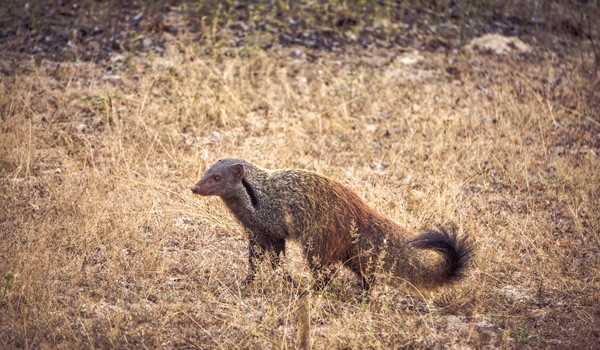
Deer, wild boar, jackals, monkeys and other mammals occur in the park. Leopards are present but much less easily seen than elephants.
Do not judge a safari solely by rare-predator sightings.
Birdwatching
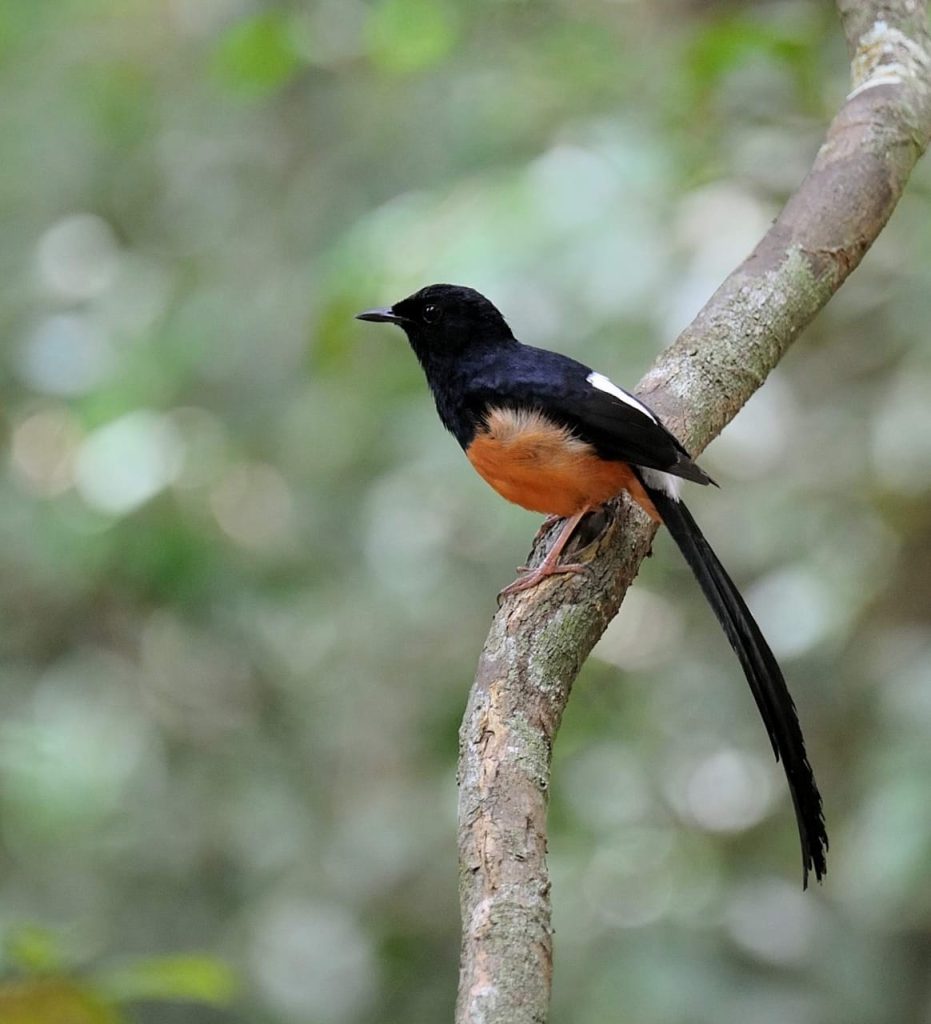
Sri Lanka Tourism records a large bird diversity in Udawalawe. Raptors, waterbirds and dry-zone species add interest throughout the drive.
Bring binoculars and ask your guide to stop for birds rather than focusing only on elephants.
Safari vehicles
Visitors normally travel in open safari jeeps. Choose a reputable operator with a driver who respects speed limits and wildlife distance.
Several vehicles can gather around popular sightings; responsible drivers should leave animals an escape route.
Elephant behavior
Watch how elephants feed, communicate and use their trunks rather than simply counting animals. Calves should always be given extra space because adults can become protective.
Never attempt to approach an elephant on foot.
Photography
A moderate telephoto lens is useful, though the open habitat can also reward wide environmental images. Keep cameras secured on rough tracks.
Do not shout or pressure a driver to move closer.
Elephant Transit Home
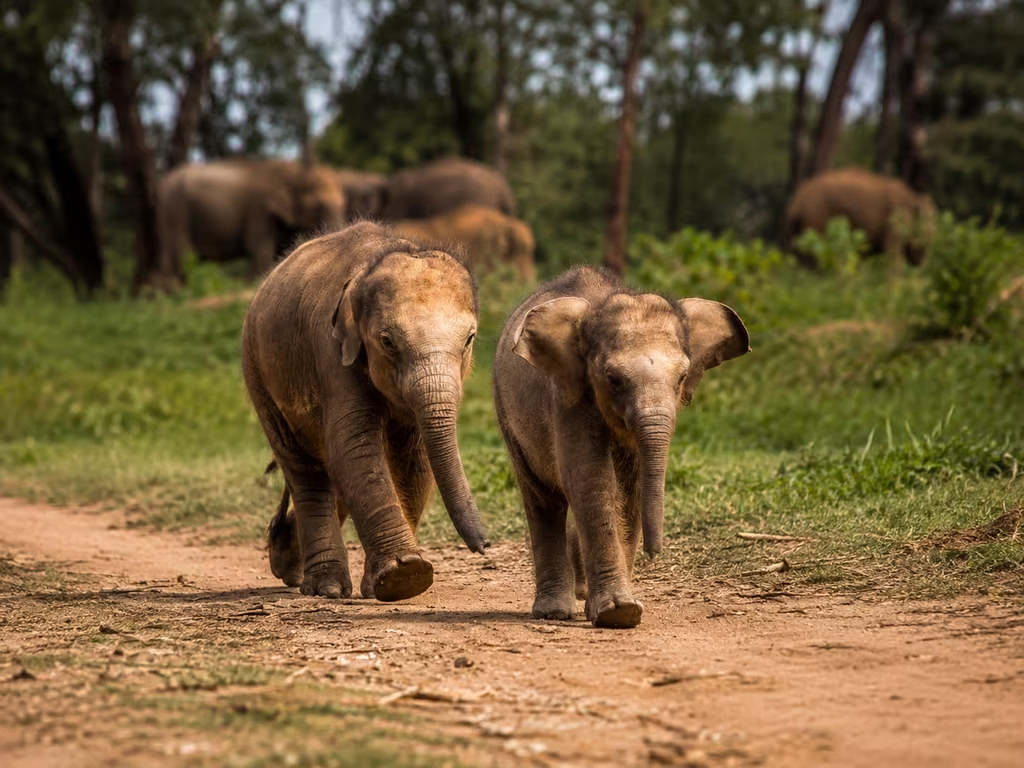
The Elephant Transit Home near Udawalawe is associated with the rehabilitation of orphaned wild elephant calves before their return to the wild. It is different from attractions offering direct elephant rides or handling.
Current public viewing arrangements should be confirmed locally.
Elephant Transit Home Opening times
| Thursday | 10:30–11:30 AM, 2:30–3:30 PM, 6–7 PM |
| Friday | 10:30–11:30 AM, 2:30–3:30 PM, 6–7 PM |
| Saturday | 10:30–11:30 AM, 2:30–3:30 PM, 6–7 PM |
| Sunday | 10:30–11:30 AM, 2:30–3:30 PM, 6–7 PM |
| Monday | 10:30–11:30 AM, 2:30–3:30 PM, 6–7 PM |
| Tuesday | 10:30–11:30 AM, 2:30–3:30 PM, 6–7 PM |
| Wednesday | 10:30–11:30 AM, 2:30–3:30 PM, 6–7 PM |
Udawalawe elephant transit home contact number 0472 232 147
Responsible elephant tourism
Prefer wild observation and recognized rehabilitation programs over attractions built around touching, riding or performing elephants.
Do not feed wild elephants from roads or vehicles.
What to bring
Carry water, sun protection, binoculars and dust protection for cameras. A hat is useful during exposed stops.
Neutral lightweight clothing is comfortable in the dry-zone heat.
Sample overnight Udawalawe plan
Arrive from the hill country in the afternoon, rest and visit the Elephant Transit Home only if current public viewing arrangements suit your schedule. Take an early safari the next morning, return for breakfast or lunch and continue toward the south coast.
This avoids combining a long road journey and several hours of rough safari driving on the same day.
Udawalawe Weather: 7-Day Forecast
Updated automatically with the latest available forecast for Udawalawe National Park, Sri Lanka.
- Rain chance
- 76%
- Rainfall
- 6.6 mm
- Wind
- 13 km/h
- UV index
- 8.2
- Sunrise
- 5:58 AM
- Sunset
- 5:46 PM
- Rain chance
- 88%
- Rainfall
- 1.9 mm
- Wind
- 8 km/h
- UV index
- 8.2
- Sunrise
- 5:58 AM
- Sunset
- 5:46 PM
- Rain chance
- 100%
- Rainfall
- 3.6 mm
- Wind
- 14 km/h
- UV index
- 8.0
- Sunrise
- 5:58 AM
- Sunset
- 5:46 PM
- Rain chance
- 100%
- Rainfall
- 13.9 mm
- Wind
- 7 km/h
- UV index
- 7.9
- Sunrise
- 5:59 AM
- Sunset
- 5:47 PM
- Rain chance
- 100%
- Rainfall
- 9.3 mm
- Wind
- 7 km/h
- UV index
- 8.1
- Sunrise
- 5:59 AM
- Sunset
- 5:47 PM
- Rain chance
- 98%
- Rainfall
- 15.9 mm
- Wind
- 7 km/h
- UV index
- 7.8
- Sunrise
- 6:00 AM
- Sunset
- 5:47 PM
- Rain chance
- 94%
- Rainfall
- 17.4 mm
- Wind
- 4 km/h
- UV index
- 8.3
- Sunrise
- 6:00 AM
- Sunset
- 5:47 PM
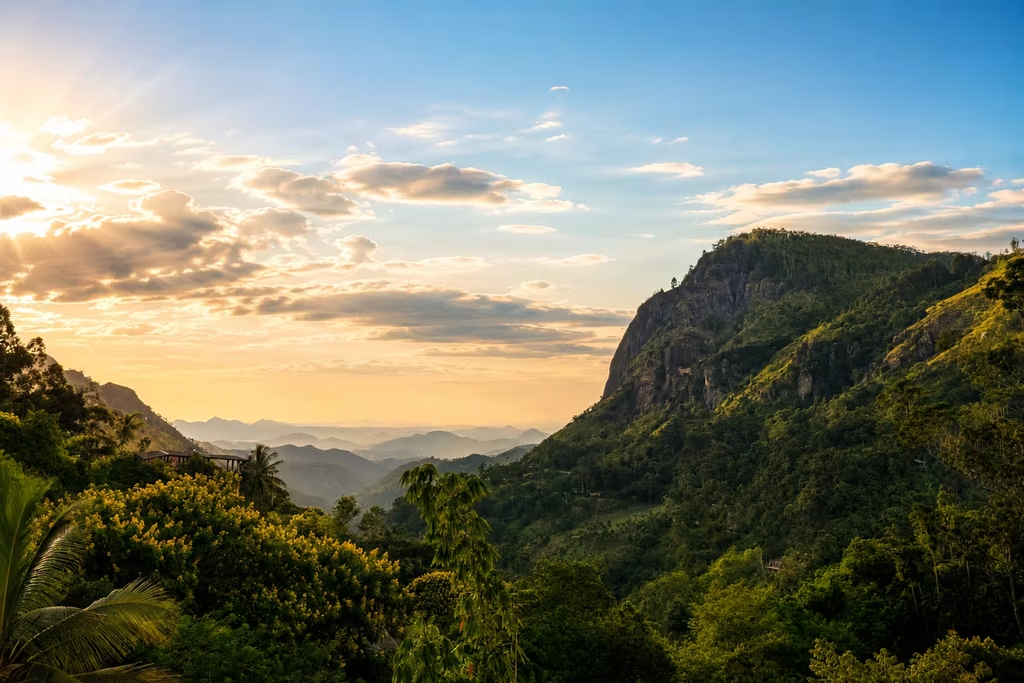
Combining Udawalawe with Ella
Udawalawe is a natural stop when traveling from Ella toward the south coast. Rather than attempting a safari after a long morning transfer, consider staying overnight nearby.
Combining Udawalawe with the south coast
Tangalle, Matara, Mirissa and other southern destinations can follow naturally after a safari stay.
This creates an effective highlands-wildlife-beach route.
How long should you stay?
One night is sufficient for many travelers, with a safari either afternoon or the following morning. Two nights allow a more relaxed pace and a second wildlife experience.
Responsible safari behavior
Stay inside the vehicle unless guides explicitly permit exit in a designated area. Do not litter or play loud music.
Support operators who prioritize conservation over racing between animals.
Frequently asked questions
Is Udawalawe good for elephants?
Yes. It is one of Sri Lanka’s most reliable parks for observing wild elephants in open habitat.
Can I visit the Elephant Transit Home?
Public viewing may be possible depending on current arrangements. Check before travel.
How long should I stay?
One night is enough for a safari-focused stop; two nights provide more flexibility.
Is Udawalawe better than Yala?
Udawalawe is especially strong for elephants and open landscapes, while Yala is more famous for leopard opportunities. The better choice depends on your interests.
Final planning advice
Check current access, weather, local regulations and transport shortly before your visit because protected areas, heritage sites and marine activities can change their visitor arrangements. Avoid building a schedule with no margin for delays or unsuitable conditions.
A better Sri Lanka itinerary allows enough time to observe, rest and respond to local advice. Spending longer at one destination generally creates a more meaningful experience than rushing through several places simply to collect photographs.