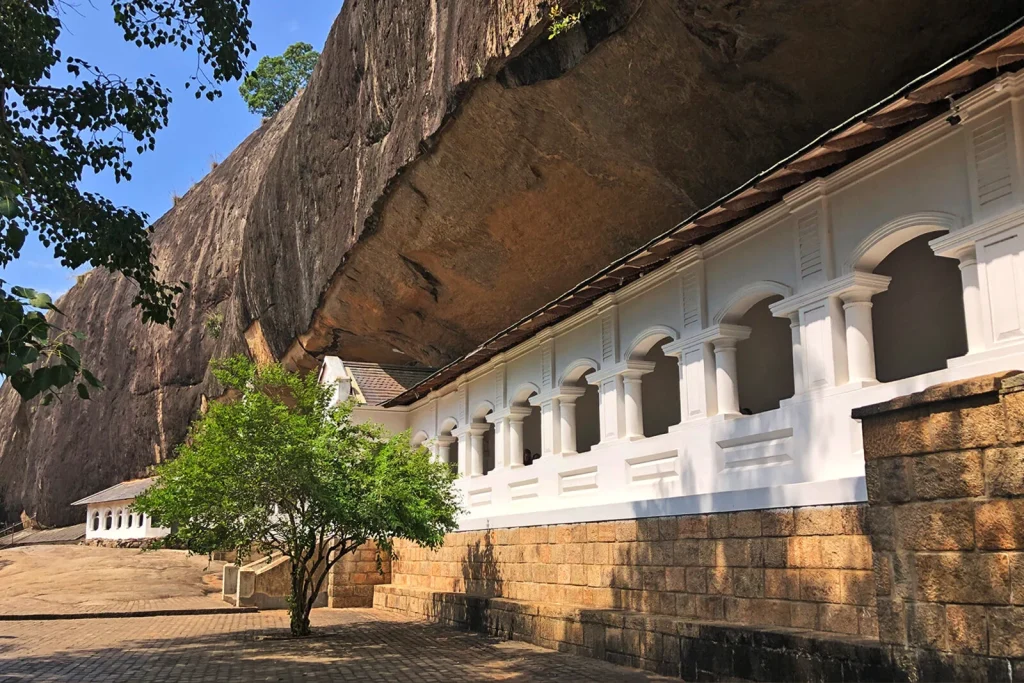
Rangiri Dambulla Cave Temple is one of Sri Lanka’s most important Buddhist heritage sites and one of the great cave-temple complexes of South Asia. The sacred complex is built into a massive rock outcrop above Dambulla and contains five principal cave shrines filled with statues and extensive mural paintings.
UNESCO describes Dambulla as a living Buddhist pilgrimage site with a tradition extending for more than two millennia. It was inscribed on the World Heritage List in 1991. The caves are important not only because of their age, but because they were continuously adapted, repainted and renewed across different historical periods while remaining places of worship.
Why Dambulla is a UNESCO World Heritage Site
UNESCO recognizes Rangiri Dambulla Cave Temple for the scale and preservation of its religious art and for its long association with Buddhist pilgrimage. The World Heritage property consists of five cave sanctuaries developed within natural rock shelters.
UNESCO records approximately 2,100 square meters of mural painting and 157 statues within the property. These numbers help communicate scale, but the real experience is spatial: painted ceilings, rows of Buddha images and the natural contours of the rock combine into interiors that feel very different from a conventional built temple.
A sacred site for more than two thousand years
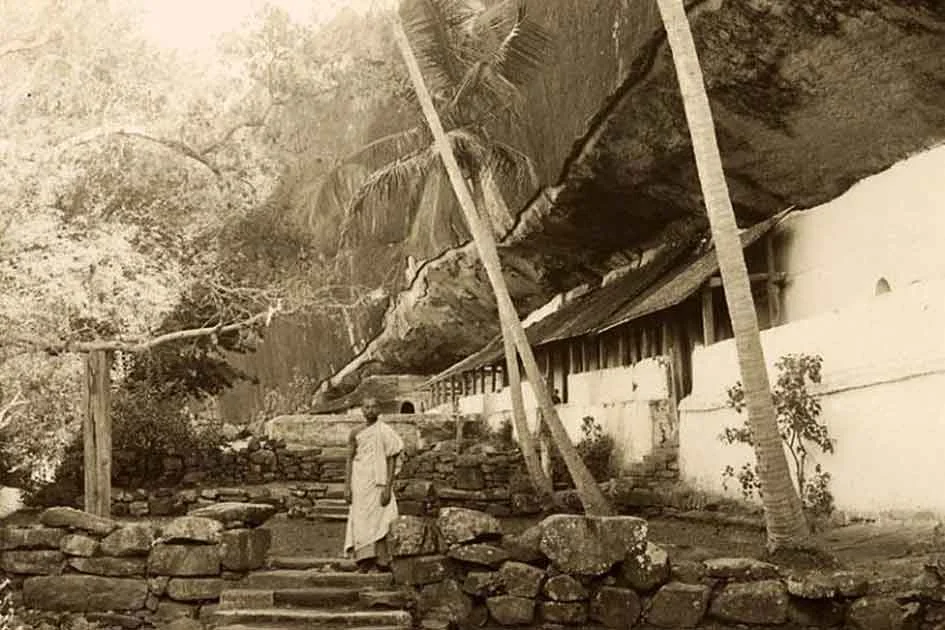
The caves were used by Buddhist monks from early periods, and historical traditions connect major development of the temple with King Valagamba in the first century BCE. Later rulers and religious patrons continued to support the shrines.
This long sequence of use means the art visitors see today does not belong to one single moment. Different periods contributed to the complex, with major renovation and painting traditions continuing into the Kandyan era.
The five cave shrines
The temple complex is traditionally divided into five principal caves: Devaraja Lena, Maharaja Lena, Maha Alut Viharaya, Paccima Viharaya and Devana Alut Viharaya. Each has its own arrangement of sculpture and painting.
Do not rush through them simply to count caves. Light levels, ceiling height, statue placement and painted surfaces change from one space to the next. The sequence is part of the experience.
Devaraja Lena
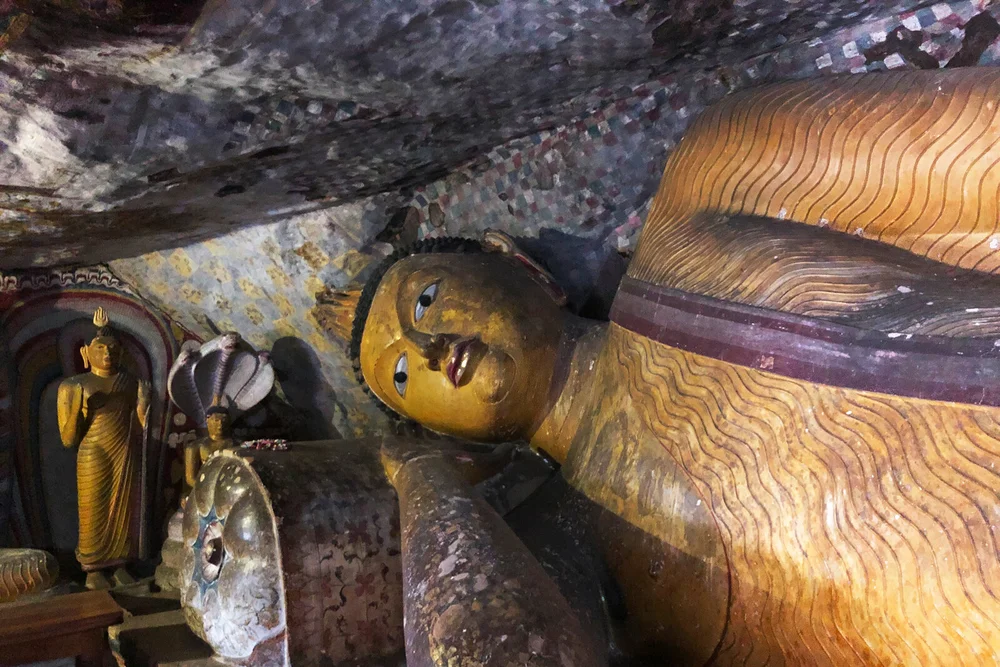
The first cave is smaller and is known for a large reclining Buddha image. Its more enclosed scale provides a dramatic introduction after the bright outdoor climb.
Allow your eyes to adjust before taking photographs. Moving too quickly through the darker interiors can cause you to miss details.
Maharaja Lena
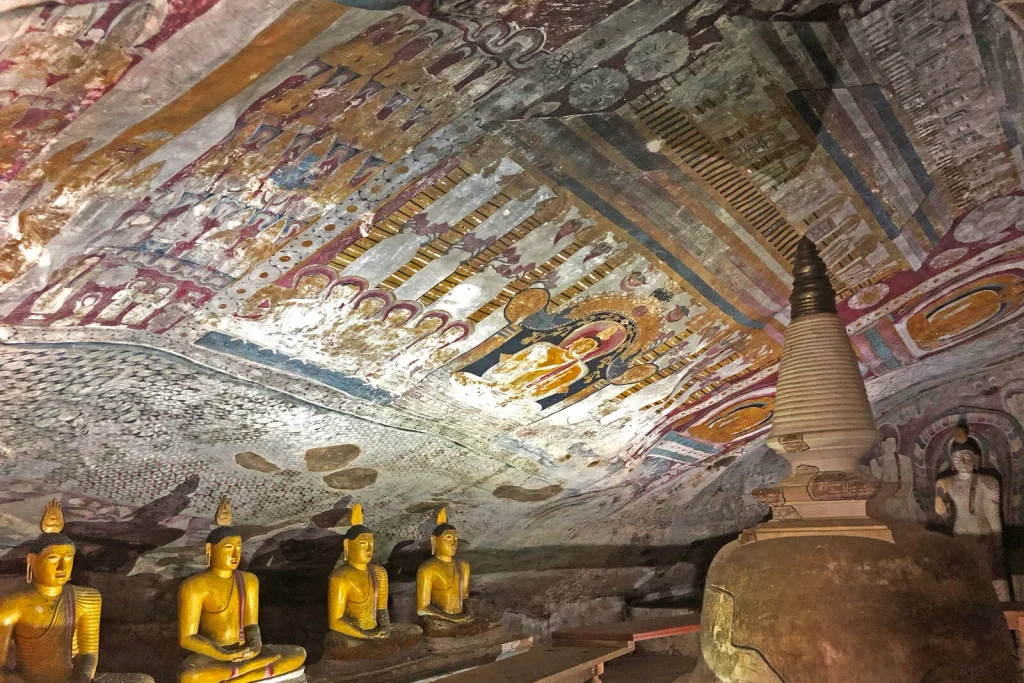
The Cave of the Great Kings is one of the most impressive spaces in the complex. It contains numerous Buddha images and other figures arranged beneath a painted ceiling.
The cave demonstrates how natural rock was transformed into a carefully organized ritual environment without hiding the fact that it is still a cave.
Maha Alut Viharaya and later artistic traditions
The Great New Temple reflects later phases of artistic development, including Kandyan-period painting traditions. This is an important reminder that Dambulla remained active and significant long after its earliest foundation.
World Heritage sites are often imagined as places preserved from one ancient moment. Dambulla is more accurately understood as a sacred place repeatedly renewed by living communities.
The paintings
Murals cover large areas of the cave ceilings and walls. Buddhist narratives, decorative patterns and religious figures create a continuous visual field that follows the rock rather than a flat architectural surface.
Flash photography can be harmful or restricted, and visitors should follow all current rules. Never touch paintings or lean against decorated surfaces.
The statues
Buddha images appear in standing, seated and reclining forms. Other figures include deities and royal patrons. Together they create a dense sculptural environment where no single statue tells the whole story.
Take time to observe how statues are positioned in relation to entrances, altars and painted surfaces. The cave interiors were designed as devotional spaces, not as a modern gallery.
The climb to the caves
Reaching the cave shrines requires climbing a long series of steps up the rock. Sri Lanka Tourism recommends tackling the climb in the cooler morning or later afternoon when possible.
Carry water, wear sun protection and take breaks if necessary. Monkeys may be present around the route; keep food secured and do not feed them.
Temple etiquette
Dambulla remains a living Buddhist site. Wear clothing that covers shoulders and knees, remove shoes and hats where required, and keep voices low. Avoid posing with your back directly toward Buddha images in a way that may be considered disrespectful.
Give worshippers space. A pilgrimage site is not a film set, even when the interiors are visually extraordinary.
Photography
Low light inside the caves can make photography challenging. Modern phones and cameras often handle the conditions reasonably well without flash. Stabilize the camera against your body rather than touching walls or paintings.
Outside, the elevated rock gives views over the surrounding Dambulla landscape. Weather and haze affect visibility, so do not judge the visit solely by whether the distant view is clear.
Golden Temple and cave complex
Visitors may encounter references to the “Golden Temple of Dambulla.” UNESCO officially uses the name Rangiri Dambulla Cave Temple for the World Heritage property. The modern golden Buddha complex at the lower area is visually prominent, but the historic cave shrines higher on the rock are the core heritage experience.
Combining Dambulla with Sigiriya
Dambulla and Sigiriya are often paired because they are relatively close within Sri Lanka’s Cultural Triangle. They are very different sites: Sigiriya is a fortified palace and rock landscape, while Dambulla is a living religious complex centered on cave shrines.
You can visit both in one day, but doing so can feel rushed. If you have enough time, separate them or begin early and allow proper rest between climbs.
How long to spend
Allow at least two hours for the full experience, including the climb, cave interiors and time to descend. Visitors with a strong interest in Buddhist art may want longer.
Dambulla Cave Temple Weather: 7-Day Forecast
Updated automatically with the latest available forecast for Dambulla, Sri Lanka.
- Rain chance
- 94%
- Rainfall
- 7.4 mm
- Wind
- 10 km/h
- UV index
- 7.8
- Sunrise
- 6:00 AM
- Sunset
- 5:45 PM
- Rain chance
- 100%
- Rainfall
- 5.5 mm
- Wind
- 16 km/h
- UV index
- 7.6
- Sunrise
- 6:01 AM
- Sunset
- 5:45 PM
- Rain chance
- 96%
- Rainfall
- 9.4 mm
- Wind
- 19 km/h
- UV index
- 7.9
- Sunrise
- 6:01 AM
- Sunset
- 5:45 PM
- Rain chance
- 100%
- Rainfall
- 14.6 mm
- Wind
- 10 km/h
- UV index
- 7.0
- Sunrise
- 6:02 AM
- Sunset
- 5:45 PM
- Rain chance
- 100%
- Rainfall
- 61.8 mm
- Wind
- 7 km/h
- UV index
- 7.6
- Sunrise
- 6:02 AM
- Sunset
- 5:46 PM
- Rain chance
- 99%
- Rainfall
- 45.6 mm
- Wind
- 7 km/h
- UV index
- 6.9
- Sunrise
- 6:03 AM
- Sunset
- 5:46 PM
- Rain chance
- 92%
- Rainfall
- 9.0 mm
- Wind
- 8 km/h
- UV index
- 7.9
- Sunrise
- 6:03 AM
- Sunset
- 5:46 PM
Conservation
UNESCO continues to monitor the conservation and visitor management of Rangiri Dambulla. Paintings and polychrome sculpture are especially sensitive to humidity, touch, dust and heavy visitor use.
Following visitor rules is therefore not a formality. It directly supports the preservation of an active sacred site and World Heritage property.
Frequently asked questions
Is Dambulla Cave Temple a UNESCO World Heritage Site?
Yes. Rangiri Dambulla Cave Temple was inscribed on the World Heritage List in 1991.
How many caves are there?
The main sacred complex contains five principal cave shrines.
How old is the temple?
The site has a Buddhist monastic and pilgrimage tradition extending for more than two thousand years, with continuous additions and renovations across later periods.
Can I visit Dambulla and Sigiriya on the same day?
Yes, but it is a full day involving substantial walking and climbing. Travelers who prefer a slower pace may enjoy them more on separate days.