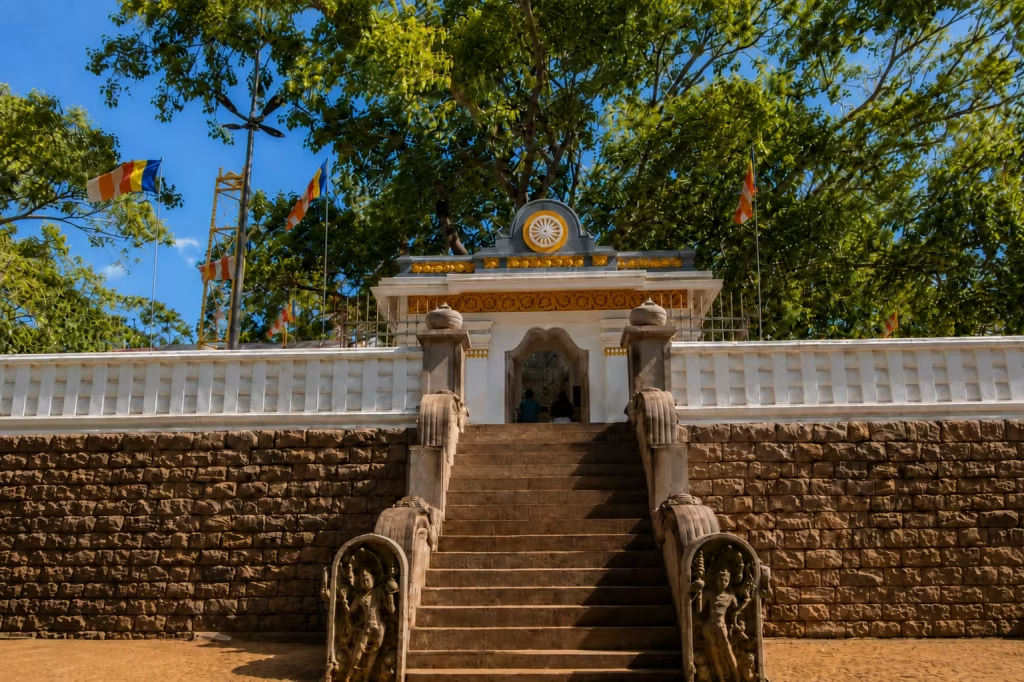
Jaya Sri Maha Bodhi in Anuradhapura is one of the most sacred places in Sri Lankan Buddhism. The living fig tree is traditionally understood to have grown from a southern branch of the Bodhi tree at Bodh Gaya in India, beneath which the Buddha attained enlightenment. Sri Lanka Tourism records the tradition that the branch was brought to Sri Lanka by Sanghamitta Theri and planted at Anuradhapura during the reign of King Devanampiyatissa.
For visitors, the importance of the site is difficult to understand if it is approached only as an ancient tree. It is a living center of pilgrimage, worship and national religious memory that has been protected and honored for more than two millennia.
Where is Jaya Sri Maha Bodhi?
The sacred tree stands within the ancient city of Anuradhapura, close to other major Buddhist monuments including Ruwanwelisaya. It lies within the wider Sacred City of Anuradhapura World Heritage landscape.
The surrounding archaeological zone is large, so combine sites geographically rather than moving back and forth across the city.
The tradition of the Bodhi tree
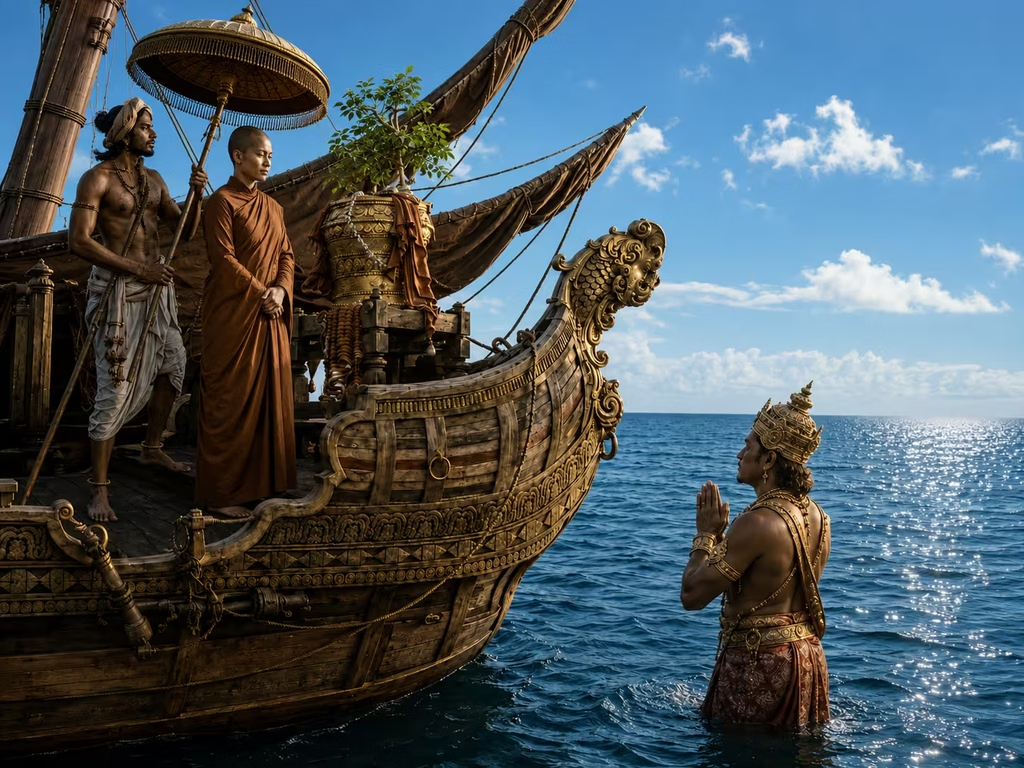
According to Sri Lankan Buddhist tradition, Emperor Ashoka’s daughter Sanghamitta Theri brought a branch from the original Bodhi tree in India to Sri Lanka in the third century BCE. King Devanampiyatissa received and planted it in Anuradhapura.
The event is central to the establishment and continuity of Buddhism on the island.
Why the tree is so important
The Bodhi tree symbolizes the Buddha’s enlightenment. A living descendant of the Bodh Gaya tree therefore has profound devotional meaning.
Generations of rulers, monks and lay devotees supported the site, creating protective terraces, walls, railings and ritual spaces around it.
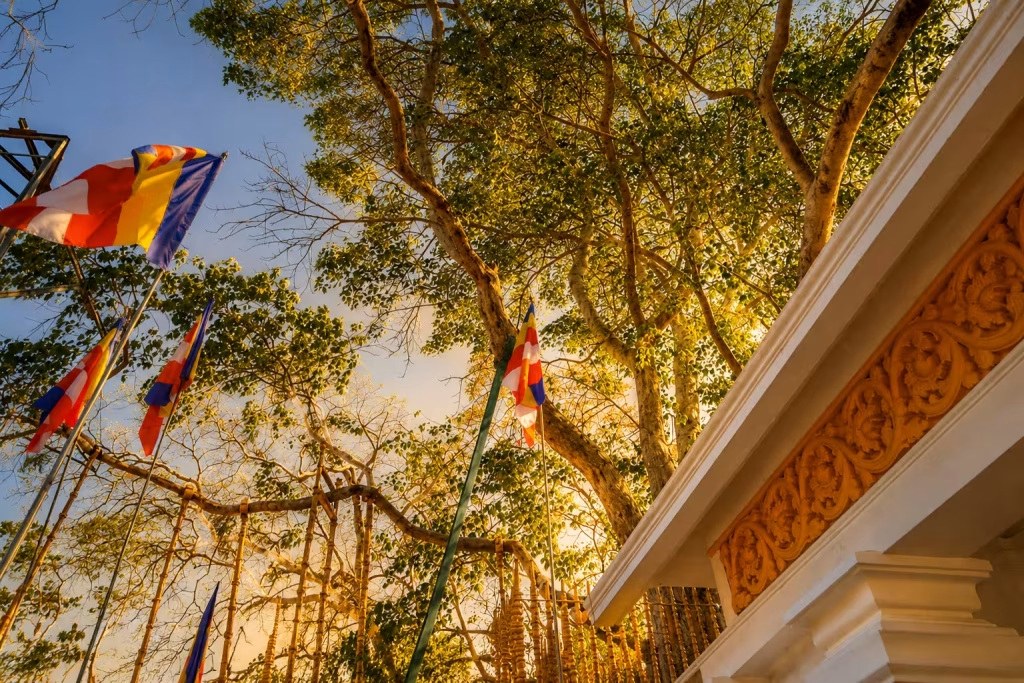
A living pilgrimage site
People come to offer flowers, lamps, water and prayers. The atmosphere can be especially powerful on Poya days and major religious occasions.
Visitors should give worshippers space and avoid moving directly between devotees and the sacred tree for photographs.
The Bodhi terrace
The sacred tree is protected on an elevated terrace rather than being freely accessible like a park tree. Supporting structures and railings reflect centuries of care and protection.
Do not expect to stand directly beneath every branch. The experience is devotional and symbolic, not botanical access.
Sanghamitta and Sri Lankan Buddhist history
The arrival of Sanghamitta Theri is important not only for the tree but for the establishment of the Bhikkhuni tradition in Sri Lanka according to Buddhist chronicles.
Her story connects Anuradhapura with Emperor Ashoka’s Buddhist networks across South Asia.
Visiting respectfully
Wear clothing that covers shoulders and knees. Remove shoes and hats where required. White clothing is common among devotees, though visitors are not normally required to wear white unless participating in a specific religious observance.
Keep voices low and avoid stepping over offerings.
Photography etiquette
The site is visually beautiful, but photography should never interrupt worship. Do not pose in ways that turn sacred rituals into a backdrop.
Ask before taking close photographs of monks or devotees. Rules can change during ceremonies.
Best time of day
Early morning is cooler and often deeply atmospheric. Late afternoon and evening can also be beautiful as devotees gather and lamps are lit.
Midday heat can make barefoot walking uncomfortable, so socks may be helpful where permitted.
Jaya Sri Maha Bodhi Area Weather: 7-Day Forecast
Updated automatically with the latest available forecast for Anuradhapura, Sri Lanka.
- Rain chance
- 4%
- Rainfall
- 0.0 mm
- Wind
- 14 km/h
- UV index
- 8.1
- Sunrise
- 6:01 AM
- Sunset
- 5:45 PM
- Rain chance
- 31%
- Rainfall
- 0.5 mm
- Wind
- 11 km/h
- UV index
- 7.5
- Sunrise
- 6:02 AM
- Sunset
- 5:45 PM
- Rain chance
- 80%
- Rainfall
- 3.6 mm
- Wind
- 12 km/h
- UV index
- 8.0
- Sunrise
- 6:02 AM
- Sunset
- 5:45 PM
- Rain chance
- 84%
- Rainfall
- 6.3 mm
- Wind
- 19 km/h
- UV index
- 8.0
- Sunrise
- 6:02 AM
- Sunset
- 5:45 PM
- Rain chance
- 100%
- Rainfall
- 9.0 mm
- Wind
- 13 km/h
- UV index
- 7.3
- Sunrise
- 6:03 AM
- Sunset
- 5:45 PM
- Rain chance
- 98%
- Rainfall
- 18.9 mm
- Wind
- 7 km/h
- UV index
- 6.0
- Sunrise
- 6:03 AM
- Sunset
- 5:45 PM
- Rain chance
- 97%
- Rainfall
- 25.2 mm
- Wind
- 6 km/h
- UV index
- 7.6
- Sunrise
- 6:04 AM
- Sunset
- 5:46 PM
Combining with Ruwanwelisaya
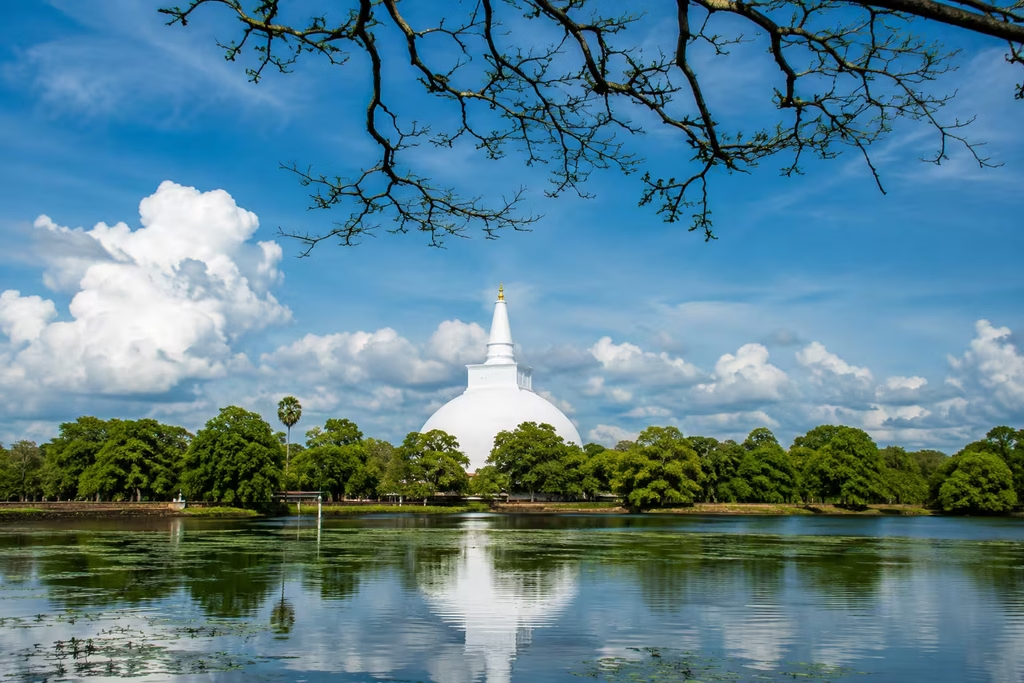
Ruwanwelisaya lies close enough to combine naturally with Jaya Sri Maha Bodhi. Visiting both provides a strong introduction to the sacred heart of Anuradhapura.
Allow enough time to sit quietly rather than simply walking from monument to monument.
Other nearby sites
Thuparamaya, Isurumuniya, Abhayagiri, Jetavanaramaya and other major locations can be added over one or two days.
The ancient city is too large to appreciate properly in a rushed half-day.
Understanding history and faith together
Archaeology can study structures, inscriptions and chronology, while pilgrimage traditions carry religious meanings that are not reducible to material evidence alone.
A thoughtful visitor can respect both approaches without demanding that one replace the other.
Visiting on Poya days
Full-moon Poya days can bring very large numbers of devotees. The atmosphere is special but access and traffic can be more demanding.
If you prefer a quiet visit, choose a normal weekday morning. If you want to witness living pilgrimage culture, Poya can be meaningful with proper respect.
What to bring
Carry water, sun protection and easy-to-remove footwear. Keep belongings compact because shoes may need to be left outside sacred areas.
Avoid carrying unnecessary valuables into crowded religious sites.
Responsible pilgrimage tourism
Do not leave plastic around offering areas, feed monkeys or touch protected structures. Use designated donation points if you wish to contribute.
Respect queues and local worship practices even when they are unfamiliar.
Frequently asked questions
Why is Jaya Sri Maha Bodhi sacred?
It is traditionally regarded as a descendant of the Bodhi tree at Bodh Gaya associated with the Buddha’s enlightenment.
Who brought the branch to Sri Lanka?
Sri Lankan Buddhist tradition records that Sanghamitta Theri brought it during the reign of King Devanampiyatissa.
Can tourists visit?
Yes, but visitors should treat the site as an active place of worship and follow dress and behavior rules.
How long should I spend?
Allow at least an hour, longer if you want to observe rituals quietly or combine the site with nearby Ruwanwelisaya.
Final planning advice
Check current access arrangements, transport conditions and weather shortly before travel. Opening times, visitor rules and local services can change, especially at religious sites, protected areas and seasonal attractions. Keep enough flexibility in your schedule to adjust without rushing.
A professional Sri Lanka itinerary should balance major sights with rest, meals and realistic road time. Spending longer at fewer places usually creates a more memorable experience than collecting photographs from many destinations in a single day.
Travel preparation checklist
Carry drinking water, sun protection and clothing appropriate to the destination. For temples, keep a modest layer available; for nature areas, choose footwear with grip. Store important documents and electronics securely and avoid depending on one payment method in remote areas.
Use reputable transport and guides, ask before photographing people and follow local instructions. These simple habits improve both safety and the quality of interactions throughout Sri Lanka.