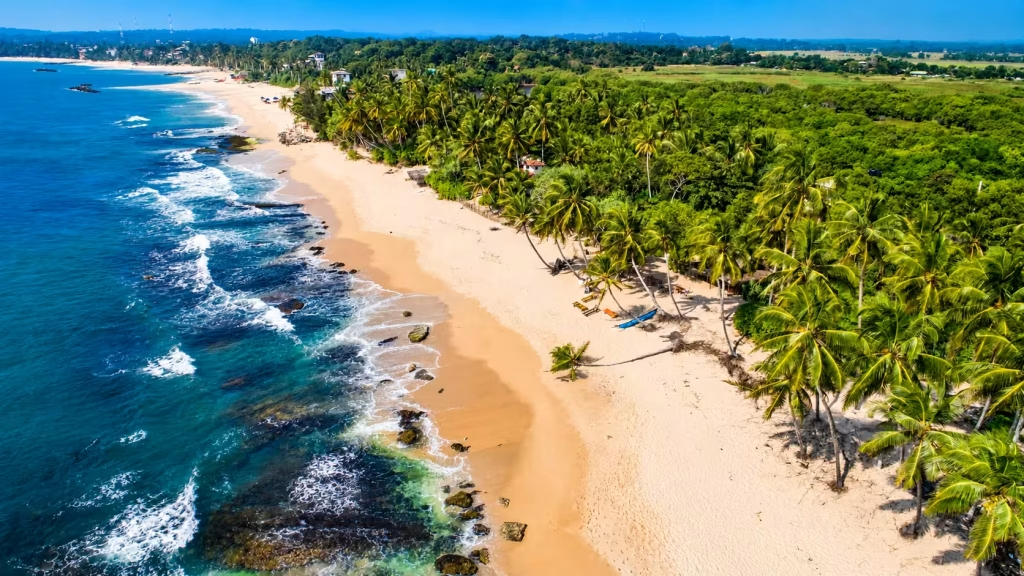
Hambantota is one of southern Sri Lanka’s most strategically located regional cities. It sits between wildlife-rich dry-zone landscapes and the Indian Ocean, with access to national parks, salt pans, botanical collections, religious sites and fast road connections toward Colombo. Unlike Galle or Mirissa, Hambantota is not defined mainly by a historic fort or a tourist beach strip. Its strength is as a gateway to the south-east.
Sri Lanka Tourism describes Hambantota as a port city with nature-based attractions nearby and highlights Yala National Park, Bundala National Park, Mirijjawila Botanical Garden, Ramba Viharaya, the Martello Tower and Madunagala Hot Spring within the wider region. This variety makes Hambantota useful for travelers who want more than a single resort experience.
Where is Hambantota?
Hambantota lies in Southern Province on Sri Lanka’s south coast. The district extends across a dry-zone landscape that feels noticeably different from the greener south-west around Galle and Matara.
The Southern Expressway has made road access from the Colombo region significantly easier than it was in the past. Even so, travelers should plan by actual journey time rather than road distance alone.
The salt pans
Hambantota is strongly associated with salt production. Sri Lanka Tourism describes extensive coastal salt pans where seawater is evaporated and salt collected after concentration.
The open pans also attract waterbirds and shorebirds. For photographers, the combination of shallow reflective water, workers and birds can be visually striking, but industrial areas should be approached responsibly. Do not enter restricted work zones or interrupt salt collection for photographs.

Mirijjawila Botanical Garden
Mirijjawila is significant because it was established as a major botanical garden for Sri Lanka’s dry zone. Sri Lanka Tourism highlights objectives including conservation of dry-zone trees and shrubs, medicinal plants, botanical education and tourism.
The garden provides a useful counterpoint to Hakgala and Peradeniya because the plant collections are adapted to a hotter, drier climate. Allow enough time to walk rather than treating it as a brief roadside stop.
Bundala National Park
Bundala is one of the region’s most important wetland areas and an internationally recognized Ramsar site. It is particularly rewarding for birdwatchers, with lagoons, saltpans, marsh and dry scrub supporting resident and migratory species.
From Hambantota, Bundala can be easier to include than from many other southern destinations. An early safari is usually best for temperature, light and bird activity.
Yala and the wider safari region
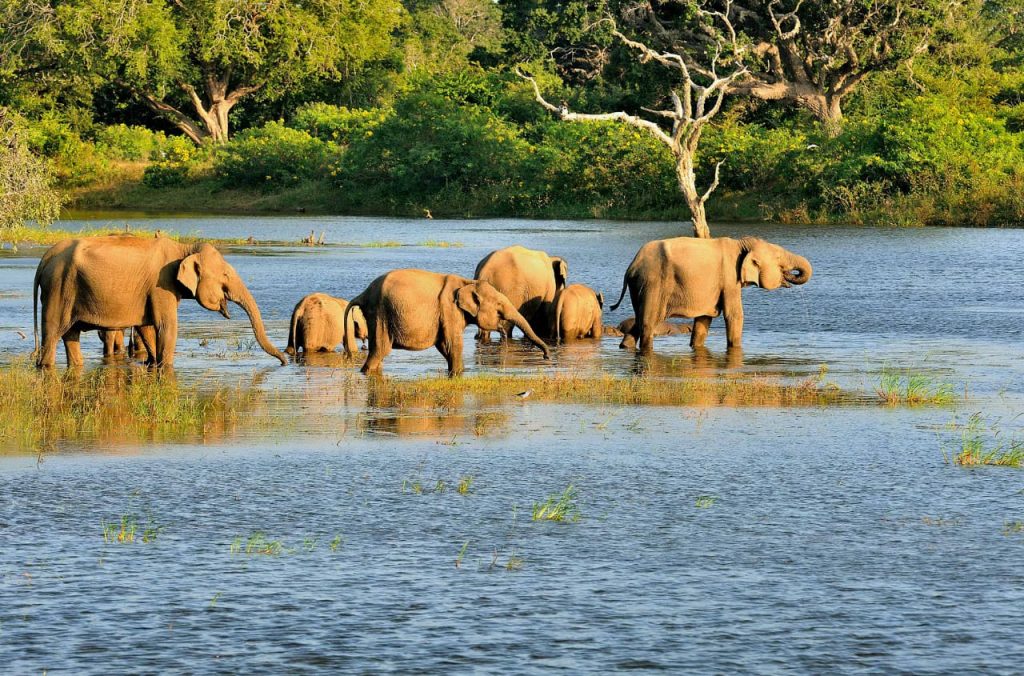
Yala National Park lies farther east and is famous for leopards, elephants and dry-zone wildlife. Hambantota can be used as part of a route toward Tissamaharama, Kataragama and Yala, although staying closer to a park entrance may be more practical for very early safaris.
Avoid planning two major safaris and a long road transfer in the same day. Wildlife experiences are better when you are not racing a clock.
Martello Tower and colonial history
Hambantota’s Martello Tower is an unusual reminder of British colonial military architecture. Its circular defensive form is different from Sri Lanka’s larger coastal forts.
Access arrangements may vary, so check locally before planning specifically around entering the structure. Even an exterior visit can add historical context to the port town.
Religious and cultural landscape
The district contains Buddhist temples, Hindu shrines, mosques and sites connected with Kataragama’s multi-religious pilgrimage tradition. Travelers who move beyond the port and main roads encounter a region with deep cultural diversity.
Dress modestly at religious sites and ask before photographing ceremonies or worshippers.
Birdwatching around Hambantota
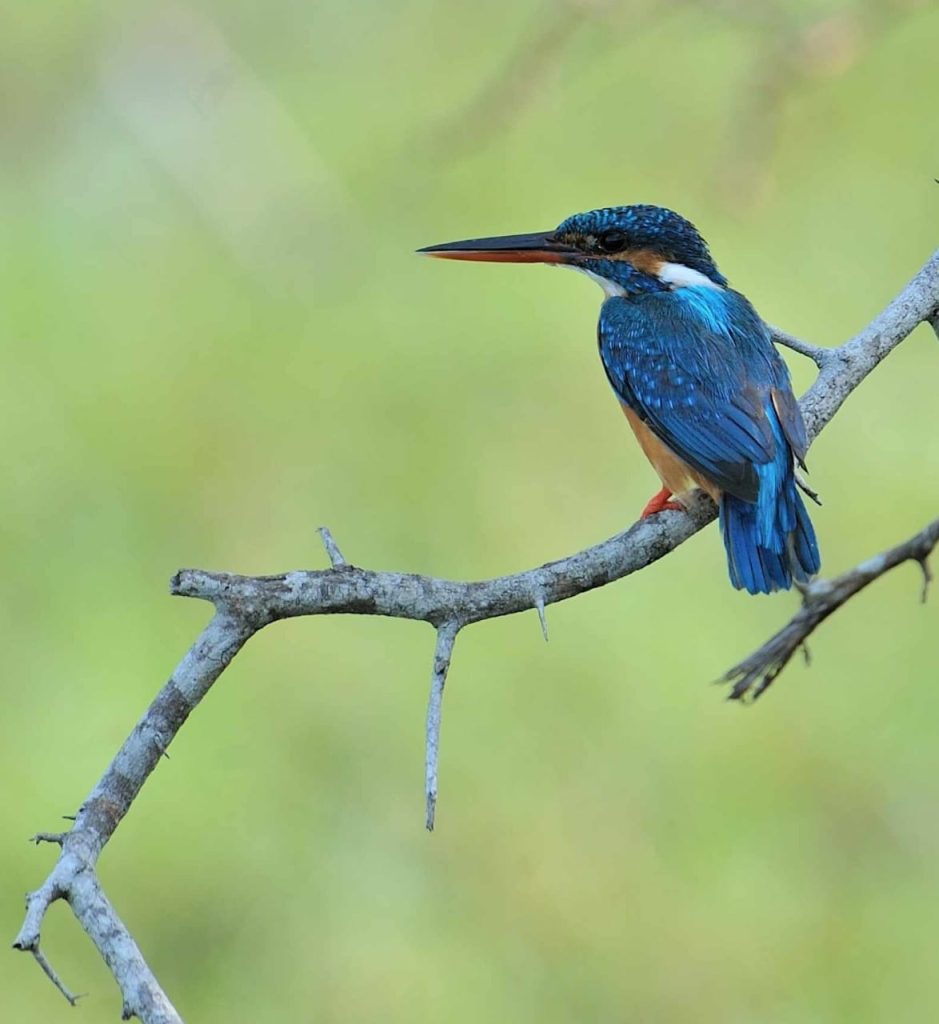
The combination of salt pans, reservoirs, lagoons and dry-zone scrub makes the wider district highly productive for birds. You do not need to be inside a national park to see interesting species.
Bring binoculars and avoid approaching feeding flocks too closely. Roadside birdwatching should always be done from safe pull-off areas away from traffic.
Beaches and coast
The district has long stretches of coast, but not every beach is suitable for swimming. Some are exposed, remote or affected by strong currents.
Ask locally before entering the sea, particularly on undeveloped beaches without lifeguards.
Food
Hambantota’s food reflects the south and dry-zone east. Rice and curry, seafood and everyday Sri Lankan bakery food are easy to find. Local restaurants can provide a more genuine experience than eating only inside hotels.
Travelers with allergies should explain them clearly, especially around seafood and coconut-based dishes.
How many nights?
One night works as a transit stop, but two or three nights allow you to include Bundala, Mirijjawila and a slower look at the city. Wildlife-focused travelers may use Hambantota as part of a longer stay split with Tissamaharama or Yala.
Sample two-day plan
On the first day, visit Mirijjawila Botanical Garden and explore Hambantota’s salt-pan landscape in the afternoon. On day two, begin with an early Bundala safari, return for lunch and continue toward Tissamaharama, Kataragama or the south coast.
This pace provides variety without turning every hour into a transfer.
Hambantota Weather: 7-Day Forecast
Updated automatically with the latest available forecast for Hambantota, Sri Lanka.
- Rain chance
- 63%
- Rainfall
- 0.6 mm
- Wind
- 12 km/h
- UV index
- 7.2
- Sunrise
- 5:55 AM
- Sunset
- 5:45 PM
- Rain chance
- 84%
- Rainfall
- 0.7 mm
- Wind
- 16 km/h
- UV index
- 8.2
- Sunrise
- 5:56 AM
- Sunset
- 5:45 PM
- Rain chance
- 67%
- Rainfall
- 1.3 mm
- Wind
- 14 km/h
- UV index
- 7.7
- Sunrise
- 5:56 AM
- Sunset
- 5:45 PM
- Rain chance
- 82%
- Rainfall
- 1.5 mm
- Wind
- 17 km/h
- UV index
- 8.2
- Sunrise
- 5:56 AM
- Sunset
- 5:46 PM
- Rain chance
- 99%
- Rainfall
- 1.2 mm
- Wind
- 15 km/h
- UV index
- 8.2
- Sunrise
- 5:57 AM
- Sunset
- 5:46 PM
- Rain chance
- 95%
- Rainfall
- 1.5 mm
- Wind
- 13 km/h
- UV index
- 8.1
- Sunrise
- 5:57 AM
- Sunset
- 5:46 PM
- Rain chance
- 92%
- Rainfall
- 0.6 mm
- Wind
- 13 km/h
- UV index
- 8.2
- Sunrise
- 5:58 AM
- Sunset
- 5:46 PM
Transport
Private vehicles are the most flexible for scattered attractions. Buses connect major towns, while expressway travel reduces journey time to the Colombo region.
For national parks, arrange safari transport separately with a reputable operator familiar with the correct entrance and permit process.
Responsible travel
Do not disturb birds around salt pans, leave waste in dry scrub or encourage drivers to approach wildlife too closely. Avoid entering industrial, port or military areas without permission.
Support local restaurants, guides and smaller accommodation providers where they suit your needs.
Frequently asked questions
Is Hambantota worth visiting?
Yes, particularly for travelers interested in wildlife, birdwatching, dry-zone landscapes and southern regional travel rather than only beach resorts.
What are the main attractions?
Mirijjawila Botanical Garden, the salt pans and access to Bundala, Yala and other southern attractions are the main reasons to stay.
How many nights should I stay?
Two nights provide a useful introduction; three nights work better if you want multiple wildlife or nature excursions.
Is Hambantota a good safari base?
It is very convenient for Bundala and useful for the wider Yala region, though some travelers prefer to stay closer to Yala’s entrances for early safaris.