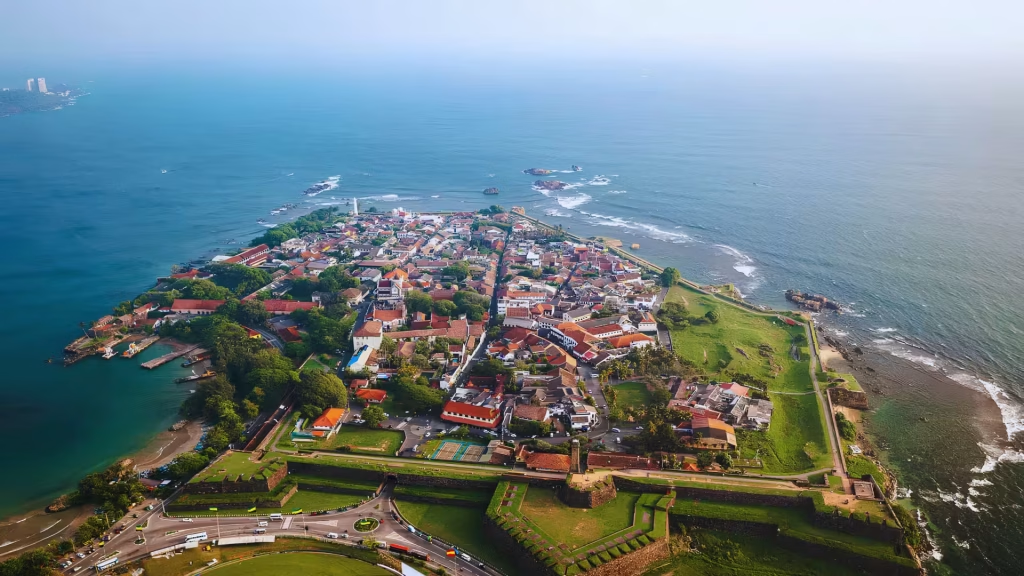
Galle Fort is one of Sri Lanka’s most rewarding places to explore on foot. Inside its walls, narrow streets, churches, administrative buildings, houses, courtyards and sea-facing ramparts form a living old town rather than a preserved archaeological ruin.
The fort’s character comes from layers of history. European military planning was adapted to a tropical South Asian environment, and the result is a townscape that UNESCO recognizes for the interaction between European architectural forms and local traditions.
Why Galle Fort is a World Heritage Site
The Old Town of Galle and its Fortifications is a UNESCO World Heritage Site. The Portuguese established a fortified settlement in the sixteenth century, and Galle reached the height of its development under Dutch rule in the eighteenth century. The British later occupied the fort, adding another layer to its history.
UNESCO describes Galle as an outstanding example of a fortified city built by Europeans in South and South-East Asia, shaped by the interaction of European planning and South Asian traditions.
Walk the ramparts
A circuit of the ramparts is one of the best introductions to Galle Fort. From the walls you can look across the Indian Ocean, the modern city, the harbor and the roofs of the old town.
Early morning and late afternoon are usually more comfortable than midday. The walls are exposed to sun, wind and rain, so bring water and sun protection and take care near unguarded edges.
Explore the streets inside the fort
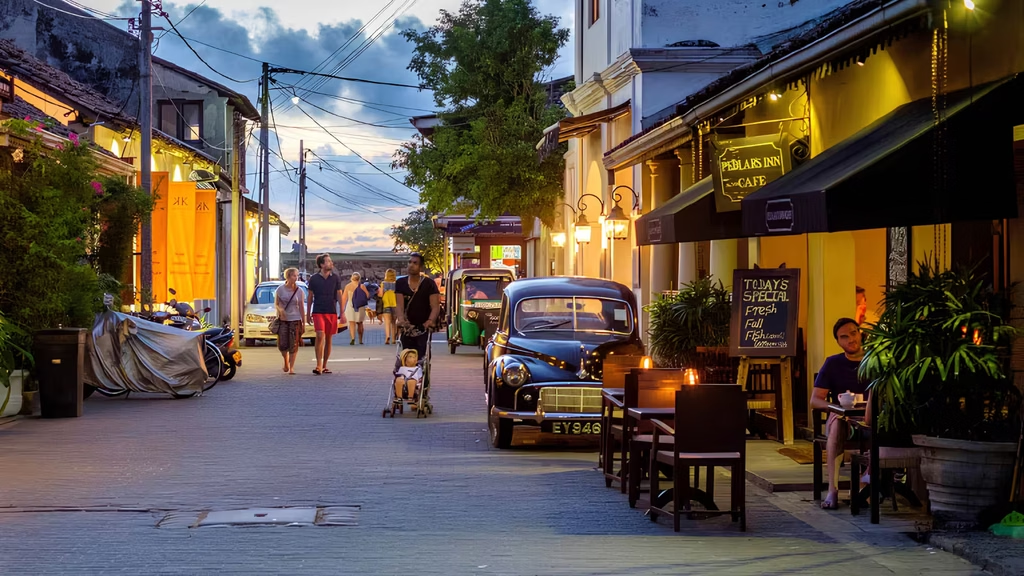
The interior is best experienced slowly. Look beyond individual landmarks and notice the street grid, deep verandas, internal courtyards, tiled roofs and the way old buildings have been adapted for present-day use.
Hotels, cafés and shops occupy many historic properties, but residents, schools, places of worship and public institutions keep the fort functioning as a real neighborhood.
Religious and civic architecture
Galle Fort contains churches, mosques and other historic religious buildings that reflect the city’s long multicultural history. Administrative and military structures add another layer, while museums help explain maritime trade and archaeology.
Opening arrangements vary from place to place. If a museum or religious building is essential to your visit, confirm current access before making a tightly timed plan.
Photography and atmosphere
The fort is photogenic in almost any weather. Strong sun emphasizes white walls and shadows, while cloudy skies can give the ramparts a dramatic maritime character.
Remember that many attractive doorways and courtyards belong to private homes or businesses. Ask before entering or photographing people at close range.
How much time do you need?
A few hours is enough for a basic rampart walk and a look at the main streets. A full day allows time for museums, meals, shopping and a slower exploration of the architecture. Staying overnight lets you experience the quieter early morning and evening atmosphere.
Combining Galle with the south coast
Galle is easy to combine with Unawatuna, Hikkaduwa, Weligama, Mirissa or other destinations along the southern coast. It also works well as a cultural break between beach stays.
Galle Fort Weather: 7-Day Forecast
Updated automatically with the latest available forecast for Galle, Sri Lanka.
- Rain chance
- 100%
- Rainfall
- 2.3 mm
- Wind
- 9 km/h
- UV index
- 8.3
- Sunrise
- 6:00 AM
- Sunset
- 5:49 PM
- Rain chance
- 100%
- Rainfall
- 2.0 mm
- Wind
- 10 km/h
- UV index
- 7.9
- Sunrise
- 6:00 AM
- Sunset
- 5:49 PM
- Rain chance
- 100%
- Rainfall
- 4.4 mm
- Wind
- 11 km/h
- UV index
- 7.4
- Sunrise
- 6:01 AM
- Sunset
- 5:50 PM
- Rain chance
- 100%
- Rainfall
- 12.2 mm
- Wind
- 10 km/h
- UV index
- 8.1
- Sunrise
- 6:01 AM
- Sunset
- 5:50 PM
- Rain chance
- 100%
- Rainfall
- 6.3 mm
- Wind
- 11 km/h
- UV index
- 7.9
- Sunrise
- 6:01 AM
- Sunset
- 5:50 PM
- Rain chance
- 100%
- Rainfall
- 9.0 mm
- Wind
- 8 km/h
- UV index
- 8.0
- Sunrise
- 6:02 AM
- Sunset
- 5:50 PM
- Rain chance
- 98%
- Rainfall
- 4.2 mm
- Wind
- 8 km/h
- UV index
- 7.7
- Sunrise
- 6:02 AM
- Sunset
- 5:51 PM
Responsible heritage travel
Do not climb fragile structures or leave graffiti on walls. Respect residents, religious sites and conservation work. Choose souvenirs carefully and avoid purchasing objects presented as genuine antiquities without proper documentation.
From Portuguese outpost to Dutch fortified town
Galle’s strategic coastal position attracted European maritime powers during the period of Indian Ocean expansion. The Portuguese established a fortified presence in the sixteenth century. The Dutch later captured Galle and greatly expanded the defenses and urban plan, creating much of the fortified townscape visitors recognize today. British control added another historical layer without erasing the Dutch street plan and ramparts.
This sequence matters because Galle Fort is not the work of a single colonial period. Its buildings, street names, places of worship and civic spaces reflect adaptation over centuries. Local materials, climate and South Asian building traditions shaped European plans, producing the hybrid character recognized by UNESCO.
How to read the ramparts and bastions
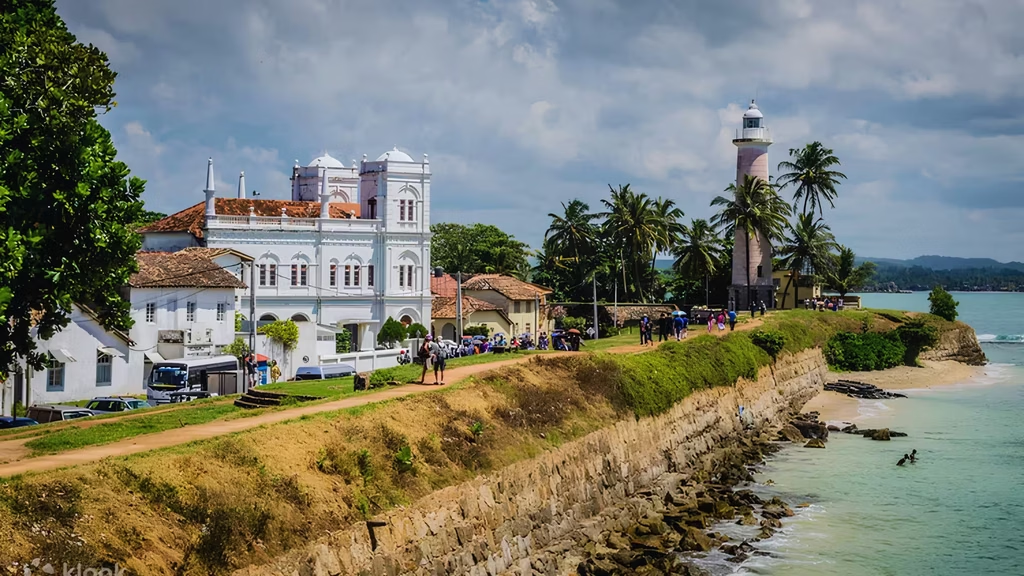
Walking the walls is more interesting when you remember that each bastion and section of rampart formed part of a defensive system. High ground provided views toward sea approaches and the landward side of the town. Thick walls, gun positions and controlled entrances were designed for military purposes long before they became a sunset promenade.
Today the ramparts offer some of the best public views in Galle, but edges can be exposed. Keep children close and avoid sitting or standing in unsafe positions for photographs. During strong wind or rain, stone surfaces may become slippery.
Architecture adapted to a tropical climate
One of Galle Fort’s defining characteristics is the way European urban forms were adapted to local conditions. Verandas, internal courtyards, high roofs, shaded openings and ventilation helped buildings function in a hot, humid climate. Coral and granite were used in parts of the fortifications, while domestic buildings developed a streetscape that feels different from European fortified towns.
Look beyond restored façades. Doorways, rooflines, drainage details and narrow plots often reveal how houses evolved. Some buildings have been carefully converted into hotels, restaurants or shops, while others remain homes, schools, religious buildings or public institutions.
Galle Fort as a living city
The fort is not an open-air museum that closes at the end of the day. People live, study, worship and work inside the walls. This living character is one reason the site remains compelling. It also means visitors should behave as guests in a neighborhood: keep noise reasonable at night, ask before photographing residents and do not block doorways or narrow streets for photo shoots.
A self-guided walking route
A simple visit can begin near the main entrance and move toward the ramparts before wandering through the interior streets. Include at least one religious building, one museum or interpretation space if open, and time for the sea-facing walls. Rather than following the fastest route, allow yourself to turn into quieter streets and notice architectural details.
Early morning is excellent for a calmer walk and softer light. Late afternoon brings more visitors but also the well-known sunset atmosphere along the walls. Midday can be hot, so use the shaded streets and cafés rather than forcing a complete rampart circuit in strong sun.
Religious diversity inside the fort
Churches, mosques and other religious sites reflect the long multicultural history of Galle. These are not simply architectural attractions. Some remain active places of worship, so opening arrangements and visitor access may vary. Dress respectfully, speak quietly and avoid entering during services unless visitors are clearly welcome.
Museums and maritime history
Galle’s story is inseparable from the sea. Maritime trade connected Sri Lanka with merchants and empires across the Indian Ocean long before European occupation, and colonial fortification added new military and commercial layers. Museums and archaeological displays can provide context for ceramics, trade, shipwrecks and everyday life that is difficult to understand from buildings alone.
Food and shopping without losing the heritage experience
Restaurants, cafés, boutiques and hotels are part of the modern fort economy. Enjoy them, but avoid allowing shopping to become the only experience. A useful approach is to alternate: walk a historical section, stop for a drink, visit a museum or place of worship, then return to the streets.
If buying antiques or objects claimed to be old, be cautious. Sri Lanka regulates the export of antiquities and culturally significant material. Buy contemporary crafts from reputable sellers rather than attempting to remove heritage objects from the country.
How long should you stay?
A half day is enough for a first walking tour, but one night inside or near the fort changes the experience. Early morning and evening are quieter, and you can appreciate how the neighborhood feels outside day-trip hours. Travelers interested in architecture, photography or history can easily spend a full day.
Using Galle as part of a south-coast itinerary
Galle combines naturally with nearby beaches, but it deserves dedicated time. Trying to fit the fort, several beaches and a long transfer into one day often turns the visit into a rushed circuit. Consider using Galle as the cultural anchor of the southern coast and beach destinations as separate experiences.
Responsible heritage travel
Do not climb fragile walls, scratch names into surfaces or treat private courtyards as public attractions. Conservation of a living heritage city depends on residents as well as authorities. Supporting businesses that respect historic buildings and local communities helps tourism contribute to preservation rather than accelerating inappropriate change.
Why Galle Fort remains one of Sri Lanka’s essential destinations
Galle Fort succeeds because history is visible without being frozen. Military walls face the Indian Ocean, colonial-era streets continue to function, religious communities remain active and old buildings have been adapted for new uses. The result is a place where architecture, maritime history and contemporary Sri Lankan life occupy the same compact peninsula. Walking slowly is the best way to understand it.
Frequently asked questions
Is Galle Fort free to walk around?
The streets and ramparts are generally part of the public townscape, while individual museums, attractions or buildings may have their own access arrangements or fees.
How old is Galle Fort?
The fortified town was established by the Portuguese in the sixteenth century and developed extensively under the Dutch in the seventeenth and eighteenth centuries.
Can I visit Galle Fort as a day trip?
Yes. It is a popular day-trip destination, although staying longer gives you time to explore the old town when it is less busy.