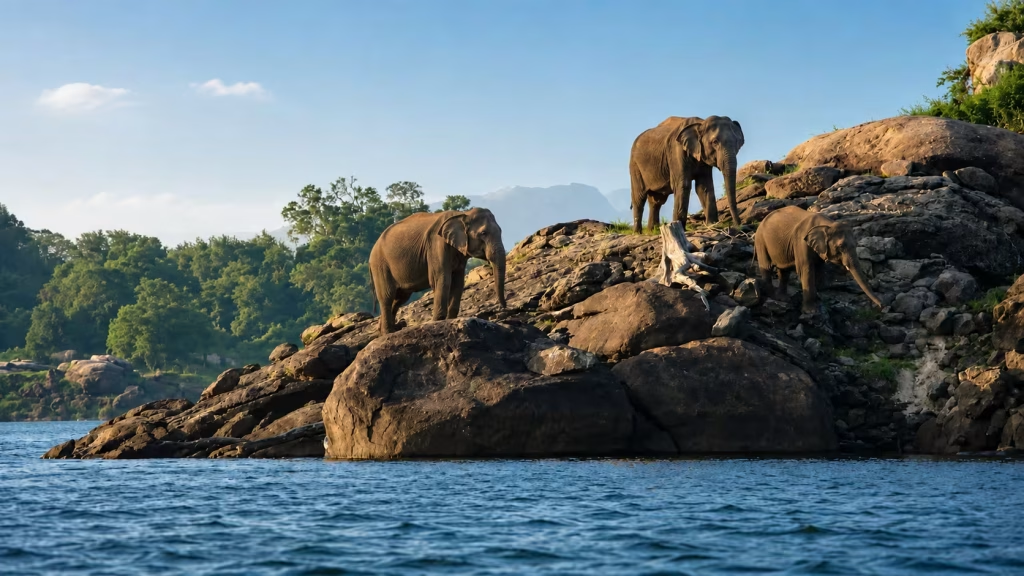
Gal Oya National Park offers one of the most distinctive wildlife experiences in Sri Lanka because water is central to the safari. The protected landscape surrounds the vast Senanayake Samudra reservoir in the dry-zone east, where forested islands, open water and shorelines create opportunities to observe elephants, birds and other wildlife from a boat.
Sri Lanka Tourism describes the park as an important sanctuary around the Senanayake Samudra catchment and notes its rich birdlife and elephant population. Unlike safari areas that are experienced almost entirely from jeeps, Gal Oya allows visitors to see the landscape from the reservoir itself.
Where is Gal Oya National Park?
The park is in Eastern Province around Inginiyagala and the Senanayake Samudra reservoir, within reach of Ampara. It is more remote from Sri Lanka’s standard tourism circuit than Yala or Udawalawe.
That distance is part of its appeal, but it means planning matters. Travel with realistic road times and avoid trying to squeeze a safari between two long transfers.
Senanayake Samudra
The reservoir is the defining feature of Gal Oya. It was created as part of a major irrigation project and is surrounded by protected catchment forest. Islands and long shorelines make the reservoir visually striking even before wildlife appears.
From a boat, distance and scale become clearer. Forest edges that look close may be far away, which is why binoculars are useful.
The boat safari
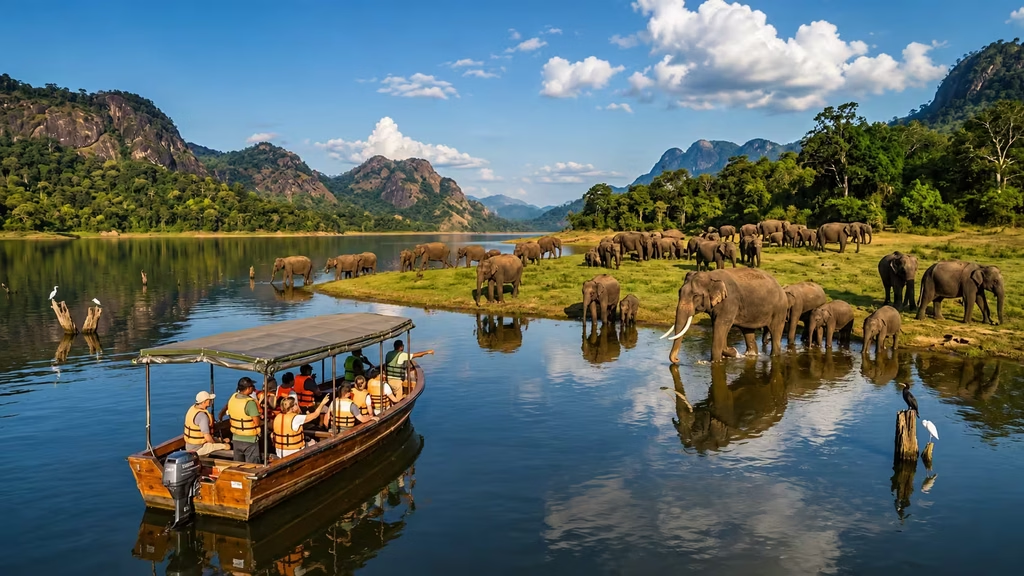
A boat safari provides a quieter style of wildlife observation than driving rapidly between sightings. The guide or operator scans shorelines, islands and open water for animals and birds.
Boat availability, routes and conditions can change with water level and weather. Confirm current arrangements with a reputable operator before travel.
Elephants and swimming behavior
Gal Oya is famous for the possibility of seeing elephants enter the reservoir or move between islands. This behavior is remarkable, but it should never be advertised as guaranteed.
Wild elephants decide where and when they approach water. A responsible safari values the entire ecosystem rather than chasing boats around in search of one dramatic photograph.
Birdwatching
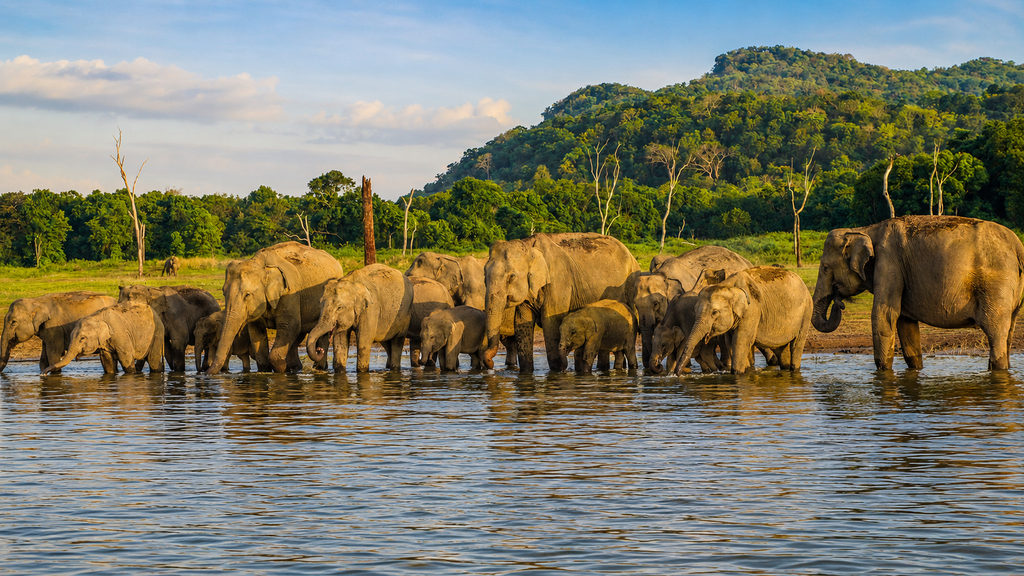
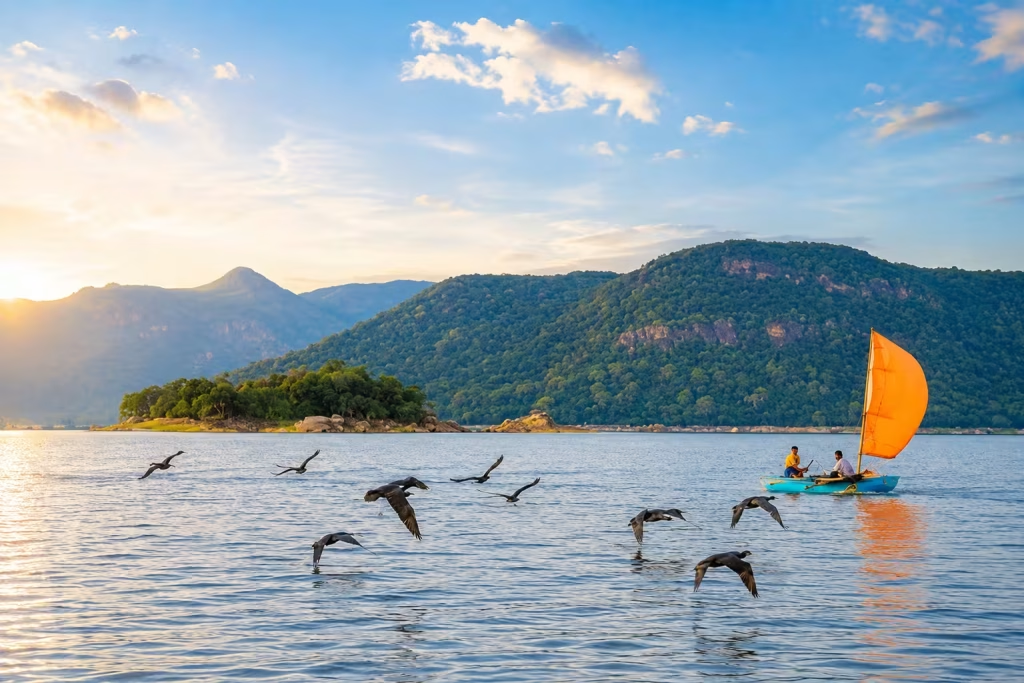
Sri Lanka Tourism notes the park’s diversity of resident and migratory birds. Open water can attract cormorants, pelicans and other waterbirds, while raptors and forest species occur around shorelines and wooded areas.
Bring binoculars even if you are not a dedicated birder. Birds are often the most consistent wildlife seen during a boat trip.
Other wildlife
The park’s dry-zone forests support mammals, reptiles and smaller wildlife in addition to elephants. Sightings vary greatly according to season, time and luck.
Do not compare the experience directly with a zoo or expect a list of species to appear on demand. The landscape itself is the main attraction.
Boat safari versus jeep safari
The boat is the signature experience because it reveals the reservoir ecosystem. Jeep-based exploration may also be possible in parts of the wider park system depending on current access.
If you have limited time, prioritize the experience that is most distinctive to Gal Oya rather than trying to duplicate a jeep safari you could do elsewhere.
Gal Oya National Park Weather: 7-Day Forecast
Updated automatically with the latest available forecast for Galoba, Sri Lanka.
- Rain chance
- 85%
- Rainfall
- 6.1 mm
- Wind
- 10 km/h
- UV index
- 8.1
- Sunrise
- 5:56 AM
- Sunset
- 5:42 PM
- Rain chance
- 98%
- Rainfall
- 3.4 mm
- Wind
- 14 km/h
- UV index
- 8.0
- Sunrise
- 5:56 AM
- Sunset
- 5:42 PM
- Rain chance
- 99%
- Rainfall
- 8.1 mm
- Wind
- 10 km/h
- UV index
- 7.7
- Sunrise
- 5:57 AM
- Sunset
- 5:43 PM
- Rain chance
- 100%
- Rainfall
- 13.4 mm
- Wind
- 6 km/h
- UV index
- 7.1
- Sunrise
- 5:57 AM
- Sunset
- 5:43 PM
- Rain chance
- 100%
- Rainfall
- 12.6 mm
- Wind
- 9 km/h
- UV index
- 7.0
- Sunrise
- 5:58 AM
- Sunset
- 5:43 PM
- Rain chance
- 96%
- Rainfall
- 24.0 mm
- Wind
- 6 km/h
- UV index
- 8.0
- Sunrise
- 5:58 AM
- Sunset
- 5:43 PM
- Rain chance
- 86%
- Rainfall
- 9.6 mm
- Wind
- 9 km/h
- UV index
- 7.6
- Sunrise
- 5:58 AM
- Sunset
- 5:43 PM
Best time of day
Early morning and late afternoon provide softer light and more comfortable temperatures. Wind can strengthen later in the day, affecting boat conditions.
Ask your operator which departure makes sense for the current water level and weather rather than relying on a fixed rule.
Seasonal conditions
The eastern dry zone has a different rainfall pattern from Sri Lanka’s south-west. Reservoir level and vegetation change across the year, influencing where wildlife can be seen.
No season guarantees elephants in the water. Plan for a broad nature experience rather than one specific behavior.
Photography from a boat
Use a shutter speed fast enough to compensate for boat movement. A moderate telephoto lens is useful because wildlife should be observed from a respectful distance.
Protect equipment from spray and keep bags secure. Do not stand suddenly in a small boat unless the guide says it is safe.
What to bring
Bring water, sun protection, a hat, binoculars and insect repellent. A light long-sleeved shirt can protect against both sun and insects.
Pack minimal loose gear. Boats are easier and safer when passengers are not surrounded by unsecured equipment.
Staying near the park
Accommodation is available in the wider Ampara and Gal Oya region, including nature-focused lodges and simpler local options. Choose based on safari departure logistics, not only room photographs.
Staying nearby allows an early start and avoids driving several hours before dawn.
Combining Gal Oya with eastern Sri Lanka
The park can be combined with Ampara heritage sites, Batticaloa, Arugam Bay or an overland journey between the Cultural Triangle and east coast. It fits particularly well for travelers who want both wildlife and eastern cultural experiences.
Give the region several days rather than treating Gal Oya as a remote detour squeezed between unrelated destinations.
Responsible elephant watching
Boats should not surround, chase or block elephants. Maintain distance and allow animals to choose their direction of movement.
Never feed wildlife or encourage guides to approach more closely for photographs. Ethical distance protects both animals and visitors.
Why Gal Oya is different
The park’s strength is perspective. From the reservoir, visitors experience a protected landscape as a connected system of water, forest, islands and wildlife rather than a series of roadside sightings.
For travelers who prefer quiet observation and do not need a guaranteed “big five” checklist, Gal Oya can become one of Sri Lanka’s most memorable wildlife destinations.
Frequently asked questions
Can you see elephants swimming in Gal Oya?
It is possible and the park is famous for this behavior, but no sighting should ever be guaranteed.
Is a boat safari the main attraction?
Yes. Exploring Senanayake Samudra by boat is the experience that most clearly distinguishes Gal Oya from other Sri Lankan parks.
Do I need binoculars?
They are highly recommended because birds and wildlife are often seen at considerable distance across the reservoir.
How long should I stay in the region?
At least one nearby overnight stay is practical. Two nights provide more flexibility for weather and regional attractions.