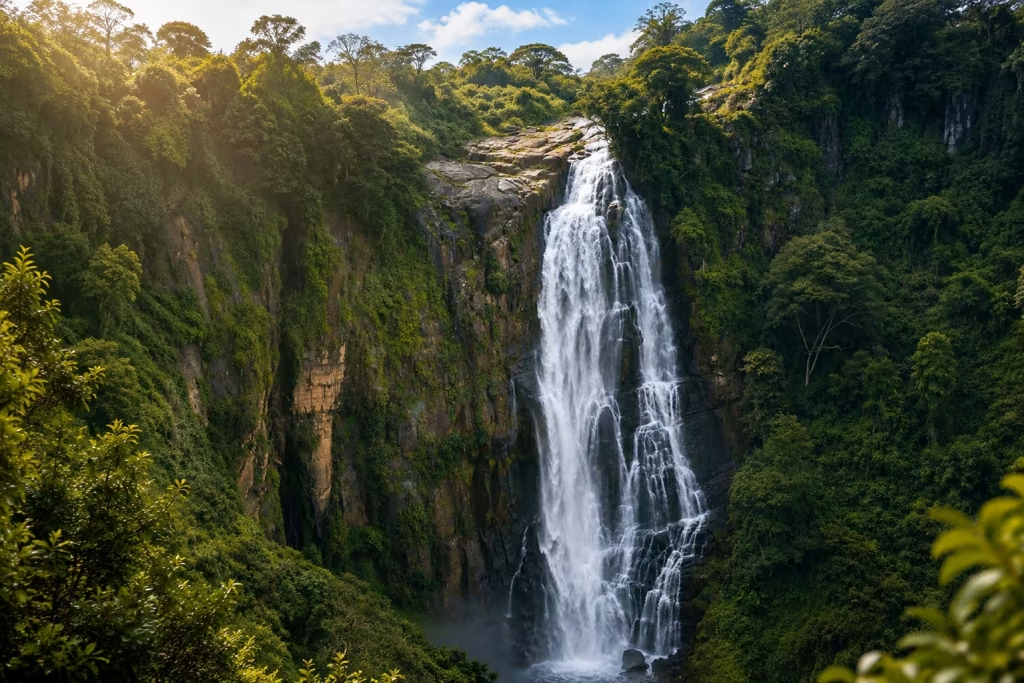
Devon Falls is one of the classic roadside waterfalls of Sri Lanka’s central highlands. Located near Talawakele in Nuwara Eliya District, the fall drops through a green tea-country landscape that makes it easy to appreciate without undertaking a demanding hike. Sri Lanka Tourism lists the waterfall at about 97 meters in height and identifies a well-known roadside viewpoint near the 20th milepost.
The accessibility of Devon Falls can make visitors underestimate it. This is not simply a photograph to take between two towns. The waterfall belongs to a wider landscape of tea estates, mountain roads, railways and other cascades, and it works best as part of a slower hill-country journey.
Where is Devon Falls?
Devon Falls is close to Talawakele on the route through the central tea-growing highlands. It is commonly visited when traveling between Hatton, Nuwara Eliya and surrounding estate areas.
The main viewpoint is reached from the road, so the visit does not require a long trek. Parking and stopping arrangements can change, and drivers should use designated safe areas rather than stopping abruptly on a mountain road.
Why is it called Devon Falls?
The name is associated with a British coffee planter known as Devon who had a plantation in the area. That connection reflects an earlier phase of highland plantation history before tea became the dominant crop.
Seeing the waterfall in this context adds an interesting historical layer. The surrounding landscape is beautiful, but it was also shaped by colonial plantation development and later tea cultivation.
How tall is Devon Falls?
Sri Lanka Tourism gives a height of approximately 97 meters. Height rankings for waterfalls can vary between sources depending on measurement methods, so the most useful fact for travelers is simply that Devon is a substantial multi-stage mountain waterfall clearly visible from across the valley.
The main viewpoint
The established roadside viewpoint provides the easiest full view. From a distance, the entire fall can be seen against the surrounding vegetation and estate landscape. A telephoto lens is useful for isolating details, while a standard phone camera can capture the broader scene.
Do not climb barriers or move onto the road to improve the angle. Mountain traffic can approach quickly around bends.
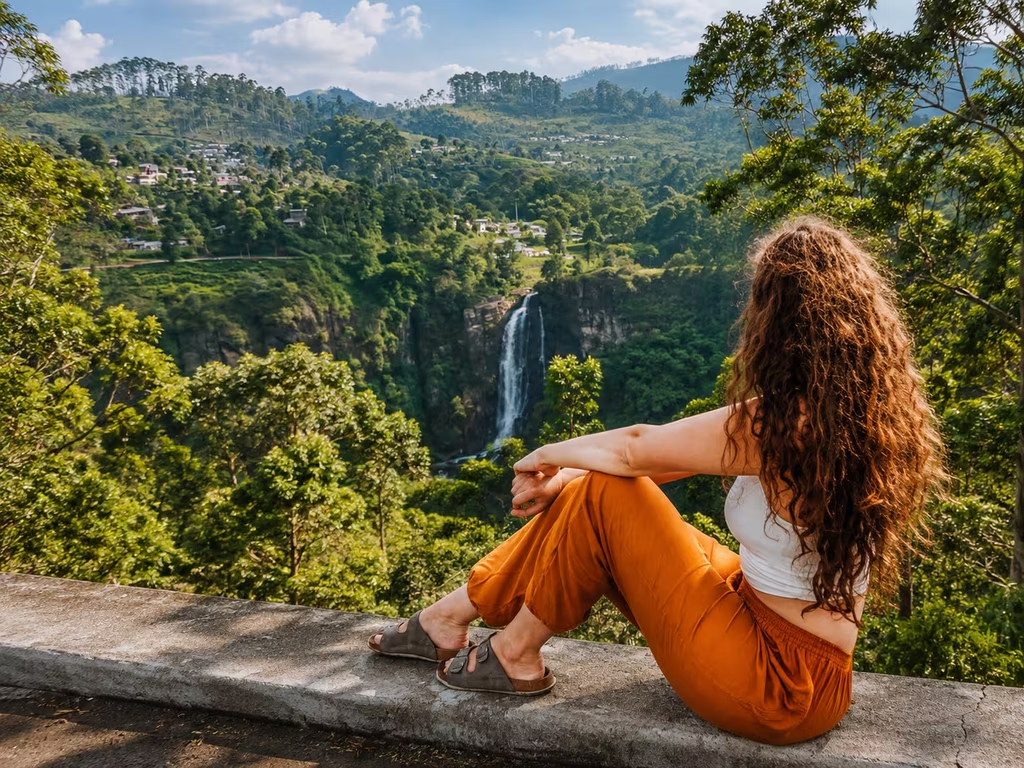
Photography
Cloud and mist are common in the highlands and can completely change the mood of the waterfall. Overcast conditions often produce softer contrast, while clear mornings may give brighter views of the valley.
A polarizing filter can help reduce reflections on wet vegetation, but it is not essential. If using a long exposure, stabilize the camera safely away from traffic rather than placing a tripod in pedestrian or vehicle areas.
Seasonal water flow
Like most waterfalls, Devon changes with rainfall. Wetter periods can increase flow and create more mist, while drier conditions may produce a thinner cascade. Heavy rain can also reduce visibility and make mountain roads more hazardous.
There is no need to chase the highest possible water level. A clear, safe view during moderate conditions can be more enjoyable than visiting during extreme rain.
Tea-country setting
The surrounding plantations are an important part of the visual experience. Tea fields contour the hills, and estate roads and settlements show how agriculture has shaped the region.
Remember that tea estates are workplaces and private property. Do not walk into fields without permission or photograph workers at close range without asking.
Combining Devon Falls with St. Clair’s Falls
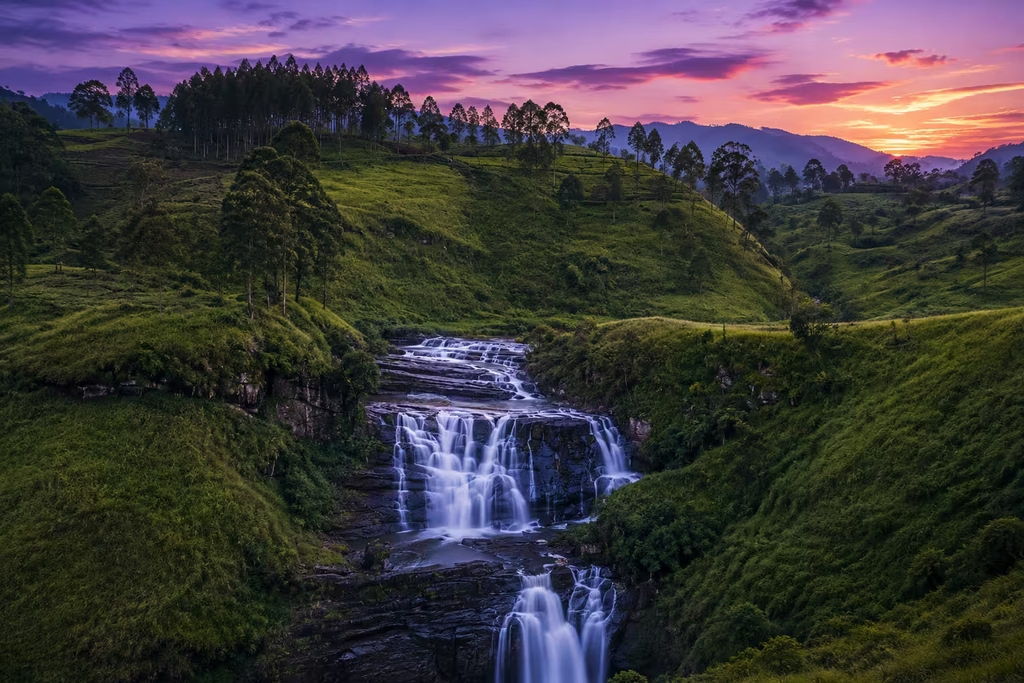
St. Clair’s Falls is another well-known waterfall in the same broad Talawakele area. Many travelers see both during the same road journey. The pair provides different compositions and helps make the stop feel more substantial than visiting one roadside viewpoint alone.
Do not attempt unsafe unofficial paths simply because another waterfall appears close on a map.
Talawakele and the railway
Talawakele is connected to Sri Lanka’s hill-country railway. Travelers interested in trains can combine the waterfall area with rail travel through tea landscapes, though the best waterfall viewpoints are generally reached by road.
Rail schedules and road itineraries should have buffer time. Hill-country transport can be slower than expected.
Nearby Nuwara Eliya
Nuwara Eliya can be used as a base, particularly for visitors who also want tea factories, gardens and highland scenery. Devon Falls works well as part of a transfer day rather than requiring a dedicated overnight stay.
What to bring
Bring a light rain layer, water and sun protection. Weather can switch from bright to misty quickly. If you plan additional walks in the area, footwear with grip is useful even though the main Devon viewpoint itself does not demand hiking.
Road safety
Mountain roads deserve attention. Use proper pull-offs, watch children closely and avoid stepping backward into traffic while framing photographs. During rain, visibility and braking distances can worsen.
If hiring a driver, choose someone experienced with hill-country roads and do not pressure them to stop in unsafe locations.
Devon Falls Weather: 7-Day Forecast
Updated automatically with the latest available forecast for Dimbula, Sri Lanka.
- Rain chance
- 100%
- Rainfall
- 21.3 mm
- Wind
- 10 km/h
- UV index
- 7.5
- Sunrise
- 5:59 AM
- Sunset
- 5:46 PM
- Rain chance
- 98%
- Rainfall
- 6.6 mm
- Wind
- 8 km/h
- UV index
- 6.8
- Sunrise
- 6:00 AM
- Sunset
- 5:47 PM
- Rain chance
- 100%
- Rainfall
- 8.7 mm
- Wind
- 9 km/h
- UV index
- 8.0
- Sunrise
- 6:00 AM
- Sunset
- 5:47 PM
- Rain chance
- 100%
- Rainfall
- 42.5 mm
- Wind
- 7 km/h
- UV index
- 6.1
- Sunrise
- 6:01 AM
- Sunset
- 5:47 PM
- Rain chance
- 100%
- Rainfall
- 29.4 mm
- Wind
- 5 km/h
- UV index
- 5.7
- Sunrise
- 6:01 AM
- Sunset
- 5:47 PM
- Rain chance
- 100%
- Rainfall
- 42.6 mm
- Wind
- 4 km/h
- UV index
- 7.0
- Sunrise
- 6:01 AM
- Sunset
- 5:47 PM
- Rain chance
- 93%
- Rainfall
- 38.7 mm
- Wind
- 7 km/h
- UV index
- 6.3
- Sunrise
- 6:02 AM
- Sunset
- 5:48 PM
Responsible waterfall tourism
Roadside viewpoints can accumulate plastic and food waste because visitors assume someone else will clean them. Carry all litter with you if bins are unavailable or full.
Do not fly drones without checking legal restrictions and local conditions. Power lines, roads, wind and private estates can make a seemingly simple flight inappropriate.
How long should you spend?
Thirty minutes may be enough for the main viewpoint, but one to two hours makes sense when combined with St. Clair’s Falls, tea scenery or a local break. The destination is better understood as part of a scenic route than as a standalone full-day attraction.
Frequently asked questions
Do I need to hike to Devon Falls?
No. The best-known full view is available from an established roadside viewpoint.
How high is Devon Falls?
Sri Lanka Tourism lists the waterfall at approximately 97 meters.
Can I combine it with another waterfall?
Yes. St. Clair’s Falls is in the same broad area and is commonly combined with Devon.
Is Devon Falls worth stopping for?
Yes, especially if your route already passes through Talawakele. The combination of waterfall and tea-country scenery makes it one of the classic highland road stops.