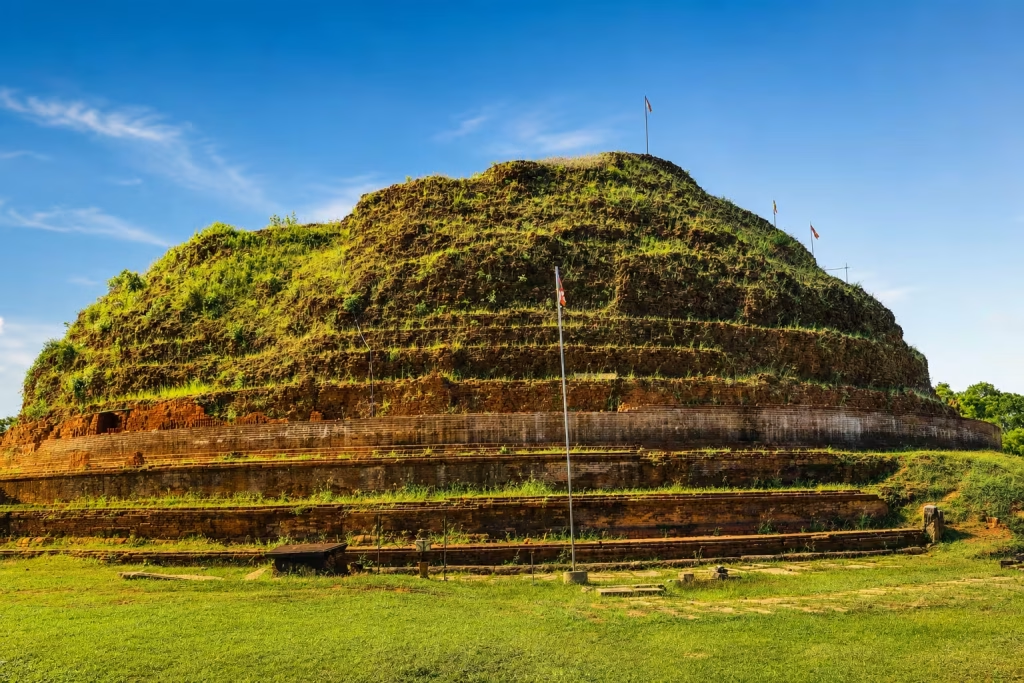
Deegavapi, also written Digavapi or Dighavapi, is one of the most important ancient Buddhist pilgrimage sites in Sri Lanka’s Eastern Province. Located in Ampara District, the site centers on a historic stupa and monastic landscape associated with early Sri Lankan Buddhism. It is far less visited by international travelers than Anuradhapura or Dambulla, which makes it especially meaningful for visitors who want to understand the island’s Buddhist heritage beyond the best-known Cultural Triangle.
Sri Lanka Tourism describes Deegavapi as one of the island’s sixteen sacred pilgrimage locations and connects the stupa with King Saddhatissa in the second century BCE. Traditional Buddhist accounts also associate the place with the Buddha’s third visit to Sri Lanka. These religious traditions remain central to the site’s significance today.
Where is Deegavapi?
Deegavapi is in Ampara District in Eastern Province, within a region of dry-zone agriculture, reservoirs, wildlife areas and ancient religious sites. It can be incorporated into a journey between Ampara, Pottuvil, Arugam Bay and other eastern destinations.
Because public transport to individual archaeological and religious locations can be complicated, a private vehicle or knowledgeable local driver is often the most practical option.
Why Deegavapi is sacred
In Sri Lankan Buddhist tradition, Deegavapi is associated with the Buddha’s third visit to the island. The religious importance of that tradition means the site is not simply an archaeological ruin.
Pilgrims come to worship, make offerings and participate in religious observances. Travelers should approach the complex with the same respect they would show at an active temple in Anuradhapura or Kandy.
King Saddhatissa and the stupa
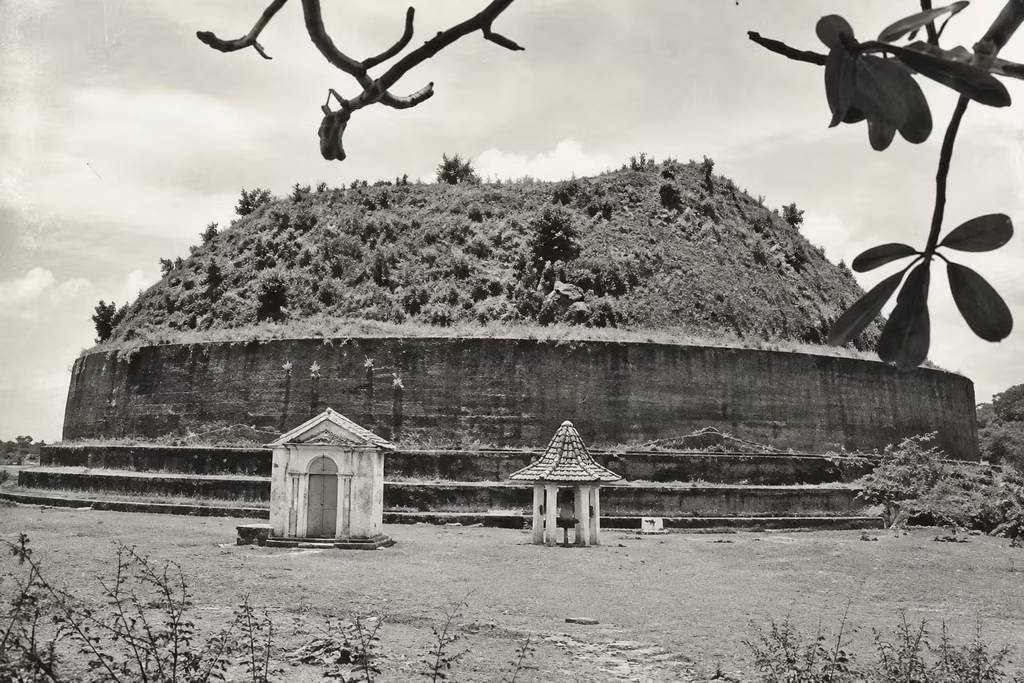
Sri Lanka Tourism attributes construction of the ancient stupa to King Saddhatissa in the second century BCE and states that relics were enshrined there. The wider monastic site developed with royal support across later periods.
Like many ancient religious sites in Sri Lanka, Deegavapi experienced periods of decline and damage before archaeological investigation and restoration efforts brought renewed attention.
Archaeology and restoration
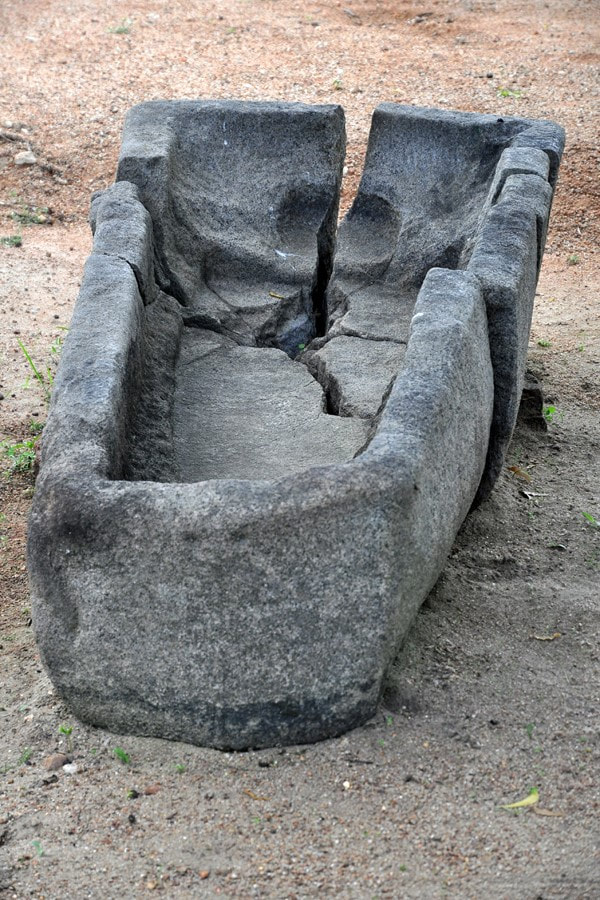
The site includes more than the visible stupa. Ancient monastic complexes typically involved residential buildings, image houses, paths, water systems and other structures supporting religious communities.
Archaeological work can change what areas are accessible. Do not cross barriers or enter excavation zones simply to get closer to ruins.
How to experience the site
Begin with the main sacred area and take time to observe how pilgrims use the space. Then look beyond the central monument toward the surrounding archaeological landscape.
A guide can be useful because many foundations are difficult to interpret without explanation. The value of the site lies in understanding how it functioned, not simply photographing a large stupa.
Temple etiquette
Wear clothing that covers shoulders and knees. Remove shoes and hats in areas where this is customary, and avoid stepping onto sacred platforms unless clearly permitted.
Do not pose with your back directly toward Buddha images in a playful or disrespectful manner. Keep voices low around worshippers and ask before photographing ceremonies.
Heat and practical planning
Eastern Sri Lanka can be hot, and archaeological sites often have exposed areas. Visit earlier in the morning when possible, carry sufficient water and use sun protection.
Easy-to-remove footwear is practical at sacred sites, but bring socks if ground surfaces are hot.
Combining Deegavapi with Ampara
Ampara and the surrounding region contain other Buddhist sites, reservoirs and wildlife landscapes. A dedicated heritage day can connect Deegavapi with selected nearby attractions without attempting to cover the entire district.
Road distances may look manageable, but local routes can be slow. Build in time for meals and unexpected stops.
Combining Deegavapi with Arugam Bay
Travelers staying around Arugam Bay can use a Deegavapi visit to add cultural depth to an otherwise beach- and surf-focused itinerary. Sri Lanka Tourism’s heritage itineraries include Deegavapi within eastern routes that also connect Pottuvil and other sacred locations.
This contrast is one of the strengths of eastern Sri Lanka: wildlife, beaches, surfing and ancient Buddhist heritage can exist within the same broader journey.
Photography
Wide-angle photographs can show the scale of the stupa and open landscape, while a longer lens is useful for architectural details. Early light is often more comfortable and visually attractive than harsh midday sun.
Always prioritize worshippers’ privacy. A devotional act is not automatically public content simply because it takes place outdoors.
Understanding religious tradition and historical evidence
Travel guides should distinguish between archaeological history and sacred tradition without dismissing either. The belief that the Buddha visited Deegavapi is part of Sri Lankan Buddhist religious tradition, while inscriptions, ruins and material remains are studied through archaeology.
Visitors do not need to resolve those different forms of knowledge. Understanding how they coexist is part of learning about a living heritage site.
Responsible heritage tourism
Do not climb ancient masonry, touch fragile surfaces or remove stones. Avoid leaving food packaging, plastic bottles or offerings outside designated areas.
Support local guides and businesses when practical. Eastern archaeological tourism receives fewer international visitors than the Cultural Triangle, so responsible spending can have a noticeable local benefit.
How long should you allow?
Allow at least one to two hours for the main complex, more if you have a guide or strong interest in archaeology. The site works best as part of a half-day or full-day Ampara heritage route.
Dighavapi Weather: 7-Day Forecast
Updated automatically with the latest available forecast for Nintavur, Sri Lanka.
- Rain chance
- 76%
- Rainfall
- 1.7 mm
- Wind
- 13 km/h
- UV index
- 8.1
- Sunrise
- 5:55 AM
- Sunset
- 5:41 PM
- Rain chance
- 87%
- Rainfall
- 1.0 mm
- Wind
- 19 km/h
- UV index
- 8.1
- Sunrise
- 5:55 AM
- Sunset
- 5:41 PM
- Rain chance
- 92%
- Rainfall
- 4.2 mm
- Wind
- 14 km/h
- UV index
- 7.5
- Sunrise
- 5:56 AM
- Sunset
- 5:41 PM
- Rain chance
- 100%
- Rainfall
- 2.8 mm
- Wind
- 11 km/h
- UV index
- 7.6
- Sunrise
- 5:56 AM
- Sunset
- 5:41 PM
- Rain chance
- 96%
- Rainfall
- 10.2 mm
- Wind
- 12 km/h
- UV index
- 7.1
- Sunrise
- 5:57 AM
- Sunset
- 5:42 PM
- Rain chance
- 94%
- Rainfall
- 8.4 mm
- Wind
- 8 km/h
- UV index
- 8.0
- Sunrise
- 5:57 AM
- Sunset
- 5:42 PM
- Rain chance
- 80%
- Rainfall
- 3.6 mm
- Wind
- 10 km/h
- UV index
- 7.5
- Sunrise
- 5:57 AM
- Sunset
- 5:42 PM
Why Deegavapi deserves a place in an eastern itinerary
Deegavapi expands the common map of Sri Lankan Buddhist heritage. It shows that important ancient monasteries and pilgrimage centers were not confined to Anuradhapura, Polonnaruwa and Kandy.
For travelers willing to move beyond the most photographed sites, it provides a quieter, more reflective encounter with the island’s long religious history.
Frequently asked questions
Where is Deegavapi?
It is in Ampara District in Sri Lanka’s Eastern Province.
Why is it important?
It is an ancient Buddhist pilgrimage site associated with a major stupa, early royal patronage and sacred traditions concerning the Buddha’s visits to Sri Lanka.
Is it still a religious site?
Yes. Visitors should treat it as a living place of Buddhist worship as well as an archaeological destination.
Can I visit from Arugam Bay?
Yes. It can be included in a cultural day trip through the wider Ampara region, with realistic allowance for road travel.