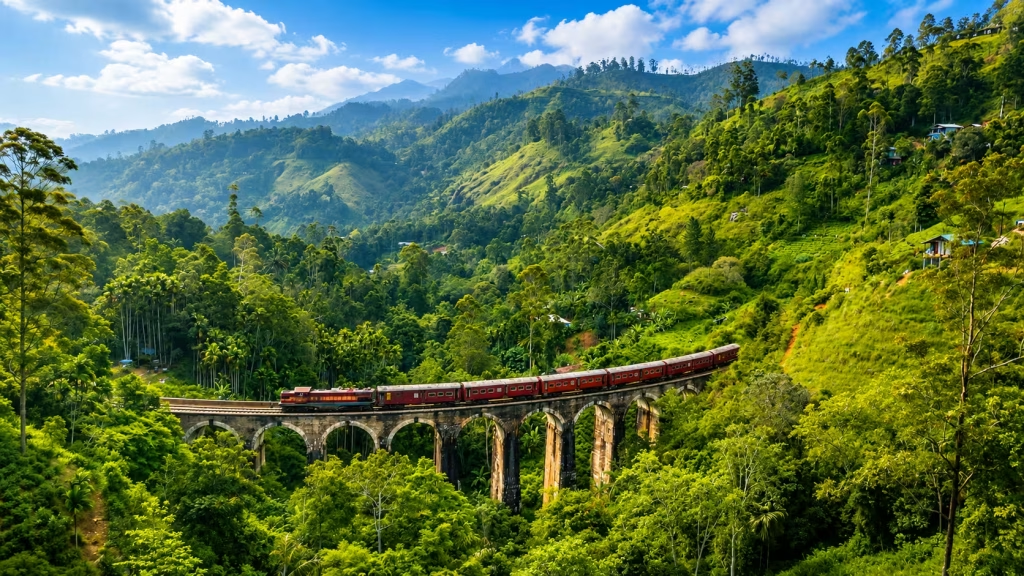
Badulla is one of the most interesting places to slow down in Sri Lanka’s hill country. It is the administrative center of Uva Province, but it feels very different from the better-known resort towns of Ella and Nuwara Eliya. The city sits in a broad valley surrounded by green hills, tea-growing country, waterfalls and mountain roads. For travelers who want to understand the eastern side of Sri Lanka’s central highlands rather than simply pass through it, Badulla makes a rewarding base.
The city is also the eastern terminus of Sri Lanka’s celebrated up-country railway. Reaching Badulla by train can be as memorable as the destination itself, because the route passes through mountain scenery, tea estates, tunnels, valleys and smaller hill towns. Once you arrive, the experience becomes more local: markets, temples, schools, government buildings and everyday city life sit alongside access to some of Uva’s most attractive natural landscapes.
Where is Badulla?
Badulla lies in Uva Province in the central-eastern hill country of Sri Lanka. The district stretches across very different elevations and landscapes, from tea-growing highlands to lower agricultural areas. The city itself is connected by road and rail with Colombo, Kandy, Bandarawela, Ella and other major destinations.
Although Badulla is sometimes treated as a transport endpoint, its location is exactly what makes it useful for a traveler. You can use the city to explore temples, waterfalls, tea country and less-visited mountain routes while still having the services of a substantial regional center.
Why visit Badulla?
Badulla works best for travelers who prefer a more grounded hill-country experience. Ella is famous for cafés, viewpoints and international backpacker culture, while Badulla feels more like a working Sri Lankan city surrounded by dramatic scenery. That contrast can be refreshing after several days in highly touristed areas.
The region also offers variety. In one itinerary you can combine Buddhist heritage, a waterfall walk, train travel, tea landscapes and ordinary local food. You do not need to treat Badulla as a destination with one single iconic attraction. Its strength lies in using the city as a gateway to the wider Uva landscape.
The train journey to Badulla
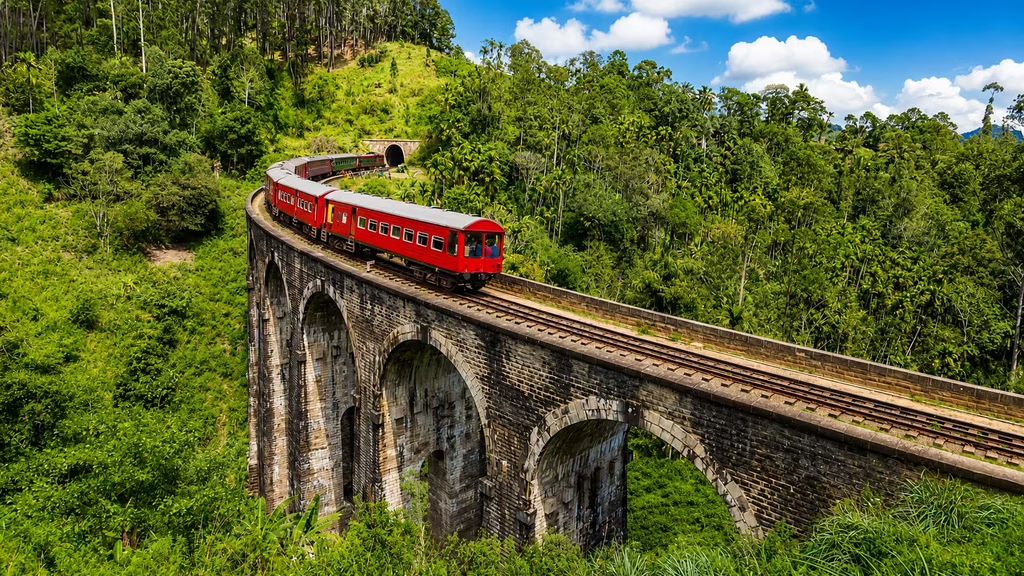
For many visitors, the railway is the most atmospheric way to arrive. The line climbs into the central highlands before continuing through tea country toward Haputale, Bandarawela, Ella and finally Badulla. The journey is long, but the changing scenery gives it a sense of progression that road travel often lacks.
Do not plan a tight schedule immediately after the train is due to arrive. Railway journeys can take longer than expected, and the best way to enjoy this route is without treating every minute as a deadline. Keep important medication, water and essential items with you rather than in luggage that is difficult to access.
If you are traveling during a busy holiday period, reserve seats when reservation options are available. For unreserved travel, expect that trains can be crowded. The scenery is still beautiful without a doorway photograph, and leaning from moving trains is not worth the risk.
Muthiyangana Raja Maha Vihara
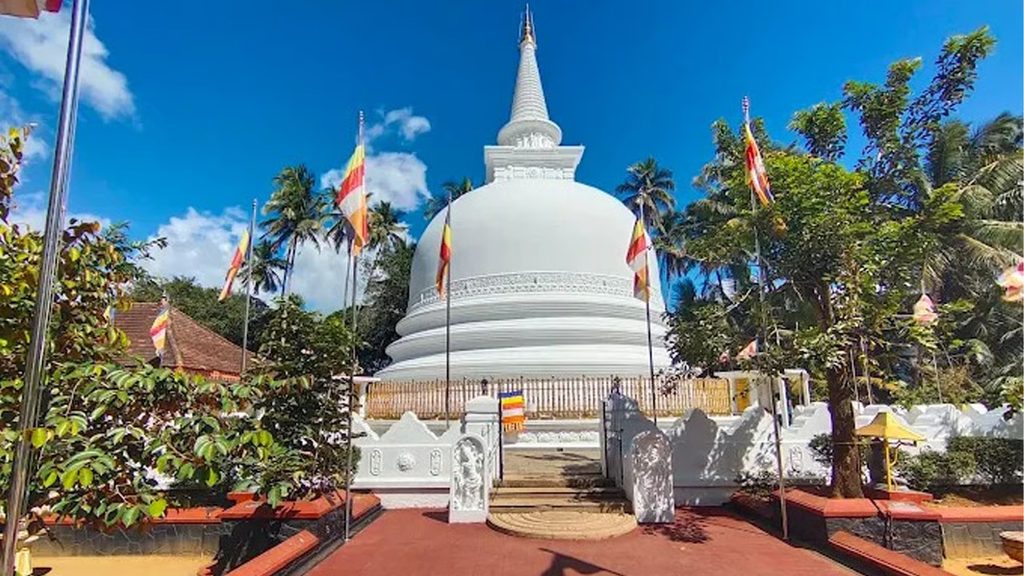
Muthiyangana Raja Maha Vihara is one of the city’s most important Buddhist sites and gives visitors an immediate sense of Badulla’s religious life. It is a living temple rather than an archaeological display, so the experience is shaped by worship, offerings, monks and local devotees.
Dress modestly, remove footwear where required and keep voices low around worshippers. Travelers who have already visited Anuradhapura or Kandy may find the smaller scale useful because it allows more attention to everyday religious practice rather than monumental architecture alone.
Dunhinda Falls
Dunhinda Falls is one of the best-known natural attractions near Badulla. The waterfall descends through a steep, forested setting and is reached by a walking route rather than by driving directly to the base. The path and viewing conditions can change after rain, so footwear with grip is important.
Take water, allow more time than a quick photo stop, and avoid leaving the marked route in search of private viewpoints. Waterfalls can become more dangerous after heavy rainfall because rocks become slippery and stream levels can change quickly. The safest experience is usually from established observation points.
Dowa Rock Temple and nearby heritage
Dowa Rock Temple, between Bandarawela and Badulla, is another useful stop in the region. It is associated with a rock-cut Buddha image and cave-temple tradition. If you are traveling overland between the two towns, it can be included without creating a major detour.
As at other Buddhist temples, visitors should follow local etiquette. Cover shoulders and knees, remove shoes when requested, avoid using sacred images as props for humorous photographs, and ask before photographing people at prayer.
Tea country and agriculture
Badulla District is closely associated with tea and vegetable cultivation in its upper areas, while lower elevations include paddy and other agriculture. This gives road journeys around the district strong visual variety. Tea-covered slopes may dominate one section of the route, while another opens toward wider valleys and cultivated land.
If you visit a tea estate or factory, choose an operation that clearly welcomes visitors rather than entering working property without permission. Tea estates are workplaces as well as scenic landscapes, and photography of workers should be done respectfully.
Badulla city life
One reason to stay overnight is to experience the city beyond attractions. Local markets, bakeries, rice-and-curry restaurants and busy streets reveal the role Badulla plays for the wider district. Early morning and late afternoon are particularly good times to walk through central areas before or after day trips.
This is also a practical place to reorganize a longer journey. You can buy supplies, use transport connections and continue toward Ella, Mahiyanganaya, the east coast or deeper into the hill country depending on your route.
How long should you stay?
One night is enough if you mainly want to see the city and visit a nearby attraction. Two nights are better if you want Dunhinda Falls, a temple visit and a slower look at the region. Travelers interested in photography, railways or rural Uva may find three nights worthwhile.
Do not build a plan around covering every waterfall and viewpoint in a single day. Mountain roads are slower than their distance suggests, and weather can change quickly.
Weather and what to pack
Badulla’s hill-country setting means temperatures can feel more comfortable than on Sri Lanka’s lowland coast, but strong sun is still possible. Rain can arrive suddenly, particularly in mountainous terrain. Carry a light rain layer, water, sun protection and shoes suitable for uneven ground.
If your itinerary includes waterfalls or forest paths, pack a dry bag or simple waterproof cover for electronics. A light layer for cooler evenings can also be useful, especially if you are continuing to higher elevations.
Badulla Weather: 7-Day Forecast
Updated automatically with the latest available forecast for Badulla, Sri Lanka.
- Rain chance
- 100%
- Rainfall
- 8.0 mm
- Wind
- 8 km/h
- UV index
- 8.3
- Sunrise
- 5:58 AM
- Sunset
- 5:44 PM
- Rain chance
- 80%
- Rainfall
- 2.6 mm
- Wind
- 9 km/h
- UV index
- 8.3
- Sunrise
- 5:58 AM
- Sunset
- 5:45 PM
- Rain chance
- 100%
- Rainfall
- 10.3 mm
- Wind
- 7 km/h
- UV index
- 8.0
- Sunrise
- 5:59 AM
- Sunset
- 5:45 PM
- Rain chance
- 100%
- Rainfall
- 15.9 mm
- Wind
- 5 km/h
- UV index
- 7.8
- Sunrise
- 5:59 AM
- Sunset
- 5:45 PM
- Rain chance
- 100%
- Rainfall
- 25.5 mm
- Wind
- 4 km/h
- UV index
- 6.0
- Sunrise
- 5:59 AM
- Sunset
- 5:45 PM
- Rain chance
- 100%
- Rainfall
- 47.4 mm
- Wind
- 6 km/h
- UV index
- 6.4
- Sunrise
- 6:00 AM
- Sunset
- 5:45 PM
- Rain chance
- 92%
- Rainfall
- 5.4 mm
- Wind
- 7 km/h
- UV index
- 6.6
- Sunrise
- 6:00 AM
- Sunset
- 5:46 PM
Getting around
Tuk-tuks are useful for short local journeys, while a car with driver gives more flexibility for waterfalls and regional sights. Public buses connect Badulla with surrounding towns but can be crowded and may not suit travelers carrying large luggage.
Agree on fares with drivers before departure when a meter is not being used. For longer day trips, confirm whether waiting time, parking and return travel are included.
Responsible travel in Badulla
Support locally run restaurants, guides and accommodation where they fit your needs. Carry your litter out of natural areas, and avoid leaving plastic or food waste at waterfall viewpoints. When photographing people, especially workers or worshippers, ask first.
The hill country is not an empty scenic backdrop. Tea estates, farms, temples and villages are places where people live and work. Treating the region that way leads to a more respectful and much more interesting journey.
Frequently asked questions
Is Badulla worth visiting if I am already staying in Ella?
Yes, particularly if you want a less tourist-oriented city experience, Buddhist heritage, Dunhinda Falls or the full railway journey to the end of the up-country line.
Can Badulla be visited as a day trip?
It can, especially from Ella or Bandarawela, but an overnight stay gives you more time and reduces the need to rush mountain roads and walking routes.
Is the train the best way to reach Badulla?
The railway is one of the most scenic options, but road travel can be faster or more flexible depending on your starting point and itinerary. Choose based on the experience you want rather than assuming one method is always best.
What is the main reason to stay in Badulla?
Badulla is best used as a practical base for exploring Uva’s waterfalls, temples, rail scenery and agricultural hill-country landscapes while experiencing a working regional city.