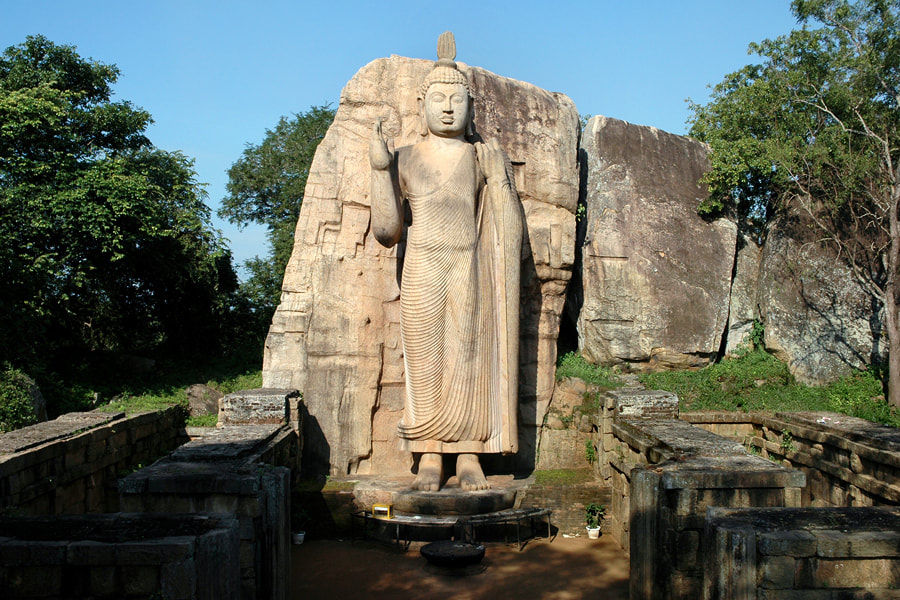
The Avukana Buddha Statue is one of Sri Lanka’s finest surviving examples of an ancient standing Buddha carved from rock. Located near Kala Wewa in the Anuradhapura District, the figure combines monumental scale with carefully controlled proportions and a calm expression that rewards close observation.
The site is sometimes written as Aukana, while Avukana is another common English spelling. Both refer to the same celebrated sculpture and temple area.
History of the Avukana Buddha
The statue is generally dated to the fifth century CE and associated with the reign of King Dhatusena. Sri Lanka Tourism describes it as a standing rock-cut image more than 11 metres high, set on a lotus pedestal.
The figure was carved from a large granite rock face. A narrow connection remains at the back, so although the statue appears almost free-standing, it is still linked to the original rock.
What to look for
Step back first to appreciate the full proportions, then look more closely at the treatment of the robe, hands, face and pedestal. The sculptor created a sense of vertical balance without making the figure appear rigid.
The gesture of the raised hand is usually described as a variation of a protective or blessing gesture. The exact terminology may differ between guidebooks, but the overall effect is one of reassurance and composure.
The relationship with Kala Wewa
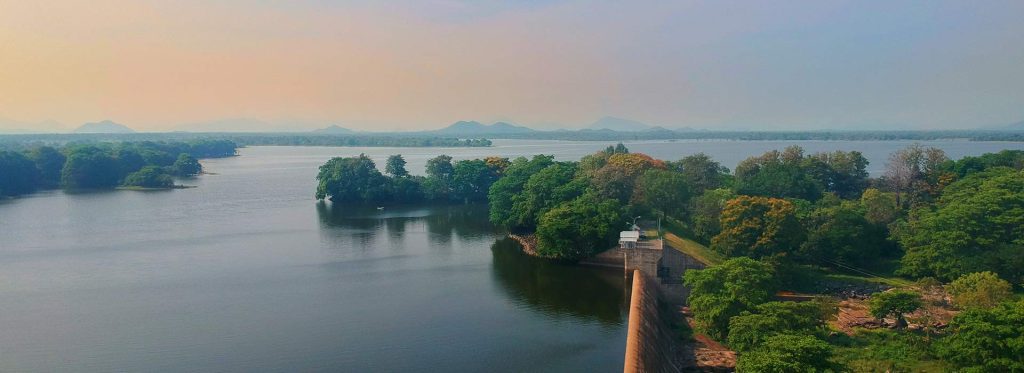
Avukana is close to the great Kala Wewa reservoir, another achievement associated with the period of King Dhatusena. Visiting both places can help travelers connect religious art with the hydraulic engineering and state-building achievements of ancient Sri Lanka.
A living religious site
The statue is not simply an art object. It stands within a Buddhist religious setting, so the atmosphere and etiquette matter. Remove shoes where required, cover shoulders and knees, and avoid loud behavior around worshippers.
Photography is generally part of the visitor experience, but respectful positioning is important. Avoid poses that treat the Buddha image as a casual backdrop.
When to visit
Morning or later afternoon can be more comfortable than the hottest part of the day and may provide softer light on the stone. Weather, ceremonies and site access can change, so check local conditions if your itinerary is tightly timed.
Avukana Buddha Statue Weather: 7-Day Forecast
Updated automatically with the latest available forecast for Kalawewa, Sri Lanka.
- Rain chance
- 95%
- Rainfall
- 8.6 mm
- Wind
- 11 km/h
- UV index
- 7.9
- Sunrise
- 6:01 AM
- Sunset
- 5:45 PM
- Rain chance
- 90%
- Rainfall
- 2.7 mm
- Wind
- 17 km/h
- UV index
- 7.5
- Sunrise
- 6:02 AM
- Sunset
- 5:45 PM
- Rain chance
- 97%
- Rainfall
- 10.9 mm
- Wind
- 12 km/h
- UV index
- 7.4
- Sunrise
- 6:02 AM
- Sunset
- 5:45 PM
- Rain chance
- 100%
- Rainfall
- 18.3 mm
- Wind
- 13 km/h
- UV index
- 7.4
- Sunrise
- 6:02 AM
- Sunset
- 5:45 PM
- Rain chance
- 95%
- Rainfall
- 41.4 mm
- Wind
- 15 km/h
- UV index
- 7.4
- Sunrise
- 6:03 AM
- Sunset
- 5:46 PM
- Rain chance
- 98%
- Rainfall
- 60.9 mm
- Wind
- 11 km/h
- UV index
- 7.3
- Sunrise
- 6:03 AM
- Sunset
- 5:46 PM
- Rain chance
- 90%
- Rainfall
- 7.8 mm
- Wind
- 8 km/h
- UV index
- 7.9
- Sunrise
- 6:04 AM
- Sunset
- 5:46 PM
Combining Avukana with the Cultural Triangle
Avukana can be included in a route linking Dambulla, Anuradhapura and other Cultural Triangle destinations. It is especially worthwhile for travelers interested in sculpture, Buddhism and ancient engineering.
Because it sits away from the largest archaeological complexes, the visit can feel calmer than the busiest heritage sites.
The artistic achievement of a monumental rock-cut Buddha
Avukana is impressive not only because of its height but because the sculptor created a calm, balanced human form at monumental scale. Large rock sculptures can easily feel heavy or rigid. At Avukana, the treatment of the robe, shoulders, face and stance creates a controlled vertical rhythm that rewards close observation.
Walk around the permitted viewing area rather than looking only from directly in front. Changes in angle reveal how the figure remains connected to the rock at the back and how carefully the body was separated from the surrounding stone.
King Dhatusena and the fifth-century context
The statue is traditionally associated with the period of King Dhatusena in the fifth century CE. That era is also remembered for major hydraulic works, including Kala Wewa. Seeing Avukana and the reservoir within the same regional journey helps connect religious patronage, engineering and royal authority rather than treating the sculpture as an isolated artwork.
Historical dating and artistic interpretation can be complex, and visitors may encounter slightly different descriptions in guidebooks. The safest approach is to distinguish established archaeological understanding from later legends about individual sculptors or competitions.
Reading the robe and hand gesture
One of the most admired features is the way the robe appears to cling to the body while still being represented in stone. Fine carved lines create the suggestion of fabric without overwhelming the figure’s overall simplicity. The raised hand is generally interpreted as a gesture of reassurance or blessing, although terminology can vary between sources.
The face is equally important. From a respectful distance, look at the lowered gaze and restrained expression. The effect is meditative rather than theatrical, which helps explain why the statue remains powerful even for visitors who know little about Buddhist art.
The lotus pedestal and the surrounding sacred space
The figure stands on a lotus pedestal, a common symbol in Buddhist art. Do not focus so tightly on the body that you miss the base, the rock setting and the temple environment around it. The sculpture belongs to a religious landscape and should be experienced together with that context.
Combining Avukana with Kala Wewa
Kala Wewa provides a valuable second stop because it represents another dimension of the same broad historical period. Ancient reservoirs were essential to dry-zone agriculture and state organization. Visiting a great work of sculpture and a great work of hydraulic engineering on the same day creates a more complete understanding of the society that produced them.
Road distances in the Cultural Triangle can take longer than expected, so avoid building a schedule that includes Avukana, Anuradhapura, Dambulla and several other major sites in a single rushed day. Avukana is most rewarding when you have time to observe rather than merely record that you were there.
Photography without losing the atmosphere
Morning and later-afternoon light can reveal texture in the stone, but the exact direction and quality of light change seasonally. A moderate telephoto or standard lens is useful for details, while a wider lens can include the setting. Avoid using worshippers as foreground props without permission.
Most importantly, do not pose in ways that trivialize the Buddha image. In Sri Lanka, turning your back toward a Buddha statue for a playful photograph can be considered disrespectful. Follow local signs and guidance.
Temple etiquette
Wear clothing that covers shoulders and knees. Remove shoes and hats where required. Stone surfaces can become hot in strong sun, so socks can sometimes make walking more comfortable after shoes are removed. Speak quietly and give space to devotees making offerings.
Who will appreciate Avukana most?
The site is particularly rewarding for travelers interested in Buddhist art, ancient engineering, sculpture or the Cultural Triangle. It also suits visitors who prefer a quieter heritage experience than the largest archaeological cities. The monument can be understood in less time than Anuradhapura, but depth comes from careful observation rather than speed.
Why Avukana should not be reduced to a height statistic
Calling Avukana simply a very tall Buddha statue misses its real importance. Its significance lies in the combination of scale, craftsmanship, religious meaning and historical context. The sculptor transformed a granite outcrop into an image that has remained a focus of admiration and devotion for centuries. That combination is what makes Avukana one of Sri Lanka’s essential works of ancient sculpture.
Frequently asked questions
How tall is the Avukana Buddha Statue?
The standing figure is more than 11 metres high, with the overall monument reaching roughly 12 metres when the pedestal is considered.
Was the statue carved from one rock?
It was carved from a large granite rock face and remains connected to that rock by a narrow section at the back.
Is Avukana near Anuradhapura?
It is in the Anuradhapura District near Kala Wewa and Kekirawa, and can be incorporated into a Cultural Triangle itinerary.