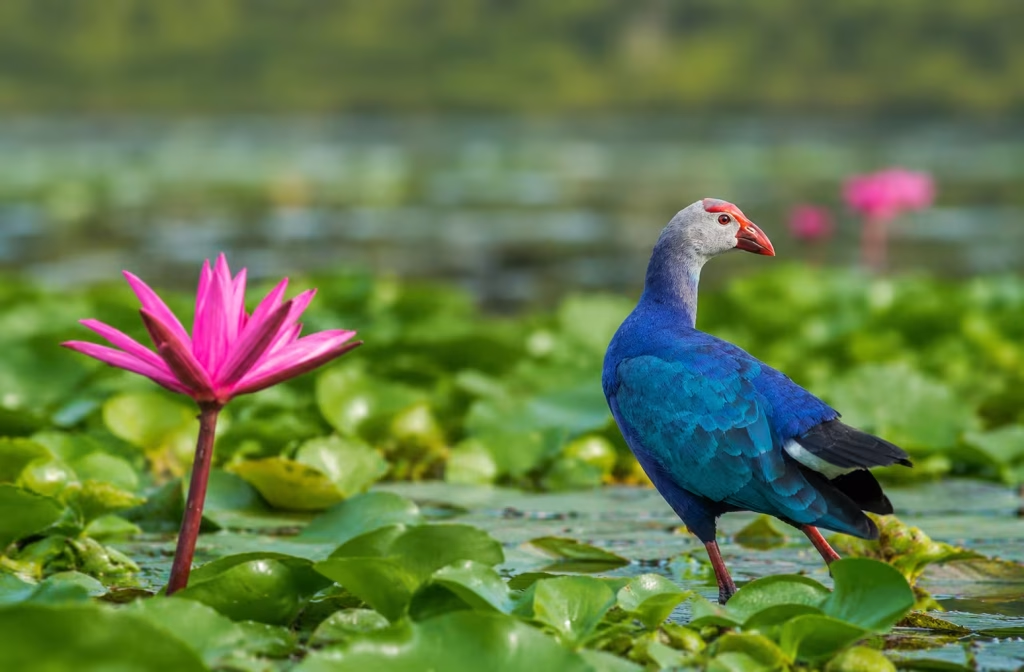
Bellanwila–Attidiya Wetland Sanctuary is one of the most valuable reminders that Colombo’s metropolitan region is not only roads, buildings and commercial districts. South of the city center, this protected wetland preserves freshwater marsh, channels, swampy vegetation and habitat used by a wide range of birds and other wildlife. It offers travelers a chance to experience nature without committing to a long journey to a national park.
The sanctuary is particularly useful for birdwatchers, photographers and visitors interested in urban ecology. It is not a manicured botanical garden and should not be approached with expectations of paved visitor circuits or guaranteed close wildlife encounters. Its appeal comes from observing a functioning wetland within a densely populated area and understanding the pressures such ecosystems face.
Where is Bellanwila–Attidiya?
The sanctuary lies in Colombo District around Bellanwila and Attidiya, within the wider urban area south of central Colombo. It is close to Bellanwila Raja Maha Viharaya and can be reached by road from Colombo, Dehiwala, Nugegoda and surrounding suburbs.
Traffic can make a short map distance take much longer than expected, especially during weekday rush periods. An early start is useful both for birds and for easier road travel.
Why this wetland matters
Urban wetlands perform several jobs at once. They provide habitat, store and move water, support fish and invertebrates, and create green space inside heavily developed areas. A scientific survey published in 2010 documented substantial vertebrate and butterfly diversity at Bellanwila–Attidiya while also warning about habitat degradation, pollution and waste.
That conservation story is part of the visit. Travelers should not expect a pristine wilderness isolated from the city. Roads, homes and urban pressures are visible. The sanctuary demonstrates why protecting remaining wetland habitat inside a city is difficult and important.
Birdwatching at Bellanwila–Attidiya
Wetland birds are the main attraction. Depending on season and water conditions, visitors may see herons, egrets, kingfishers, rails, waterhens, cormorants, pelicans and smaller birds using reeds and scrub. Migratory species can add variety during the appropriate season.
Use binoculars rather than walking closer whenever possible. Birds feeding in shallow water often change behavior when people approach, and repeatedly disturbing them reduces both the quality of observation and the value of the habitat.
Best time of day
Early morning is usually the strongest choice. Temperatures are lower, traffic is lighter and many birds are actively feeding. Late afternoon can also be rewarding and may produce attractive warm light over open water.
Midday is not useless, but bird activity can appear quieter and the heat may be uncomfortable in exposed sections. If photography is your priority, softer morning or evening light is generally easier to work with.
Attidiya Weather: 7-Day Forecast
Updated automatically with the latest available forecast for Attidiya, Sri Lanka.
- Rain chance
- 17%
- Rainfall
- 0.0 mm
- Wind
- 14 km/h
- UV index
- 8.2
- Sunrise
- 6:01 AM
- Sunset
- 5:49 PM
- Rain chance
- 91%
- Rainfall
- 0.4 mm
- Wind
- 11 km/h
- UV index
- 8.1
- Sunrise
- 6:02 AM
- Sunset
- 5:49 PM
- Rain chance
- 96%
- Rainfall
- 2.7 mm
- Wind
- 15 km/h
- UV index
- 7.4
- Sunrise
- 6:02 AM
- Sunset
- 5:49 PM
- Rain chance
- 83%
- Rainfall
- 5.5 mm
- Wind
- 10 km/h
- UV index
- 8.0
- Sunrise
- 6:02 AM
- Sunset
- 5:49 PM
- Rain chance
- 96%
- Rainfall
- 2.1 mm
- Wind
- 11 km/h
- UV index
- 8.0
- Sunrise
- 6:03 AM
- Sunset
- 5:50 PM
- Rain chance
- 100%
- Rainfall
- 1.5 mm
- Wind
- 13 km/h
- UV index
- 7.7
- Sunrise
- 6:03 AM
- Sunset
- 5:50 PM
- Rain chance
- 100%
- Rainfall
- 6.9 mm
- Wind
- 7 km/h
- UV index
- 8.2
- Sunrise
- 6:04 AM
- Sunset
- 5:50 PM
What to bring
A compact pair of binoculars makes the biggest difference. Bring drinking water, insect repellent, sun protection and footwear suitable for damp or uneven ground. Neutral, lightweight clothing is comfortable and less visually disruptive.
If you use a camera, a telephoto lens allows you to photograph birds without closing the distance. A phone is more than sufficient for landscape images and documenting plants or interpretation features.
Wetland photography
Rather than trying only for close bird portraits, photograph the habitat as well. Reeds, channels, reflections and the contrast between wetland vegetation and the surrounding city tell the fuller story of Bellanwila–Attidiya.
Avoid playback calls designed to lure birds toward the camera. Do not use flash around nesting or resting wildlife, and never step into marsh vegetation to improve an angle.
Seasonal variation
A wetland changes constantly. Water depth, rainfall and vegetation influence which areas attract birds. Migratory species are seasonal, while resident species may shift between feeding areas throughout the year.
This means two visits can look very different. A quiet morning does not indicate that the sanctuary has no wildlife; observation sometimes requires waiting and scanning rather than constant walking.
Combining the sanctuary with Bellanwila Temple
Bellanwila Raja Maha Viharaya is nearby and can be combined with a wetland visit for a balanced half day. The temple is an important Buddhist site, so a nature-focused morning can be followed by a cultural visit without a long transfer.
Dress respectfully if entering the temple. Cover shoulders and knees, remove shoes where required and avoid treating religious spaces as extensions of a photography tour.
Urban pressures and conservation
Bellanwila–Attidiya has faced pollution, waste dumping and pressure from surrounding development. Visitors can contribute positively by taking out all waste, staying on established access routes and refusing to disturb wildlife for photographs.
Do not feed birds. Feeding can alter natural behavior and concentrate animals in unhealthy ways. It also encourages wildlife to approach roads and people.
Is it suitable for first-time birdwatchers?
Yes. An urban wetland is an excellent place to begin because several broad bird groups can be learned in a relatively compact area. Start with obvious differences: long-legged waders, diving birds, kingfishers, raptors and small reed birds.
You do not need to identify everything immediately. Note color, bill shape, size and behavior, then use a field guide later. Learning to observe is more important than completing a checklist.
How much time should you allow?
Two to three hours is comfortable for most visitors. Dedicated birders may stay longer, while travelers combining the sanctuary with Bellanwila Temple can easily build a half-day outing.
Do not schedule an airport transfer immediately afterward. Colombo traffic is unpredictable, and birdwatching is far more enjoyable without watching the clock.
Responsible visitor behavior
Keep voices low, remain on established routes and avoid entering private property. Residential areas border parts of the wetland, so normal respect for local communities is essential.
Never leave plastic, food containers or cigarette waste. Wetlands collect material carried by water, which means litter dropped nearby can enter the ecosystem even when it does not appear to land directly in the marsh.
Why Bellanwila–Attidiya is worth visiting
The sanctuary provides a different kind of Sri Lankan wildlife experience. There are no safari jeeps and no promise of dramatic large mammals. Instead, it rewards attention to water, vegetation, bird behavior and the fragile relationship between a growing city and its remaining natural systems.
For travelers with limited time in Colombo, that makes Bellanwila–Attidiya especially valuable. It proves that meaningful nature observation does not always require traveling hundreds of kilometers.
Frequently asked questions
Is Bellanwila–Attidiya close to Colombo?
Yes. It lies within the greater Colombo urban area, making it suitable for a morning or half-day nature excursion.
Do I need binoculars?
You can visit without them, but binoculars greatly improve birdwatching and allow you to keep a respectful distance from wildlife.
Is wildlife guaranteed?
No specific species is guaranteed. Bird activity changes with season, weather, water level and time of day.
Can I combine it with another attraction?
Yes. Bellanwila Raja Maha Viharaya is nearby and makes a natural cultural addition to the same outing.