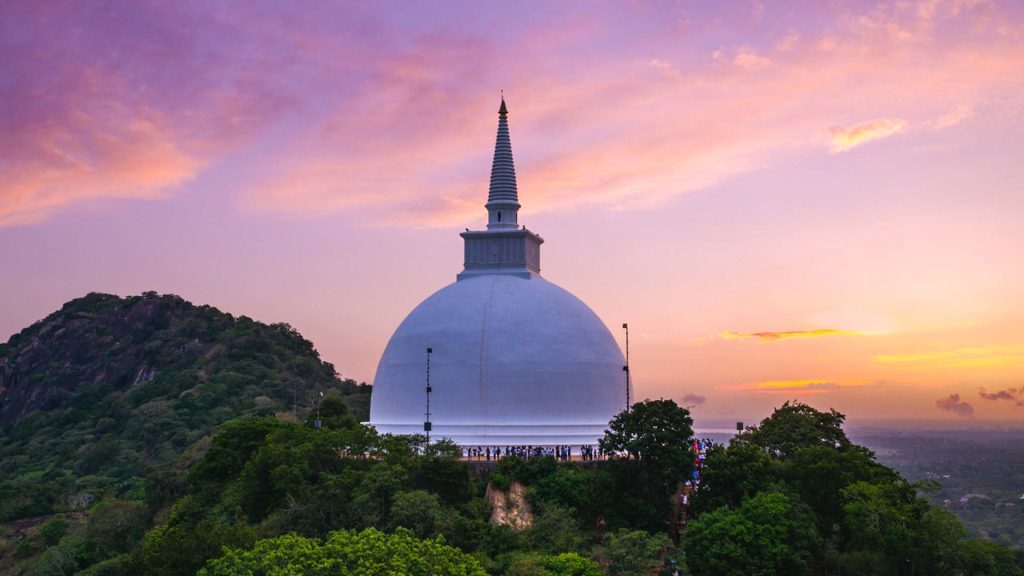
Anuradhapura is one of the essential places for understanding Sri Lanka. The ancient city was a political capital, a center of Buddhist learning and worship, and the heart of a sophisticated civilization that built enormous stupas, monasteries, reservoirs and planned urban spaces.
Today the Sacred City is both an archaeological landscape and a living pilgrimage center. That combination makes Anuradhapura different from a conventional ruin: worship continues beside structures that are more than a thousand years old.
Why Anuradhapura is a UNESCO World Heritage Site
UNESCO inscribed the Sacred City of Anuradhapura on the World Heritage List in 1982. The city developed around a cutting of the sacred Bodhi tree brought to Sri Lanka in the third century BCE and flourished as a political and religious center for roughly 1,300 years.
The surviving landscape includes stupas, monasteries, palaces, ponds, carvings and irrigation works that together reveal the scale of ancient Sri Lankan urban and religious life.
Sri Maha Bodhi
Sri Maha Bodhi is one of the most sacred Buddhist sites in Sri Lanka. The tree is traditionally regarded as having grown from a cutting of the Bodhi tree associated with the Buddha’s enlightenment, brought to the island by Sanghamitta.
This is first and foremost a place of worship. Expect pilgrims, offerings and religious observances, and allow the atmosphere of devotion to shape how you visit.
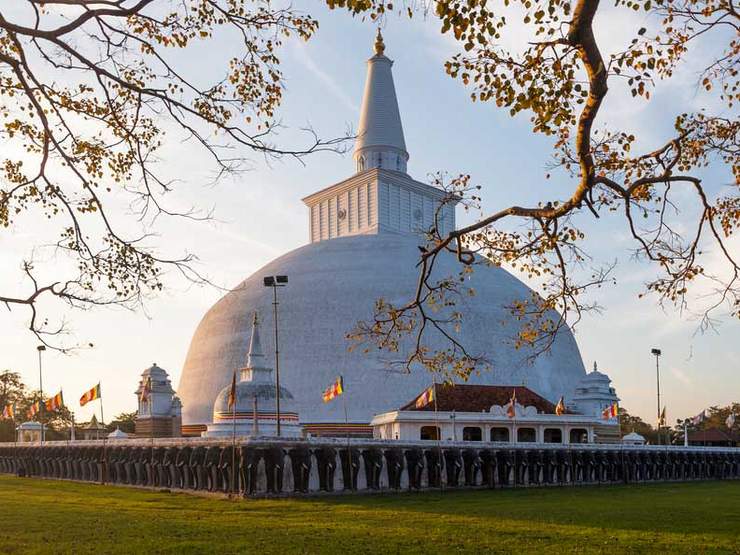
Ruwanwelisaya
Ruwanwelisaya is one of Anuradhapura’s great stupas and remains an active focus of Buddhist worship. The white dome, broad terraces and procession of elephant sculptures make it one of the most visually memorable monuments in the city.
Abhayagiri and Jetavanaramaya
Abhayagiri and Jetavanaramaya demonstrate the scale of Anuradhapura’s monastic institutions. Their monumental brick stupas once stood at the centers of extensive religious complexes that included residences, water systems, image houses and other facilities.
Do not rush from stupa to stupa. The quieter ruins around them often reveal more about how ancient monastic communities functioned.
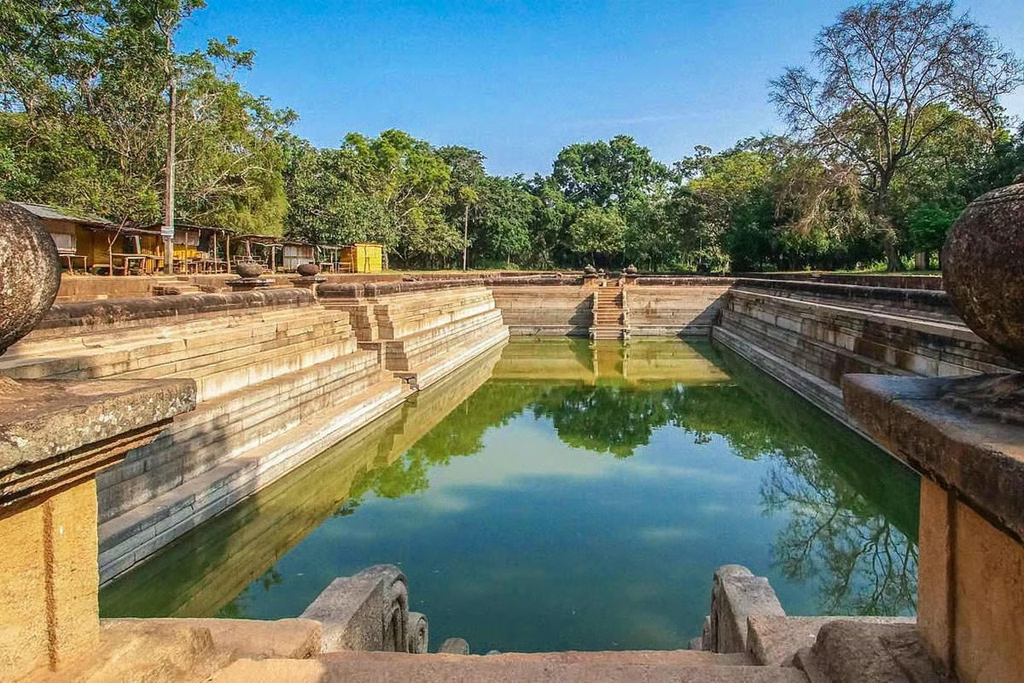
Kuttam Pokuna and stone craftsmanship
The Twin Ponds, known as Kuttam Pokuna, are celebrated examples of ancient hydraulic and stone engineering. Elsewhere in the city, moonstones, guard stones, balustrades and carved pillars show the artistic sophistication of the period.
Anuradhapura Weather: 7-Day Forecast
Updated automatically with the latest available forecast for Anuradhapura, Sri Lanka.
- Rain chance
- 99%
- Rainfall
- 10.8 mm
- Wind
- 13 km/h
- UV index
- 7.9
- Sunrise
- 6:02 AM
- Sunset
- 5:45 PM
- Rain chance
- 73%
- Rainfall
- 1.1 mm
- Wind
- 18 km/h
- UV index
- 7.9
- Sunrise
- 6:02 AM
- Sunset
- 5:45 PM
- Rain chance
- 95%
- Rainfall
- 10.5 mm
- Wind
- 15 km/h
- UV index
- 7.1
- Sunrise
- 6:03 AM
- Sunset
- 5:45 PM
- Rain chance
- 98%
- Rainfall
- 13.3 mm
- Wind
- 14 km/h
- UV index
- 7.3
- Sunrise
- 6:03 AM
- Sunset
- 5:45 PM
- Rain chance
- 97%
- Rainfall
- 16.8 mm
- Wind
- 14 km/h
- UV index
- 7.2
- Sunrise
- 6:04 AM
- Sunset
- 5:46 PM
- Rain chance
- 94%
- Rainfall
- 28.5 mm
- Wind
- 9 km/h
- UV index
- 7.2
- Sunrise
- 6:04 AM
- Sunset
- 5:46 PM
- Rain chance
- 86%
- Rainfall
- 12.6 mm
- Wind
- 7 km/h
- UV index
- 7.8
- Sunrise
- 6:05 AM
- Sunset
- 5:46 PM
How much time do you need?
A full day allows you to see the principal monuments, but two days provides a much more comfortable experience. The archaeological zone is extensive, and tropical heat can make continuous sightseeing tiring.
Bicycles, tuk-tuks and hired vehicles are commonly used between monuments. Choose transport based on your fitness, weather and the amount of time you have.
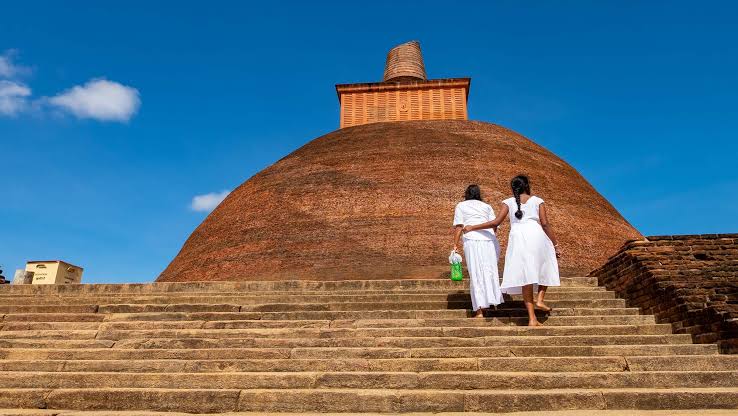
Dress and behavior
Many of Anuradhapura’s most important monuments are active sacred sites. Cover shoulders and knees, remove shoes and hats where required, and avoid posing disrespectfully with Buddha images.
Stone surfaces can become extremely hot in the middle of the day. Socks may be useful where footwear must be removed, provided local rules allow them.
Planning around the weather
Early morning and late afternoon can be more comfortable for walking and photography. Carry water and sun protection, but keep food and drink away from areas where local religious rules restrict them.
How Anuradhapura became one of Sri Lanka’s great capitals
Anuradhapura served as a major political and religious center for more than a millennium. Its long history produced royal monuments, enormous Buddhist stupas, monasteries, reservoirs and an urban landscape that continued to evolve across generations. The surviving archaeological zone is therefore not the product of one ruler or one century. It is a layered city whose monuments record changing styles, institutions and priorities.
UNESCO inscribed the Sacred City of Anuradhapura on the World Heritage List in 1982. Its significance is closely tied to Buddhism, including the tradition of the Sri Maha Bodhi, grown from a cutting associated with the Bodhi tree under which the Buddha attained enlightenment. The sacred city remains a major place of pilgrimage today.
The three monumental monastic traditions
Visitors often hear about Mahavihara, Abhayagiri and Jetavana. These were not simply three stupas; they represented major monastic institutions with extensive communities and associated buildings. Understanding them as institutions makes the city easier to read. The monumental stupas were focal points within much larger religious landscapes.
Abhayagiri developed important international connections, while Jetavanaramaya became associated with one of the tallest brick monuments of the ancient world. Around these great structures were image houses, residences, ponds, assembly spaces and service buildings. Allow time to notice those less dramatic remains.
Water engineering and the survival of a capital
A large dry-zone city required reliable water management. Reservoirs, channels, ponds and smaller hydraulic features supported both urban life and agriculture. The famous tanks around Anuradhapura are therefore not separate from the city’s history; they were fundamental to its ability to sustain a large population and religious institutions.
Travelers interested in engineering should look beyond the major monuments. Bathing ponds such as Kuttam Pokuna, stone conduits and carefully planned drainage features reveal how water was managed at different scales.
Planning a one-day visit
A single day is possible if your goal is to see the principal landmarks, but it requires prioritization. Begin with one or two of the most sacred active sites, then choose a major monastic complex such as Abhayagiri or Jetavana. Include at least one water-management feature or museum so the day is not limited to stupas.
Use a tuk-tuk, bicycle or vehicle to bridge longer distances. Midday heat can be intense, so save exposed archaeological areas for more comfortable periods when possible. A rushed circuit that tries to photograph every monument usually provides less understanding than a smaller number of carefully chosen stops.
Planning a two-day visit
Two days allow the city to unfold more naturally. One day can focus on the sacred core and major stupas, while the second explores Abhayagiri, museums, ponds and quieter archaeological areas. This also gives you flexibility if rain, heat or religious events affect access.
An overnight stay offers another advantage: early morning and evening can be atmospheric around active religious sites, with pilgrims, offerings and changing light giving a very different impression from the middle of the day.
Cycling around the ancient city
Cycling is popular because many sites are spread across relatively flat terrain. It can be an excellent option for confident riders, but remember that roads are shared with motor traffic and local users. Wear sun protection, carry water and secure your bicycle when entering monuments. During the hottest hours, cycling can become tiring quickly.
Religious etiquette in Anuradhapura
This is not merely an archaeological park. Sri Maha Bodhi, Ruwanwelisaya and other places are active centers of worship. Wear clothing that covers shoulders and knees, remove footwear and hats where required, and walk around sacred structures in the direction indicated by local custom or signage. Avoid standing directly in front of a Buddha image for playful or disrespectful poses.
Photography should never interfere with worship. If a ceremony or offering is taking place, give participants space and avoid using flash at close range.
What to carry
Water, sun protection and easy-to-remove footwear are especially useful. Socks can help on hot stone surfaces where shoes must be left outside, although rules vary by location. A hat is valuable between monuments but should be removed in sacred areas when requested.
Understanding Anuradhapura beyond ruins
The most rewarding way to experience Anuradhapura is to recognize that three cities overlap: the ancient royal capital, the archaeological landscape and the living sacred city. Pilgrims, monks, residents and travelers all use the space differently. Respecting those layers turns a monument tour into a much deeper introduction to Sri Lankan history and Buddhist culture.
Frequently asked questions
Is Anuradhapura still a religious city?
Yes. It is both an archaeological World Heritage Site and a major living Buddhist pilgrimage center.
Can I visit Anuradhapura in one day?
You can see the main monuments in a day, but a slower two-day visit gives more time for the extensive monastic zones and museums.
Is Anuradhapura suitable for cycling?
Many travelers use bicycles because the area is spread out. Consider heat, traffic, rain and your own comfort before choosing this option.