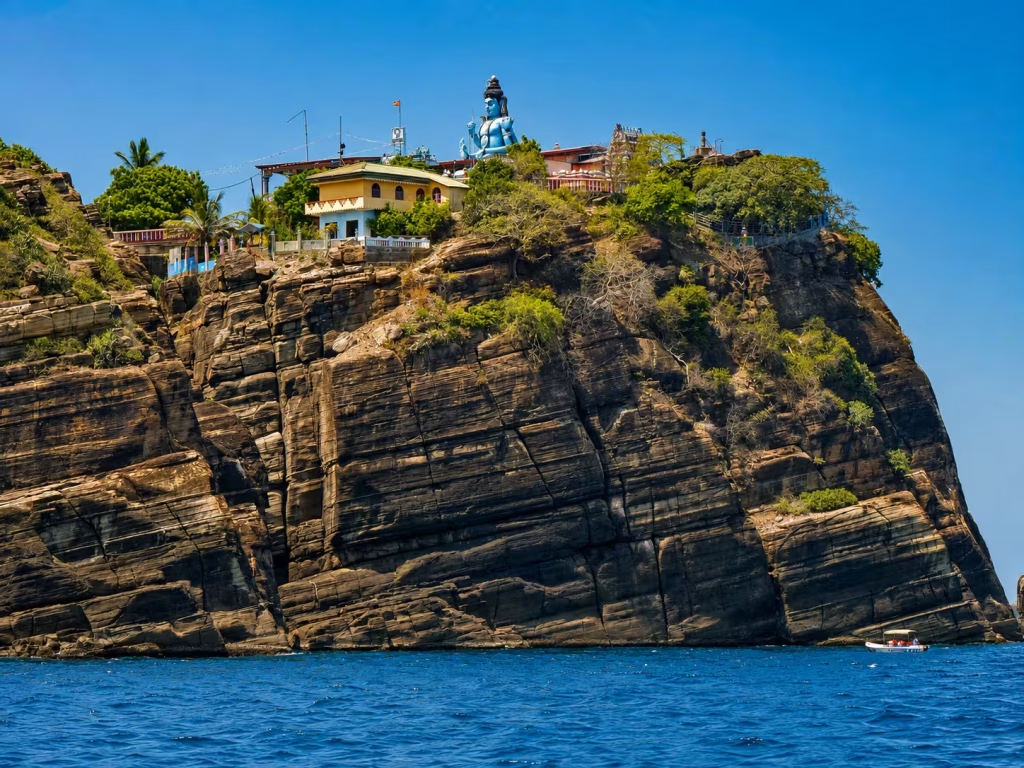
Koneswaram Temple is one of the most important Hindu sacred sites in Sri Lanka and one of the defining landmarks of Trincomalee. Dedicated to Shiva, the temple stands high above the Indian Ocean on Swami Rock within the Fort Frederick area. The setting combines religious significance, dramatic coastal views and layers of history in a way few other sites in the country can match.
For visitors, Koneswaram should be approached first as a living temple and only second as a sightseeing attraction. Worshippers come to pray, make offerings and participate in ceremonies, while travelers are drawn by the architecture, cliff-top setting and Trincomalee’s multicultural history.
Where is Koneswaram Temple?
The temple is located on Swami Rock above Trincomalee’s natural harbor. Visitors normally enter through the Fort Frederick area and continue uphill toward the temple.
The walk is manageable for many visitors, but heat can be strong. Carry water and use sun protection, especially around midday.
Why Koneswaram is important
Koneswaram is an ancient Shiva shrine with a long place in Tamil Hindu religious tradition. Historical references, inscriptions and later records connect the site with centuries of worship and patronage.
Its location on the eastern coast also reflects Trincomalee’s importance within Indian Ocean travel and cultural exchange.
Shiva and the sacred landscape
The temple is dedicated to Lord Shiva, one of the principal deities of Hinduism. Shrines, ritual spaces and devotional imagery throughout the complex reflect this religious identity.
Visitors unfamiliar with Hindu worship should observe quietly rather than assuming every ritual is open for close photography.
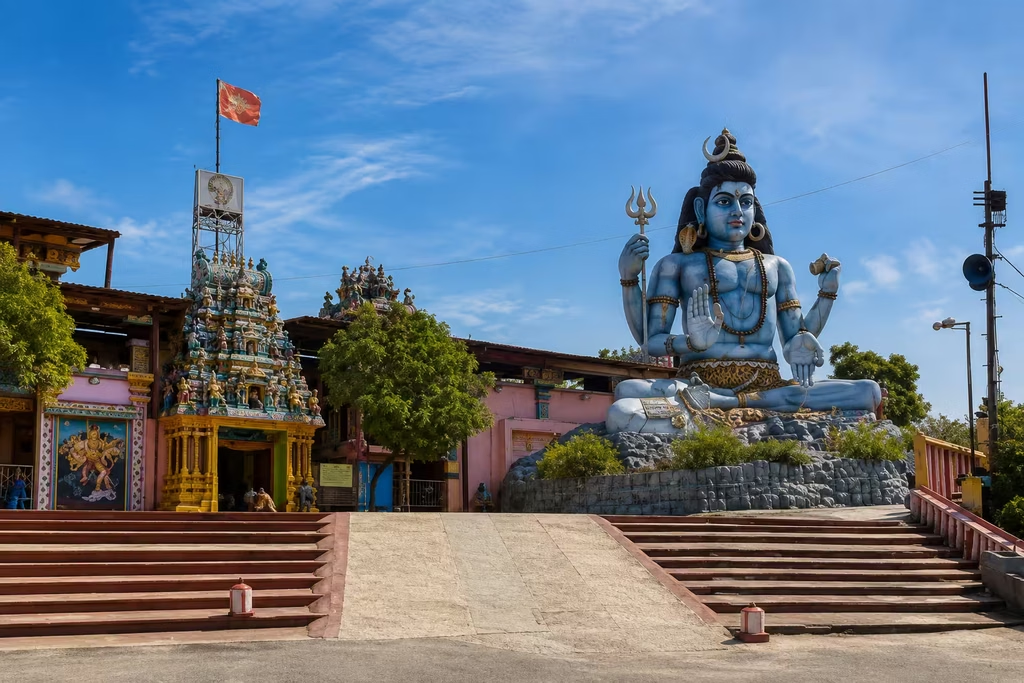
Swami Rock
The rocky promontory is one of the most dramatic natural features in Trincomalee. From the upper area, the ocean and harbor stretch far below.
Cliff edges can be dangerous. Stay behind barriers and do not move into restricted areas for photographs.
Colonial destruction and rebuilding
The temple’s history includes destruction during Portuguese colonial rule in the seventeenth century, after which religious objects and architectural material were lost, buried or dispersed. Worship later revived, and the modern temple developed around the surviving sacred site.
This history explains why Koneswaram is both ancient in tradition and comparatively modern in much of its visible architecture.
Fort Frederick
Visitors pass through Fort Frederick, which itself represents another layer of Trincomalee’s colonial history. Portuguese, Dutch and British control all left marks on the strategic harbor area.
Parts of the fort remain connected with official and military use, so follow signs and avoid photographing restricted areas.
The temple approach
The road and path toward the temple can include vendors, devotees and wildlife such as deer. Move carefully around animals and never feed them.
During festivals, the approach can become crowded. Allow extra time and be patient with local worshippers.
Dress code
Wear modest clothing that covers shoulders and knees. Footwear must normally be removed before entering the sacred temple area.
Some Hindu temples have additional customs, so follow signs and guidance from temple staff rather than relying on rules from another site.
Photography
Photography may be allowed in some exterior areas but restricted in inner shrines. Ask before using a camera near rituals or sacred images.
Do not photograph devotees at close range without permission. A prayer or offering is a personal religious act.
Best time of day
Morning is comfortable and often less crowded. Late afternoon can offer attractive light over the ocean, but temple activity should determine where you stand and when you photograph.
Midday can be extremely hot on exposed stone and road surfaces.
Trincomalee Weather: 7-Day Forecast
Updated automatically with the latest available forecast for Trincomalee, Sri Lanka.
- Rain chance
- 76%
- Rainfall
- 0.9 mm
- Wind
- 14 km/h
- UV index
- 7.2
- Sunrise
- 5:59 AM
- Sunset
- 5:42 PM
- Rain chance
- 84%
- Rainfall
- 2.0 mm
- Wind
- 16 km/h
- UV index
- 7.9
- Sunrise
- 5:59 AM
- Sunset
- 5:42 PM
- Rain chance
- 73%
- Rainfall
- 2.3 mm
- Wind
- 16 km/h
- UV index
- 7.9
- Sunrise
- 6:00 AM
- Sunset
- 5:42 PM
- Rain chance
- 93%
- Rainfall
- 5.8 mm
- Wind
- 11 km/h
- UV index
- 6.8
- Sunrise
- 6:00 AM
- Sunset
- 5:42 PM
- Rain chance
- 98%
- Rainfall
- 5.7 mm
- Wind
- 10 km/h
- UV index
- 6.4
- Sunrise
- 6:01 AM
- Sunset
- 5:42 PM
- Rain chance
- 100%
- Rainfall
- 3.0 mm
- Wind
- 10 km/h
- UV index
- 7.7
- Sunrise
- 6:01 AM
- Sunset
- 5:42 PM
- Rain chance
- 84%
- Rainfall
- 10.2 mm
- Wind
- 9 km/h
- UV index
- 6.6
- Sunrise
- 6:01 AM
- Sunset
- 5:43 PM
Festivals
Major Hindu festival periods can transform Koneswaram with processions, offerings and large numbers of worshippers. Exact dates follow religious calendars and should be verified for the year of travel.
Festival visits can be deeply rewarding, but travelers should expect crowds and stricter movement around ritual areas.
Understanding Trincomalee’s religious diversity
Koneswaram is part of a city where Hindu, Buddhist, Muslim and Christian traditions have all shaped the cultural landscape. Seeing the temple alongside other religious and historical sites helps visitors understand Trincomalee as more than a beach destination.
Approach each place of worship on its own terms and avoid comparing religious practices as though they are competing attractions.
Combining Koneswaram with Trincomalee Fort
Because the temple lies within the Fort Frederick area, the two experiences naturally belong together. Take time to notice defensive walls, harbor views and the transition from colonial military space to active Hindu pilgrimage.
Nearby Trincomalee attractions
Trincomalee offers beaches, the harbor, hot wells, religious sites and access to Nilaveli and Pigeon Island. Koneswaram works best as part of a two- or three-day eastern-coast stay rather than a rushed stop.
Food and refreshments
Trincomalee has Tamil, Muslim and wider Sri Lankan food traditions, with seafood, dosai, rice and curry and local snacks widely available. After the temple visit, central Trincomalee is a good place for a proper meal.
Responsible temple visiting
Do not touch sacred objects, block worshippers or leave litter. Use official donation points if you wish to contribute. Respecting religious practice is more important than capturing every detail on camera.
Why Koneswaram is worth visiting
Koneswaram brings together three of Trincomalee’s defining identities: a great natural harbor, a complex colonial history and a living Tamil Hindu tradition. The cliff-top location makes the temple visually dramatic, but its religious significance gives the place its real depth.
Frequently asked questions
Where is Koneswaram Temple?
It is on Swami Rock within the Fort Frederick area of Trincomalee.
Who is the temple dedicated to?
Koneswaram is dedicated to Lord Shiva.
Can tourists visit?
Yes, where visitor access is permitted, but modest clothing, footwear rules and photography restrictions should be respected.
How long should I allow?
Allow one to two hours for the temple, views and Fort Frederick area, longer during festivals or busy periods.
Final planning advice
Check current access, weather, local regulations and transport shortly before your visit because protected areas, religious sites and marine activities can change their visitor arrangements. Avoid building a schedule with no margin for delays or unsuitable conditions.
A better Sri Lanka itinerary allows enough time to observe, rest and respond to local advice. Spending longer at one destination generally creates a more meaningful experience than rushing through several places simply to collect photographs.