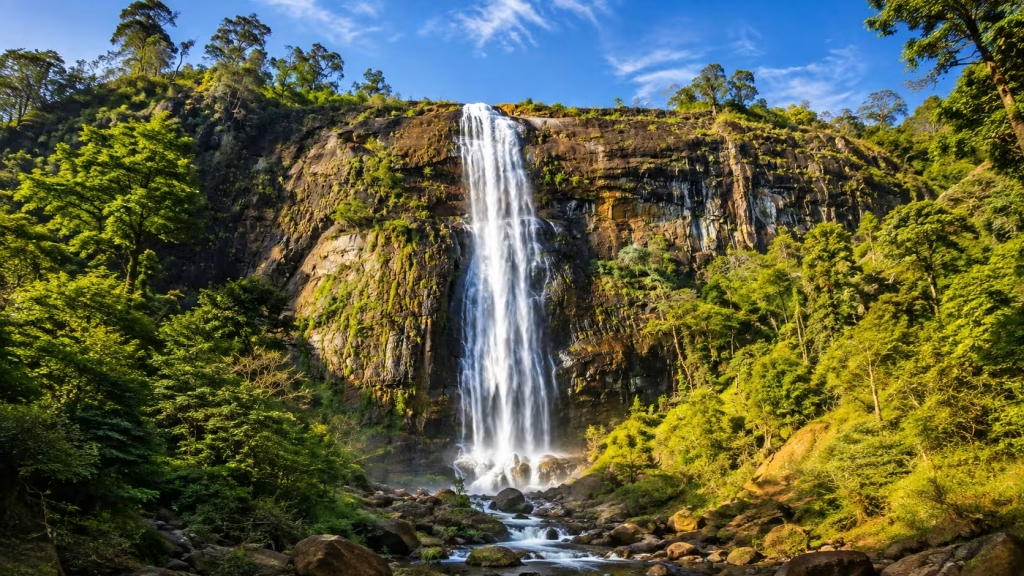
Diyaluma Falls is one of Sri Lanka’s most dramatic waterfalls, dropping from the highlands above the Koslanda–Wellawaya road in Badulla District. Sri Lanka Tourism lists the main fall at approximately 171 meters and identifies it as one of the country’s tallest waterfalls. What makes Diyaluma especially popular, however, is not only the long vertical drop. Above the main fall, a series of cascades and natural rock pools has become a major hiking destination.
That popularity creates an important responsibility: Diyaluma is a natural waterfall system, not a controlled swimming facility. Conditions can change quickly, and edges around the upper falls can be extremely dangerous. A good visit begins with understanding the landscape rather than copying photographs seen online.
Where is Diyaluma Falls?
The waterfall is near Koslanda along the route toward Wellawaya in the southern side of Badulla District. The lower fall can be viewed from road-accessible areas, while reaching the upper cascades requires a hike from one of the local approaches.
Trail access can change due to weather, land use and local conditions. Ask locally for the safest current route rather than relying entirely on an old map or social-media post.
How high is Diyaluma?
Sri Lanka Tourism gives a height of about 171 meters. Waterfall rankings can differ between sources, so travelers should avoid becoming too focused on whether it is listed as second, third or another ranking.
The visual experience is more important: water drops from a high plateau toward the lower valley, creating a striking contrast between rock, vegetation and open sky.
The lower viewpoint
If you do not want to hike, the lower view is still worthwhile. From the road area, visitors can appreciate the full height of the main fall, particularly after periods of rain.
Use safe stopping locations and avoid standing in the road. Mountain traffic and buses can approach quickly.
The upper Diyaluma hike
The upper area is reached on foot through hillside terrain. Routes vary in steepness and can cross village or private land. A local guide is useful for first-time visitors because trail junctions may not be obvious.
Wear shoes with grip and carry water. Sandals intended only for the beach are a poor choice on wet rock and uneven earth.
Natural pools
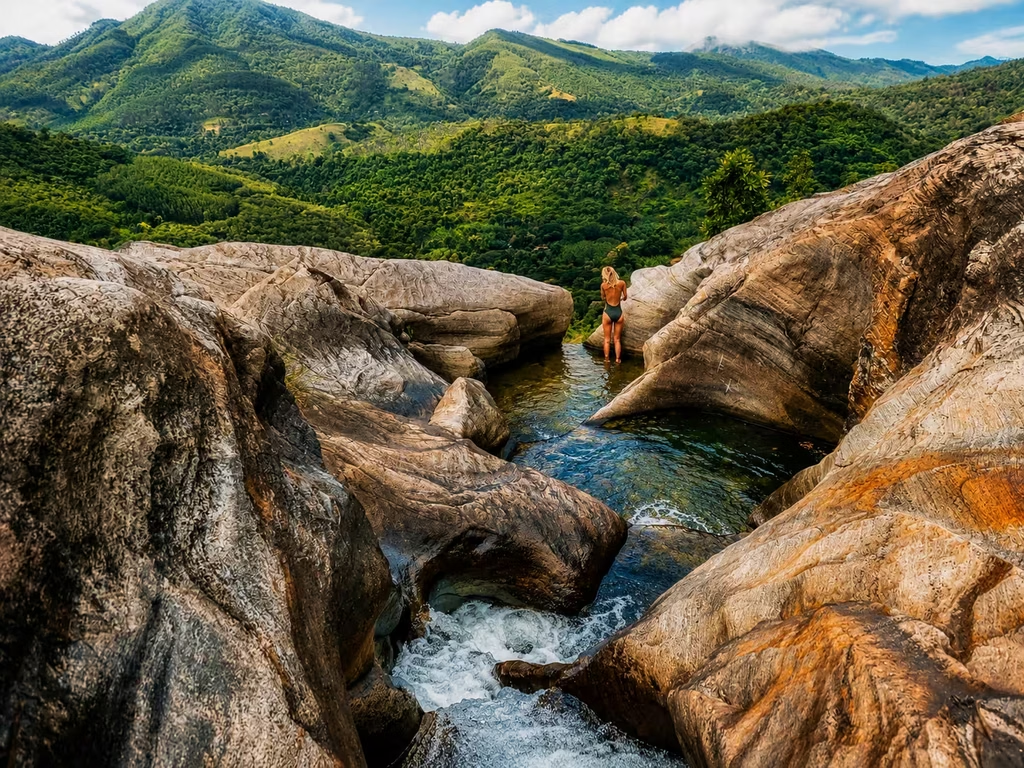
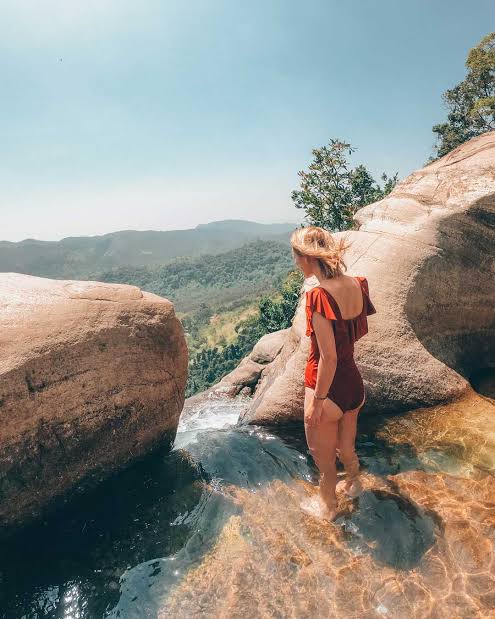
Upper Diyaluma is known for a sequence of rock pools and cascades. Photographs often show people standing or swimming close to dramatic edges, but those images should not be interpreted as proof that every location is safe.
Water depth, current and rock slipperiness change with rainfall. Never enter a pool if water is flowing strongly toward an exposed drop, and never encourage children or weak swimmers to copy risky poses.
The edge of the main drop
The lip of a very high waterfall is an unforgiving environment. Wet rock can become slippery instantly, and there is no barrier protecting much of the natural edge.
Stay well back. A wide-angle photograph can create drama without standing inches from a drop. No photograph is worth testing traction at the top of a 171-meter waterfall.
Rain and flash changes in water level
Heavy rain upstream can increase water flow even when conditions at the falls appear temporarily calm. During or after significant rain, avoid swimming and reconsider exposed sections of the hike.
Local guides and residents understand seasonal conditions better than a generic online guide. If they advise against entering a pool, follow that advice.
Best time of day
Morning is generally practical because temperatures are more comfortable and there is more daylight available for the return walk. It also gives flexibility if the route takes longer than expected.
Afternoon weather can become cloudy or wet in the highlands. Do not begin a first-time hike late in the day.
Diyaluma Falls Weather: 7-Day Forecast
Updated automatically with the latest available forecast for Wellawaya, Sri Lanka.
- Rain chance
- 69%
- Rainfall
- 1.1 mm
- Wind
- 12 km/h
- UV index
- 8.3
- Sunrise
- 5:57 AM
- Sunset
- 5:45 PM
- Rain chance
- 66%
- Rainfall
- 2.4 mm
- Wind
- 13 km/h
- UV index
- 8.3
- Sunrise
- 5:57 AM
- Sunset
- 5:45 PM
- Rain chance
- 100%
- Rainfall
- 10.7 mm
- Wind
- 14 km/h
- UV index
- 8.2
- Sunrise
- 5:58 AM
- Sunset
- 5:45 PM
- Rain chance
- 100%
- Rainfall
- 9.9 mm
- Wind
- 8 km/h
- UV index
- 7.8
- Sunrise
- 5:58 AM
- Sunset
- 5:45 PM
- Rain chance
- 98%
- Rainfall
- 16.5 mm
- Wind
- 6 km/h
- UV index
- 6.9
- Sunrise
- 5:58 AM
- Sunset
- 5:45 PM
- Rain chance
- 98%
- Rainfall
- 9.3 mm
- Wind
- 7 km/h
- UV index
- 7.3
- Sunrise
- 5:59 AM
- Sunset
- 5:46 PM
- Rain chance
- 84%
- Rainfall
- 36.0 mm
- Wind
- 7 km/h
- UV index
- 7.5
- Sunrise
- 5:59 AM
- Sunset
- 5:46 PM
Photography
The lower viewpoint benefits from a longer focal length that compresses the high waterfall against the cliff. At the upper cascades, wide lenses show pools and surrounding landscape.
Use straps securely and avoid changing lenses while standing on slippery rock. A waterproof pouch can protect phones from spray or sudden rain.
What to bring
Carry water, sun protection, a light rain layer, a basic first-aid kit and footwear with reliable grip. Pack snacks in reusable or secure containers and carry every piece of waste back out.
Offline maps can help, but do not let navigation software persuade you to follow a route that is clearly unsafe or private.
Who should avoid the upper hike?
Travelers with serious balance problems, very young children or anyone uncomfortable around unprotected heights may prefer the lower viewpoint. There is no need to reach the top to say you have experienced Diyaluma.
During heavy rain or thunderstorms, the upper route should be treated with particular caution regardless of fitness.
Combining Diyaluma with Ella or Haputale
Diyaluma is commonly visited from Ella, Haputale or other nearby hill-country bases. The road journey can be combined with Koslanda-area scenery, but avoid adding several major hikes to the same day.
If you climb Diyaluma in the morning, a relaxed afternoon is usually more sensible than immediately attempting another mountain trail.
The folklore of Diyaluma
Sri Lanka Tourism records a well-known local story associated with the waterfall involving a tragic romance and the image of water concealing the scene like a veil. Such folklore adds cultural depth to the landscape.
Stories can have multiple versions. Treat them as traditional narratives rather than presenting every detail as documented history.
Responsible visiting
Popular natural pools are particularly vulnerable to litter. Carry out bottles, snack packets and cigarette waste. Do not leave clothing, shoes or broken glass around rocks.
Respect local land access and pay agreed guide or parking fees fairly when services are legitimately provided.
Frequently asked questions
How high is Diyaluma Falls?
Sri Lanka Tourism lists it at approximately 171 meters.
Can I see Diyaluma without hiking?
Yes. The main waterfall can be viewed from lower road-accessible areas.
Are the upper pools safe for swimming?
Safety changes with rainfall, flow and exact location. Never assume a pool is safe because other people are swimming there.
Do I need a guide?
A guide is a sensible choice for first-time visitors to the upper falls, particularly when trail conditions or access routes are uncertain.