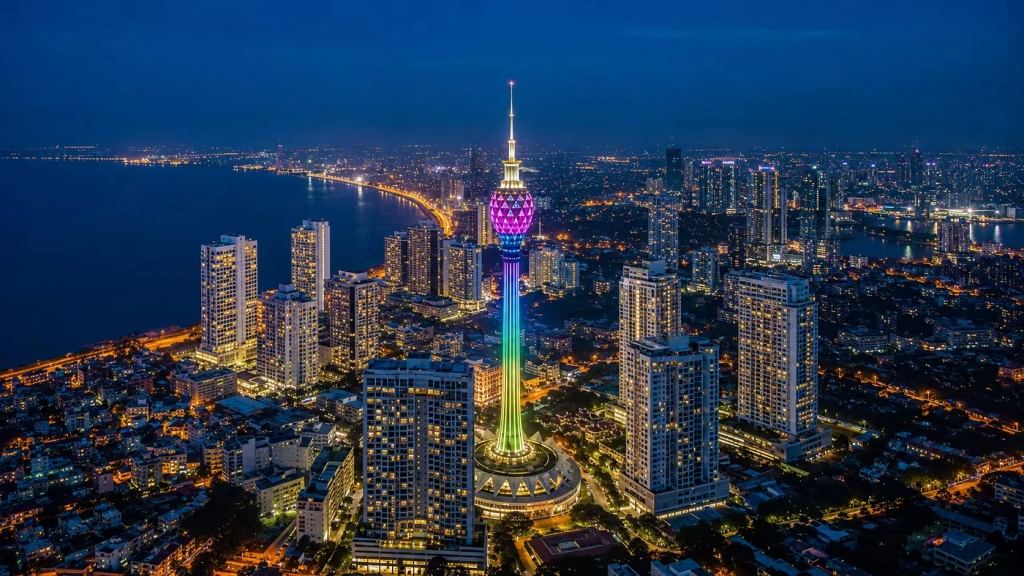
Colombo is often treated as somewhere to pass through on the way between Bandaranaike International Airport and Sri Lanka’s beaches, ancient cities or hill country. That approach misses one of the island’s most revealing destinations. Colombo is the country’s commercial and financial center, a busy port city where colonial-era architecture, temples, mosques, churches, markets, offices, towers and coastal public spaces sit close together.
Sri Lanka Tourism describes Colombo as a mixture of races, religions and cultures and highlights experiences ranging from Pettah Market and tuk-tuk rides to food, shopping and Galle Face. The city is not polished into one uniform tourist district. Its contrasts are exactly what make it worth exploring.
Understanding Colombo
Colombo is divided into numbered postal zones, but visitors usually navigate by neighborhood names and landmarks. Fort and Pettah form the historic commercial core, while areas such as Cinnamon Gardens, Kollupitiya, Bambalapitiya and Slave Island each have different characters.
Distances can look short on a map but take time in traffic. Build itineraries around clusters rather than crossing the city repeatedly.
Colombo Fort
Fort was once literally fortified and remains associated with the port, commercial buildings and important colonial-era architecture. The old Dutch Hospital precinct is one of the easiest heritage areas for visitors to recognize, while surrounding streets contain government, banking and transport landmarks.
Some buildings remain working offices, and security restrictions can apply. Photograph architecture from public areas and follow instructions near government property.
Pettah Market
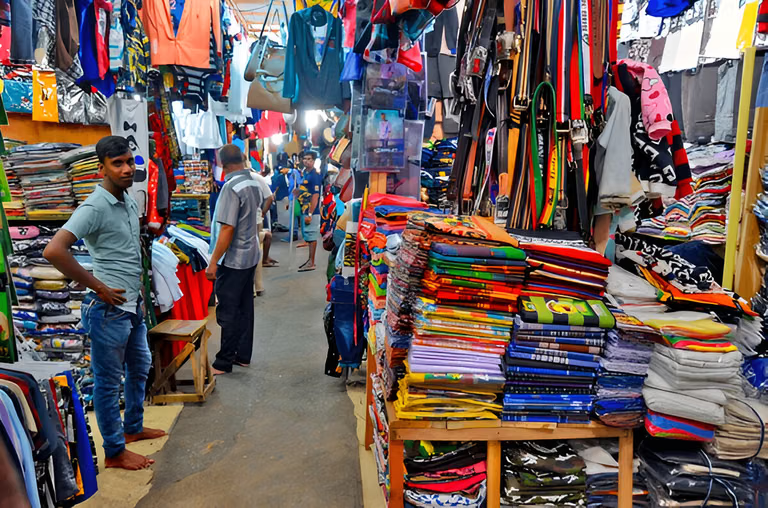
Pettah is one of the most energetic areas in Colombo. Streets specialize in different goods, and the district mixes wholesale trade, small shops, food, religious buildings and intense pedestrian traffic.
Go with minimal luggage, keep valuables secure and avoid expecting a relaxed shopping mall experience. Pettah is a working commercial district. The best approach is to walk slowly, observe and stop when something genuinely interests you.
Galle Face Green
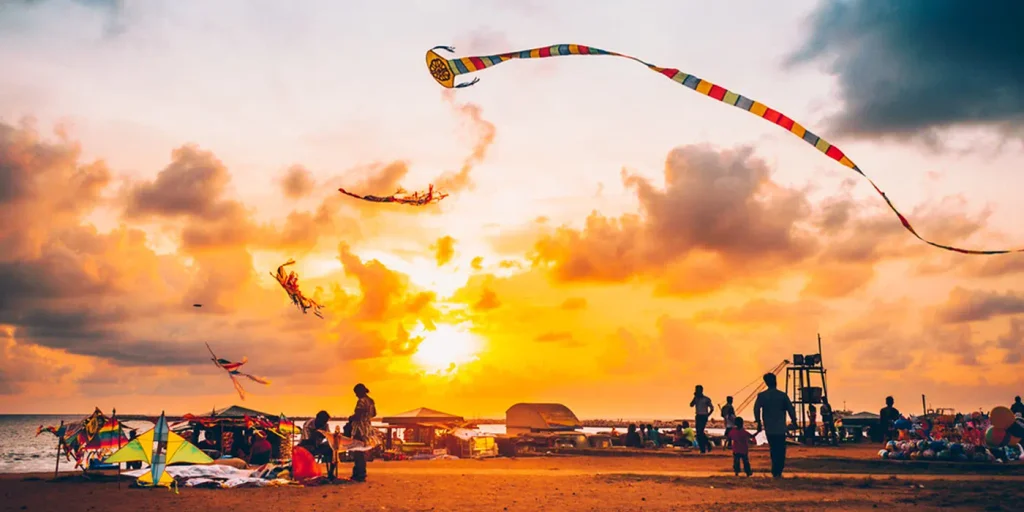
Galle Face is Colombo’s best-known seafront public space. In the evening, families, couples, walkers and food vendors create a social atmosphere very different from the business districts only a short distance away.
Sunset is popular, but weather varies. Even on a cloudy evening, the open sea, city skyline and street-food scene make the area worthwhile.
Gangaramaya and Seema Malaka
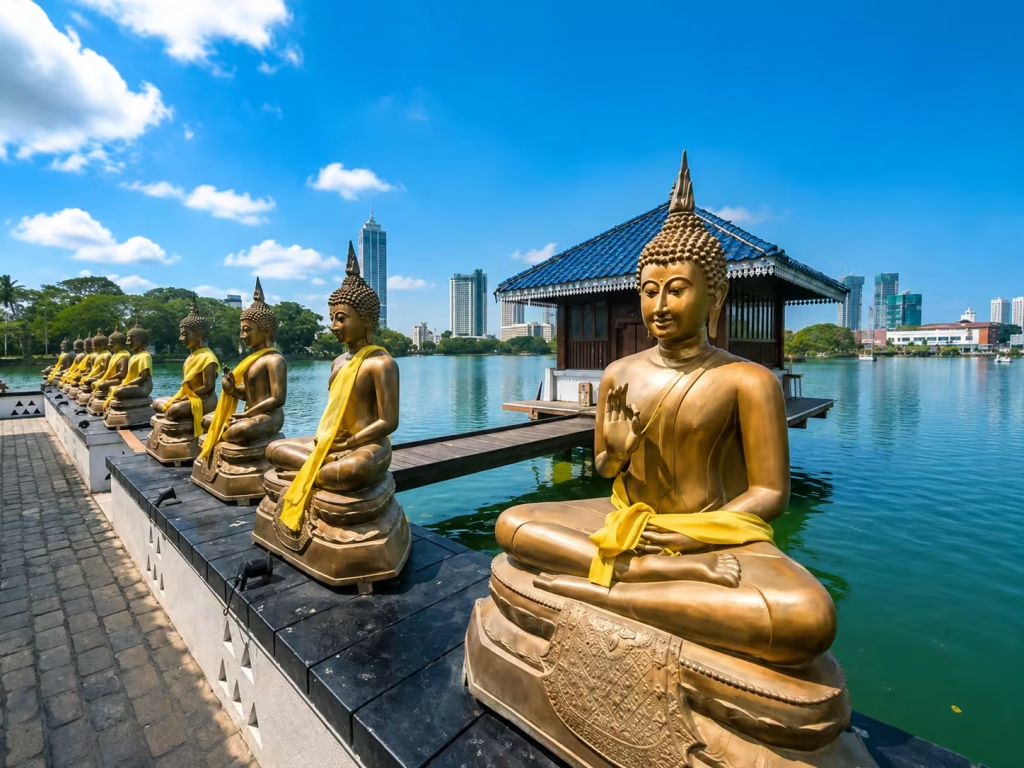
Gangaramaya Temple near Beira Lake is one of Colombo’s best-known Buddhist sites. Its architecture and collection reflect Sri Lankan and wider Asian influences. Nearby Seema Malaka, associated with architect Geoffrey Bawa, creates a calmer waterside setting.
Dress modestly, remove shoes where required and remember that these are religious spaces as well as visitor attractions.
National Museum and cultural context
For travelers heading to Anuradhapura, Polonnaruwa or Kandy, a museum visit in Colombo can provide useful historical context before the journey. Collections help connect royal history, religion, art and material culture with places you may later see around the island.
Check current opening arrangements directly rather than relying on older travel blogs.
Independence Square and Cinnamon Gardens
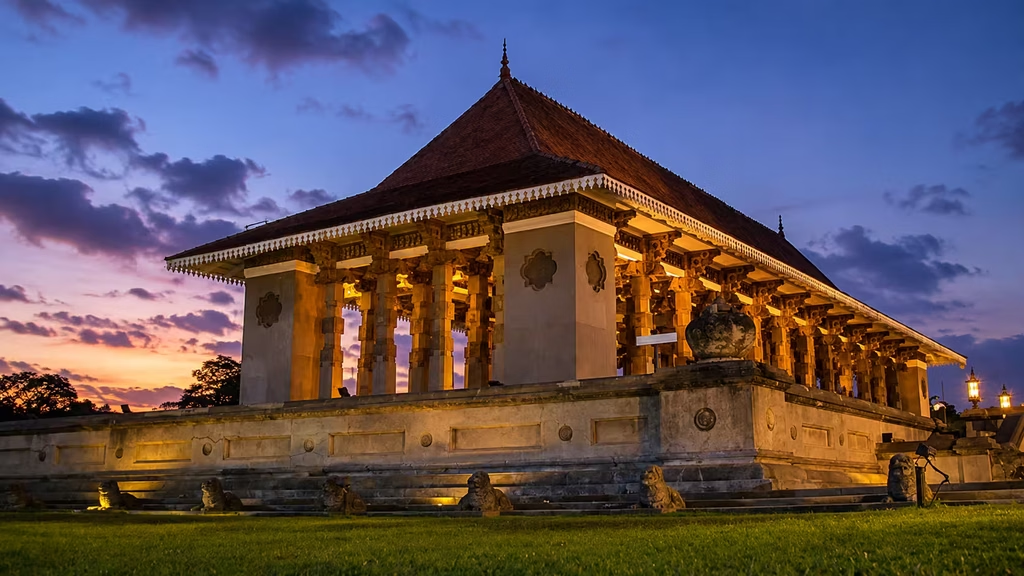
The Cinnamon Gardens area feels very different from Pettah. Wider roads, embassies, educational institutions, older residences and green spaces create a quieter urban atmosphere. Independence Memorial Hall is one of the area’s major landmarks.
A visit works well in the early morning or late afternoon and can be combined with museums or nearby cafés.
Religious diversity
Colombo’s religious landscape includes Buddhist temples, Hindu kovils, mosques and churches. Buildings often stand surprisingly close to one another, reflecting the city’s long role as a port and trading center.
When entering any active place of worship, prioritize local customs over photography. Dress appropriately, avoid interrupting services and ask before photographing people.
Colombo Weather: 7-Day Forecast
Updated automatically with the latest available forecast for Colombo, Sri Lanka.
- Rain chance
- 76%
- Rainfall
- 4.8 mm
- Wind
- 11 km/h
- UV index
- 8.0
- Sunrise
- 6:02 AM
- Sunset
- 5:49 PM
- Rain chance
- 93%
- Rainfall
- 1.9 mm
- Wind
- 15 km/h
- UV index
- 8.1
- Sunrise
- 6:03 AM
- Sunset
- 5:50 PM
- Rain chance
- 100%
- Rainfall
- 1.4 mm
- Wind
- 9 km/h
- UV index
- 7.5
- Sunrise
- 6:03 AM
- Sunset
- 5:50 PM
- Rain chance
- 100%
- Rainfall
- 6.4 mm
- Wind
- 9 km/h
- UV index
- 7.8
- Sunrise
- 6:04 AM
- Sunset
- 5:50 PM
- Rain chance
- 100%
- Rainfall
- 14.1 mm
- Wind
- 9 km/h
- UV index
- 7.2
- Sunrise
- 6:04 AM
- Sunset
- 5:50 PM
- Rain chance
- 98%
- Rainfall
- 7.8 mm
- Wind
- 9 km/h
- UV index
- 8.1
- Sunrise
- 6:05 AM
- Sunset
- 5:50 PM
- Rain chance
- 90%
- Rainfall
- 3.6 mm
- Wind
- 7 km/h
- UV index
- 7.7
- Sunrise
- 6:05 AM
- Sunset
- 5:51 PM
Food in Colombo
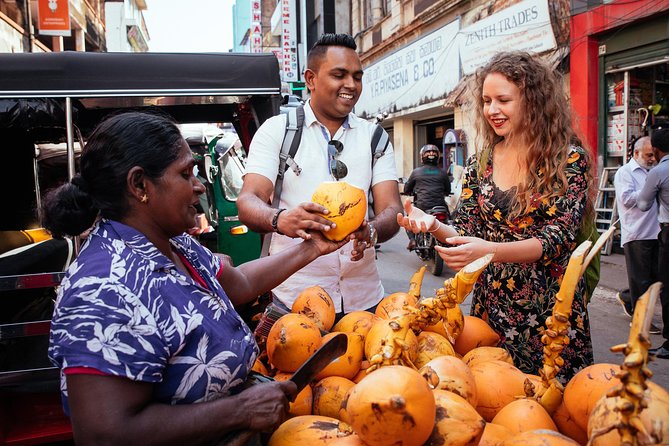
Colombo is one of the best places in Sri Lanka to sample both regional food and modern interpretations. Rice and curry, hoppers, kottu, seafood, short eats, Tamil dishes, Muslim specialties and international restaurants are all available.
Street food can be enjoyable, but choose busy vendors with good turnover and visible hygiene. Travelers with allergies should explain them clearly because coconut, seafood, nuts or gluten may appear in unexpected preparations.
Shopping
Shopping ranges from Pettah wholesale streets to modern malls and boutiques selling local design, tea, spices, textiles and crafts. Decide what you actually want before buying large souvenir quantities.
For gems and jewelry, use reputable sellers and obtain appropriate documentation for valuable purchases. Avoid products made from coral, wildlife parts or questionable antiques.
Getting around Colombo
Tuk-tuks are convenient for short trips, while ride-hailing services can simplify fares and navigation. Trains and buses are useful for locals and adventurous visitors but are less convenient for complex sightseeing routes with luggage.
Walking works well within individual neighborhoods, though heat, traffic and inconsistent sidewalks can make long cross-city walks tiring.
Traffic and timing
Rush-hour congestion is one of the most important practical realities. Do not estimate journey time by distance alone. If you have a flight, train or fixed appointment, leave a generous buffer.
Grouping Fort and Pettah together, then treating Cinnamon Gardens and southern neighborhoods as a separate cluster, usually creates a better day.
One-day Colombo itinerary
Begin early in Fort and Pettah, visit one religious or cultural site, have lunch in the city and move toward Cinnamon Gardens or a museum in the afternoon. Finish at Galle Face for sunset and dinner.
This gives a broad introduction without trying to see every landmark.
Two- or three-day stay
With two days, you can slow down and add museums, markets, architecture and a dedicated food experience. A third day allows nearby wetland areas such as Beddagana or Bellanwila–Attidiya, or a deeper exploration of neighborhoods beyond the standard sightseeing circuit.
Is Colombo worth staying in?
Yes, especially at the beginning or end of a trip. One or two nights provide context for the rest of Sri Lanka and make airport logistics less stressful.
Travelers who dislike large cities may prefer a shorter stay, but even they can benefit from one carefully planned day.
Responsible city travel
Ask before photographing market workers and religious worshippers. Do not block narrow commercial lanes for posed pictures. Support independent restaurants, local designers and guides where they fit your interests.
Colombo is not a theme park built for visitors. Its value comes from seeing Sri Lankan urban life operating at full speed.
Frequently asked questions
Is Colombo Sri Lanka’s capital?
Colombo is the country’s commercial and financial center, while Sri Jayewardenepura Kotte is the administrative capital.
How many days do I need?
One day gives an overview; two days are much better for food, museums and neighborhoods; three days allow nearby nature or specialist interests.
Is Pettah worth visiting?
Yes, if you enjoy markets and urban culture. Go with minimal luggage and expect crowds rather than a relaxed retail environment.
Should I stay in Colombo before flying home?
It can be practical, but airport travel time depends on traffic. Always leave a generous margin for your departure.