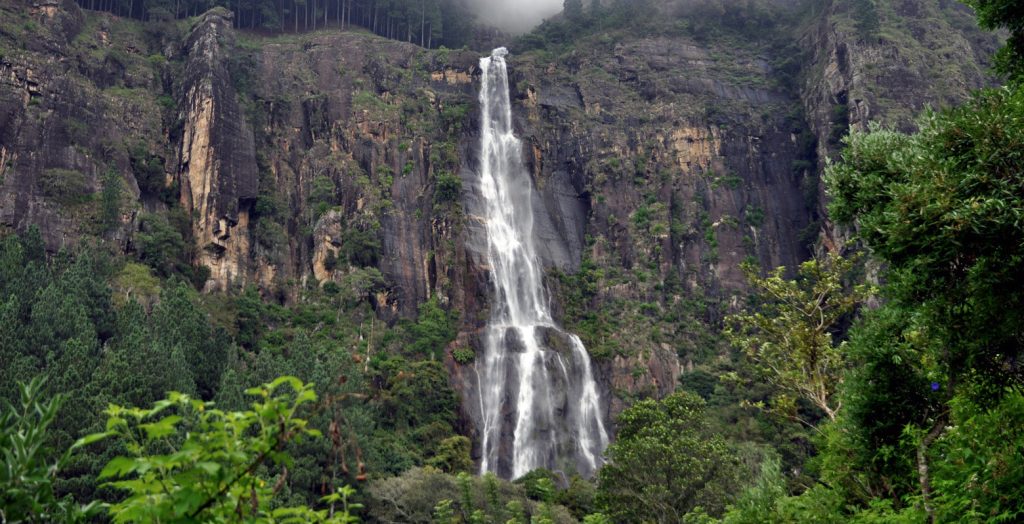
Bambarakanda Falls is Sri Lanka’s tallest waterfall, dropping about 263 metres through a steep highland landscape near Kalupahana in the Badulla District. Unlike a broad curtain of water, Bambarakanda often appears as a long, slender cascade descending from a rocky escarpment into forest below.
The journey is part of the attraction. Pine-covered slopes, mountain roads and cooler highland scenery make the area feel very different from Sri Lanka’s coastal destinations.
Why Bambarakanda is special
At approximately 263 metres, Bambarakanda is the highest waterfall in Sri Lanka. The fall is associated with Kuda Oya, a tributary within the wider Walawe River system.
Height is only part of the appeal. The surrounding terrain creates dramatic viewpoints and opportunities for hiking, but it also means conditions can change quickly with rain, mist and runoff.
Getting to the waterfall
Bambarakanda is reached from the Kalupahana area, off the A4 corridor. The final road toward the falls is narrower and rougher than a major highway. Conditions can vary after heavy rain, road work or erosion.
If you are traveling in a low-clearance vehicle, ask locally about the current state of the access road before committing to the final section. A local driver familiar with the area can be useful.
Walking and viewpoints
There are views of the waterfall from the surrounding area, and visitors often continue on foot toward closer viewpoints. Trails may be muddy, uneven or slippery, particularly during wet weather.
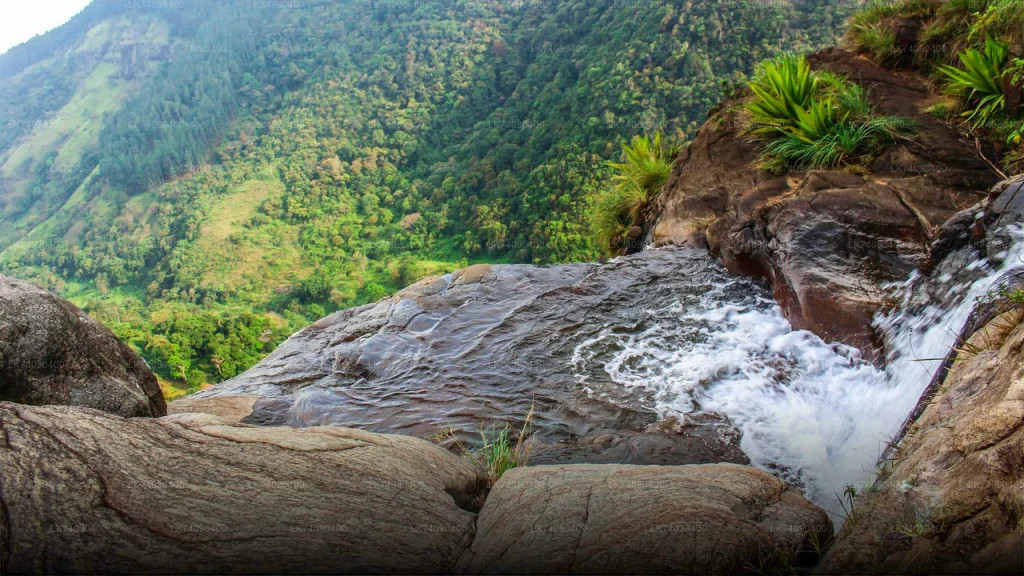
Wear footwear with grip and avoid walking onto exposed rock when it is wet. Waterfall landscapes can look calm even when surfaces are dangerously slick.
Water levels and weather
The appearance of the falls changes with rainfall. More water can make the cascade dramatic, but heavy rain can also increase the risk of slippery paths, poor road conditions, falling debris and sudden changes in stream flow.
Do not enter pools or climb close to the falling water simply because other visitors are doing so. Local warnings and weather conditions should determine what is safe.
Photography
A wider lens is useful for showing the height of the waterfall and its forest setting. Mist and changing cloud can create interesting photographs, while a person placed safely in the landscape can provide scale.
Protect cameras and phones from spray and sudden rain, and never step backward toward an edge while framing a picture.
What to combine with Bambarakanda
The waterfall fits well into a hill-country route involving Haputale, Belihuloya or other highland viewpoints. Travelers focused on hiking may want to spend longer in the area rather than treating the falls as a quick roadside stop.
Responsible visiting
Carry all litter out, avoid damaging vegetation and keep noise low. Waterfall sites can suffer quickly from plastic waste and informal trail expansion when visitors leave established paths.
The landscape around Bambarakanda
Bambarakanda lies in a highland environment of steep slopes, forest patches and mountain roads. Its height is immediately impressive, but the waterfall is best understood as part of this larger watershed. Rain falling on the uplands feeds streams that descend rapidly through the escarpment, and seasonal changes in rainfall affect both the appearance of the fall and the condition of access routes.
The surrounding pine areas are visually distinctive, but the broader region also includes native vegetation, farms and mountain settlements. Visitors should avoid assuming that every path visible on a map is an official hiking route.
Why waterfall conditions change so much
A waterfall is never a completely fixed attraction. During wetter periods, Bambarakanda can carry more water and produce more mist, but heavy rain also increases risk. Paths become slippery, small streams rise and loose rock or branches may fall. During drier conditions, the waterfall may appear thinner but walking can be easier.
There is no single perfect condition for every traveler. Photographers may prefer dramatic flow, while families or less experienced walkers may prioritize stable weather. Check local conditions on the day rather than planning solely from photographs taken in another season.
Bambarakanda Falls Weather: 7-Day Forecast
Updated automatically with the latest available forecast for Bambarakanda Falls, Sri Lanka.
- Rain chance
- 100%
- Rainfall
- 3.7 mm
- Wind
- 7 km/h
- UV index
- 8.1
- Sunrise
- 5:58 AM
- Sunset
- 5:46 PM
- Rain chance
- 100%
- Rainfall
- 10.6 mm
- Wind
- 6 km/h
- UV index
- 7.5
- Sunrise
- 5:59 AM
- Sunset
- 5:46 PM
- Rain chance
- 100%
- Rainfall
- 10.0 mm
- Wind
- 6 km/h
- UV index
- 8.3
- Sunrise
- 5:59 AM
- Sunset
- 5:46 PM
- Rain chance
- 100%
- Rainfall
- 12.7 mm
- Wind
- 7 km/h
- UV index
- 7.6
- Sunrise
- 5:59 AM
- Sunset
- 5:46 PM
- Rain chance
- 100%
- Rainfall
- 3.0 mm
- Wind
- 7 km/h
- UV index
- 5.9
- Sunrise
- 6:00 AM
- Sunset
- 5:46 PM
- Rain chance
- 100%
- Rainfall
- 11.1 mm
- Wind
- 9 km/h
- UV index
- 5.6
- Sunrise
- 6:00 AM
- Sunset
- 5:47 PM
- Rain chance
- 100%
- Rainfall
- 33.6 mm
- Wind
- 6 km/h
- UV index
- 5.7
- Sunrise
- 6:01 AM
- Sunset
- 5:47 PM
Approaching the falls safely
The final road from the main highway is narrower and rougher than Sri Lanka’s principal roads. Vehicle suitability can depend on recent rain and maintenance. If you are unsure, use a driver familiar with the area rather than forcing a low-clearance rental vehicle along a damaged section.
Once on foot, move at a pace that allows you to test slippery surfaces. Wet leaves, moss and smooth rock can be more dangerous than they appear. Keep both hands free where possible and do not carry a camera in a way that prevents you from balancing.
Swimming and water safety
Natural pools below waterfalls can look inviting, but conditions may be difficult to judge from the edge. Falling water, submerged rocks, cold water, sudden depth and changing current all create risk. Do not assume that swimming is safe because other visitors are in the water.
Local warnings should take priority. After heavy rain, avoid entering streams or pools even if the weather has temporarily cleared. Water levels upstream can change faster than conditions are visible from below.
Photography techniques that suit a tall waterfall
Bambarakanda’s height can be difficult to communicate in a photograph. Include surrounding trees, cliffs or people at a safe distance to provide scale. A vertical composition often works well, while a wider horizontal frame can show the waterfall within the full mountain setting.
If using a tripod for a long exposure, place it where it does not block a path. Mist can quickly cover lenses, so a microfiber cloth is useful. Avoid climbing onto unstable rocks simply to remove another person from the frame; waiting is safer than improvising a dangerous viewpoint.
Extending the visit into the hill country
Kalupahana sits within reach of several scenic highland routes, making Bambarakanda a useful stop between larger destinations. Travelers sometimes combine the area with Haputale or other viewpoints and waterfalls, but travel times on winding roads are slower than map distance suggests.
If hiking is a major goal, consider dedicating a full day to the region rather than stacking multiple long walks. Weather can change quickly in the hills, and an early start provides more flexibility.
What to bring
Wear shoes with grip and carry drinking water, a light rain layer, sun protection and basic first-aid supplies. A waterproof bag or cover can protect electronics during sudden showers. Mobile signal may vary in mountain terrain, so do not rely entirely on real-time navigation.
Responsible waterfall travel
Carry out all litter and avoid leaving food waste, which can attract animals. Do not carve names into trees or rocks, and do not create new shortcuts down steep slopes. Human traffic can accelerate erosion around popular viewpoints, especially after rain.
Choose local guides and drivers who respect safety and the environment rather than operators who encourage visitors to enter restricted or hazardous areas for photographs.
Why Bambarakanda is worth visiting
The waterfall’s national height record attracts attention, but the real experience is the combination of mountain road, forest, weather and the long white drop of water against the escarpment. Approached patiently, Bambarakanda is less about checking off a statistic and more about spending time in one of Sri Lanka’s dramatic highland landscapes.
Frequently asked questions
How high is Bambarakanda Falls?
It is approximately 263 metres high and is recognized by Sri Lanka Tourism as the country’s tallest waterfall.
Is the road to Bambarakanda easy?
The final access is narrower and rougher than a main road, and conditions can change. Check locally if you are using a low-clearance vehicle.
Can I swim at Bambarakanda?
Water and rock conditions vary. Do not assume swimming is safe; follow local guidance and avoid entering water during or after heavy rain.