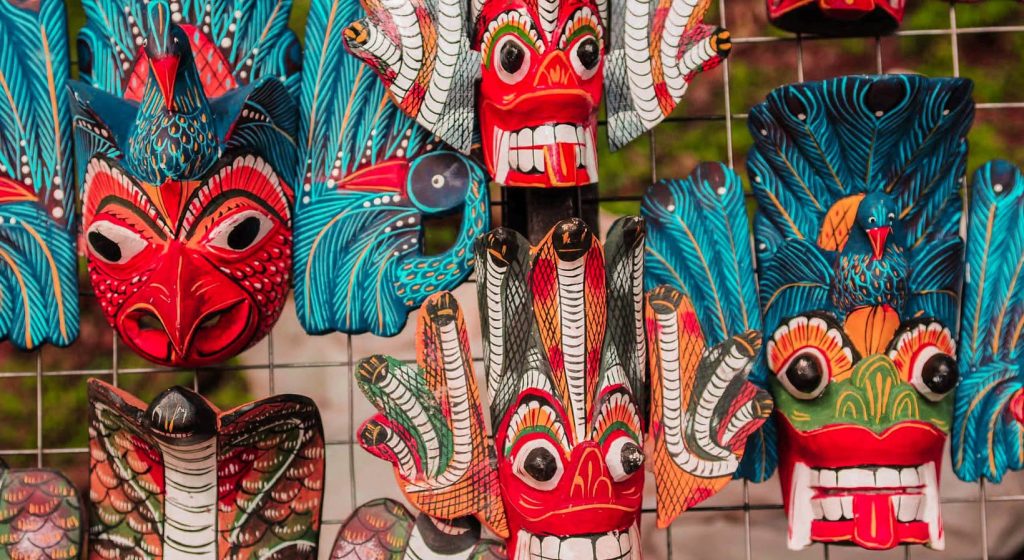
Ambalangoda is a coastal town in southern Sri Lanka with a cultural identity that reaches far beyond its beach. It is particularly associated with the island’s tradition of carved wooden masks—bright, expressive objects connected with ritual, healing traditions, folk theatre and performance.
For travelers moving between Colombo, Bentota, Hikkaduwa and Galle, Ambalangoda can be an rewarding cultural stop that adds context to the crafts seen in souvenir shops across the country.
Why Ambalangoda is known for masks
Sri Lankan masks come in many forms and have historically been used in different traditions, including ritual performances and folk drama. Ambalangoda became especially associated with the carving and preservation of these forms, and mask workshops continue to make the town a reference point for visitors interested in the craft.
Some masks are dramatic and fearsome; others are humorous or stylized. Their meaning depends on the tradition and character represented, so it is worth learning the story behind a design rather than choosing only by color or appearance.
Visit a mask museum or workshop
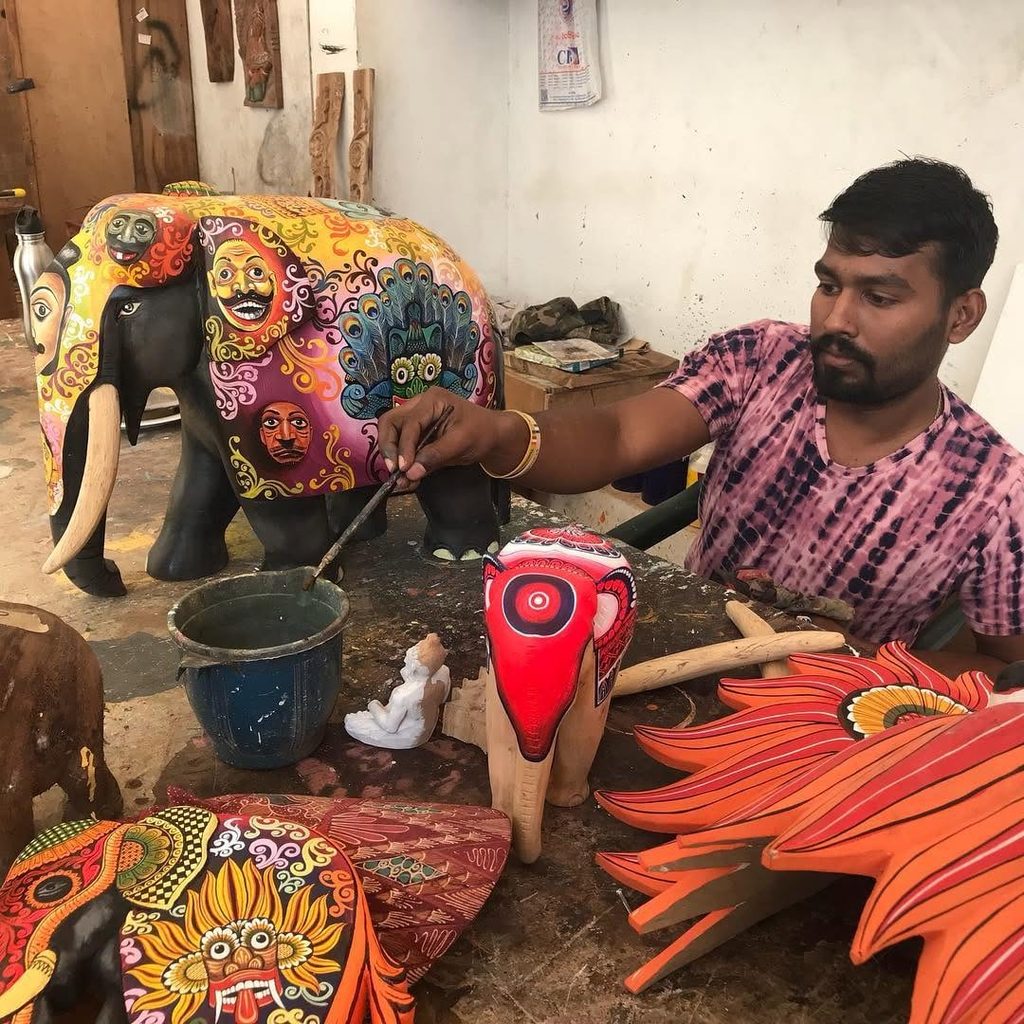
A museum or working craft center can help you understand the stages of production, from shaping the wood to painting the finished surface. Sri Lanka Tourism lists traditional mask businesses in Ambalangoda, including long-established workshops.
When visiting a workshop, observe how much is genuinely made by hand. Asking respectful questions about the craft can turn a souvenir stop into a more meaningful cultural experience.
Understanding the cultural context
Traditional masks should not be reduced to decorative wall art. They are connected to living cultural practices and stories. Some forms are linked with healing rituals, while others belong to dramatic and satirical performance traditions.
If a demonstration is offered, distinguish between a performance staged for visitors and a religious or community ceremony. Both can be interesting, but they have different meanings.
Buying a mask responsibly
If you want to take a mask home, ask about the material, where it was made and whether the piece is hand-carved or mass-produced. Purchasing directly from recognized craft workshops can support artisans and give you a clearer understanding of what you are buying.
Very old objects should be treated differently from newly made crafts. Sri Lanka has laws protecting antiquities and cultural property, so do not assume an old-looking religious or archaeological object can legally be exported.
Ambalangoda beyond masks
The town also offers a glimpse of everyday life on the south-west coast. Its location makes it easy to combine with beaches, lagoon landscapes and nearby coastal destinations. Rather than trying to turn Ambalangoda into a full resort itinerary, many travelers will find that a half-day cultural stop fits naturally into a longer journey along the coast.
How to include Ambalangoda in a south-coast trip
Ambalangoda lies on the main coastal corridor between Colombo and Galle. It can therefore be visited while traveling south, from a nearby beach base, or on a day devoted to crafts and local culture.
Road and rail services connect towns along this coast, but travel times can vary. Leave flexibility if you plan to continue to Galle or another destination the same day.
Ambalangoda Weather: 7-Day Forecast
Updated automatically with the latest available forecast for Ambalangoda, Sri Lanka.
- Rain chance
- 100%
- Rainfall
- 1.9 mm
- Wind
- 11 km/h
- UV index
- 8.2
- Sunrise
- 6:01 AM
- Sunset
- 5:50 PM
- Rain chance
- 100%
- Rainfall
- 0.0 mm
- Wind
- 12 km/h
- UV index
- 7.8
- Sunrise
- 6:01 AM
- Sunset
- 5:50 PM
- Rain chance
- 100%
- Rainfall
- 3.8 mm
- Wind
- 14 km/h
- UV index
- 7.6
- Sunrise
- 6:02 AM
- Sunset
- 5:50 PM
- Rain chance
- 100%
- Rainfall
- 17.0 mm
- Wind
- 7 km/h
- UV index
- 8.0
- Sunrise
- 6:02 AM
- Sunset
- 5:50 PM
- Rain chance
- 100%
- Rainfall
- 11.7 mm
- Wind
- 13 km/h
- UV index
- 8.1
- Sunrise
- 6:02 AM
- Sunset
- 5:51 PM
- Rain chance
- 100%
- Rainfall
- 8.1 mm
- Wind
- 10 km/h
- UV index
- 8.2
- Sunrise
- 6:03 AM
- Sunset
- 5:51 PM
- Rain chance
- 98%
- Rainfall
- 1.8 mm
- Wind
- 9 km/h
- UV index
- 8.0
- Sunrise
- 6:03 AM
- Sunset
- 5:51 PM
The main traditions behind Sri Lankan masks
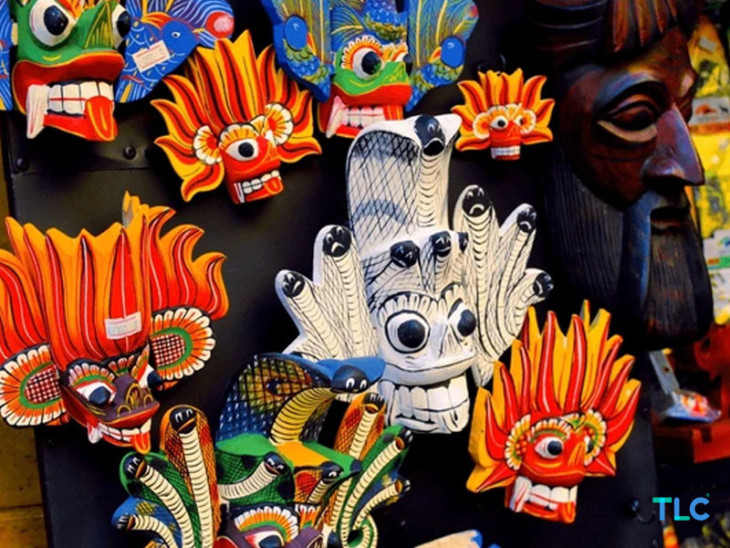
Sri Lankan masks are often grouped by the performance or ritual traditions in which they appear. Kolam masks are associated with folk drama and can represent comic, social or supernatural characters. Sanni masks are connected with traditional healing rituals, while Raksha masks are known for dramatic demon-like forms. Modern decorative versions may borrow from these traditions without being intended for ritual use.
Because tourist shops frequently display masks without context, Ambalangoda is a useful place to learn what the designs originally meant. A guide, museum label or experienced carver can explain why two masks that look similarly colorful may belong to very different traditions.
From raw wood to a finished mask
Traditional mask making begins with selecting an appropriate piece of light, workable wood. The basic form is cut and carved, then refined to establish eyes, teeth, noses, crowns and other details. The surface is smoothed before paint is applied. More complex designs may require separately carved elements or elaborate painted patterns.
The most interesting workshop visits are those where you can see several stages at once. A rough block beside a partially carved face makes the skill involved much clearer than looking only at a finished souvenir. If an artisan is working, avoid interrupting repeatedly for posed photographs. Ask first, and show interest in the process rather than only the final price.
Why masks should be understood as cultural objects
A traditional mask can carry theatrical, ritual and social meaning. In performance, costume, dance, music and narrative work together; the mask is only one component. Removing it from that setting and hanging it on a wall changes its function. That does not make decorative use inappropriate, but visitors benefit from recognizing the difference between an object created for cultural practice and a modern object inspired by that tradition.
This distinction is especially important when discussing healing traditions. They should be described respectfully as part of Sri Lanka’s cultural and religious history, not sensationalized as frightening or exotic entertainment.
How to choose an authentic craft purchase
If you want a handmade mask, ask who carved it, what wood was used and whether the design represents a recognized character or is a contemporary decorative interpretation. Look at the reverse of the piece as well as the front; tool marks and construction details can reveal more about how it was made. Very cheap identical pieces sold in large quantities may be industrially produced or only partly handmade.
Buying directly from a reputable workshop can support craft knowledge as well as provide a better story behind the object. Keep your receipt if the item is valuable, and consider how you will transport delicate protruding elements safely in luggage.
Ambalangoda as more than a shopping stop
The town sits on Sri Lanka’s south-western coastal corridor, which means many travelers pass close to it without stopping. Spending a few hours here can add cultural depth to an itinerary otherwise dominated by beaches. The contrast is useful: one part of the day can focus on craft history and another on the coast.
Ambalangoda also offers an opportunity to observe a functioning Sri Lankan town rather than a resort enclave. Markets, traffic, local businesses and residential neighborhoods provide a different atmosphere from nearby tourist centers. Travel with normal urban awareness and ask before photographing people at close range.
Building Ambalangoda into a southern route
If you are traveling between Colombo and Galle, Ambalangoda can work as a planned cultural break. It also pairs naturally with Hikkaduwa or other coastal areas. Avoid trying to visit every attraction along the coast in one day; a mask museum or workshop is much more meaningful when there is time to listen, ask questions and compare different designs.
Photography and cultural sensitivity
Colorful masks are naturally photogenic, but workshop spaces may contain private collections, religious objects or artisans who do not want to be photographed. Ask first. Flash may also be restricted in museums or around fragile painted objects. A few carefully made photographs accompanied by an understanding of what you saw are more valuable than dozens of images taken without context.
Why Ambalangoda belongs in a culture-focused itinerary
Sri Lanka’s heritage is often presented through ancient capitals, temples and colonial architecture. Ambalangoda adds another layer: living craft and performance traditions carried by families and communities. For travelers interested in how culture continues in the present, that makes the town more than a convenient stop on the coastal road.
Frequently asked questions
What is Ambalangoda famous for?
It is widely known for traditional Sri Lankan wooden masks and the carving traditions associated with them.
Can I buy masks in Ambalangoda?
Yes. Workshops and tourist shops sell masks and related crafts. Ask about how and where a piece was made before purchasing.
Is Ambalangoda worth visiting if I am not shopping?
Yes. The town is most interesting when you use the visit to learn about the history, performance traditions and craftsmanship behind the masks.