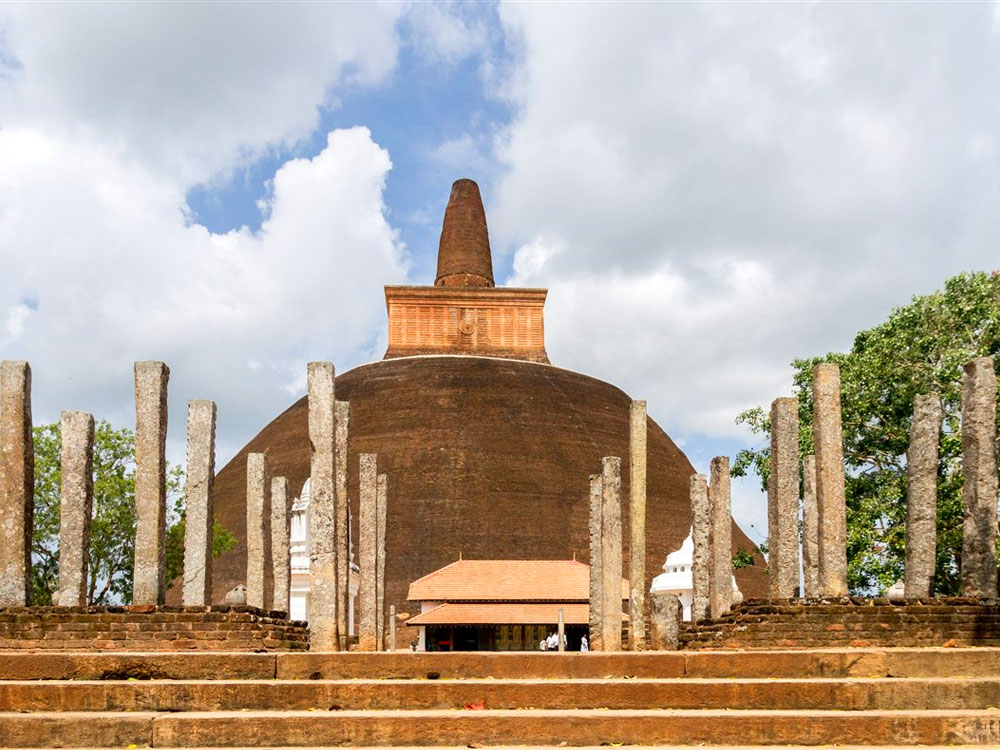
Abhayagiri is much more than a single stupa. It was one of the great monastic institutions of ancient Anuradhapura, and its archaeological landscape helps visitors understand how religion, scholarship, architecture, water management and international exchange came together in Sri Lanka’s first great capital.
The vast stupa is the visual anchor, but the surrounding ruins reward a slower visit. Monastic buildings, ponds, stone carvings and museum collections reveal the scale of a community that flourished for centuries.
Abhayagiri Weather: 7-Day Forecast
Updated automatically with the latest available forecast for Anuradhapura, Sri Lanka.
- Rain chance
- 85%
- Rainfall
- 1.8 mm
- Wind
- 15 km/h
- UV index
- 7.9
- Sunrise
- 6:02 AM
- Sunset
- 5:45 PM
- Rain chance
- 100%
- Rainfall
- 5.7 mm
- Wind
- 14 km/h
- UV index
- 7.6
- Sunrise
- 6:03 AM
- Sunset
- 5:45 PM
- Rain chance
- 100%
- Rainfall
- 6.4 mm
- Wind
- 14 km/h
- UV index
- 7.5
- Sunrise
- 6:03 AM
- Sunset
- 5:45 PM
- Rain chance
- 99%
- Rainfall
- 28.6 mm
- Wind
- 12 km/h
- UV index
- 6.6
- Sunrise
- 6:04 AM
- Sunset
- 5:46 PM
- Rain chance
- 97%
- Rainfall
- 24.6 mm
- Wind
- 19 km/h
- UV index
- 7.8
- Sunrise
- 6:04 AM
- Sunset
- 5:46 PM
- Rain chance
- 86%
- Rainfall
- 24.3 mm
- Wind
- 13 km/h
- UV index
- 7.7
- Sunrise
- 6:05 AM
- Sunset
- 5:46 PM
- Rain chance
- 80%
- Rainfall
- 7.8 mm
- Wind
- 13 km/h
- UV index
- 7.2
- Sunrise
- 6:05 AM
- Sunset
- 5:46 PM
A monastery with more than a thousand years of history
Abhayagiri was established in the first century BCE during the reign of King Vattagamani Abhaya, also known as Valagamba. Over time it developed into one of Anuradhapura’s three major monastic complexes and remained influential into the later Anuradhapura period.
The monastery was connected to wider Buddhist intellectual networks. The Chinese monk Faxian, who travelled through South Asia in search of Buddhist texts, stayed at Abhayagiri in the early fifth century. His association with the monastery is one reason the site is important not only to Sri Lankan history but also to the history of Buddhist exchange across Asia.
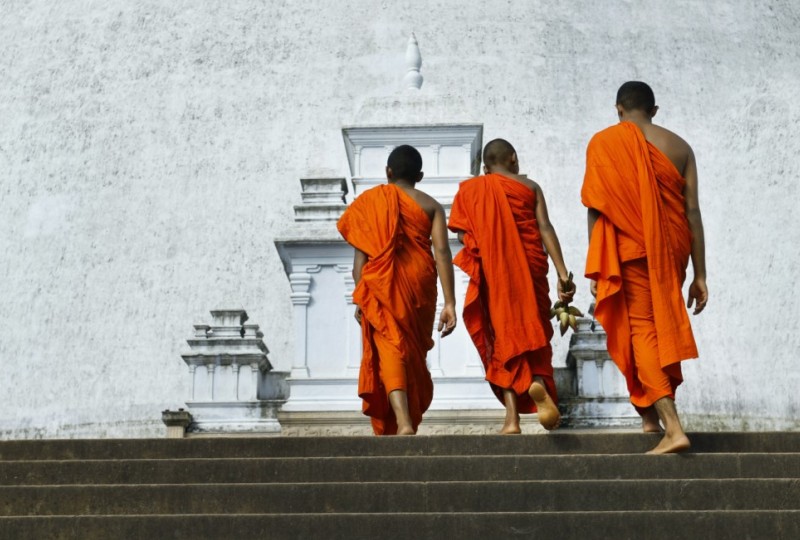
The Abhayagiri Stupa
The enormous brick stupa dominates the complex. Like the other monumental stupas of Anuradhapura, it demonstrates the engineering ambition and religious patronage of the ancient kingdom. Restoration and conservation have made its form easier for modern visitors to appreciate while preserving the archaeological character of the site.
Rather than judging the stupa only by size, walk around it and notice the relationship between the monument, terraces, drainage features and the wider monastic landscape.
What else to see around Abhayagiri
The monastery extended across a large area and contained residential, ritual and service spaces. Among the broader Abhayagiri archaeological zone are elegant stone carvings, bathing ponds and sophisticated water-management features. The famous Kuttam Pokuna, or Twin Ponds, is closely associated with this part of ancient Anuradhapura and illustrates the refined hydraulic design of the period.
Take time to look at guard stones, moonstones, balustrades and foundation plans. These smaller details often communicate more about daily monastic life than a quick photograph of the main stupa.
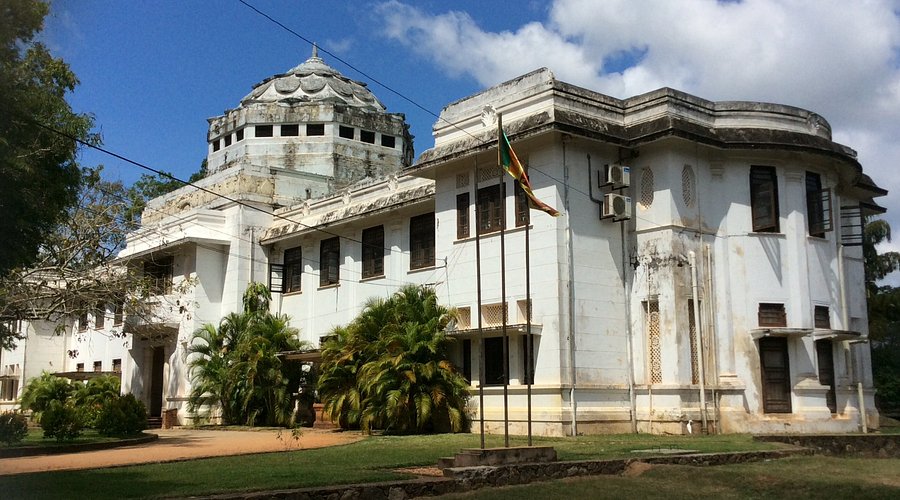
Abhayagiriya Museum
The Abhayagiriya Museum adds useful context to the ruins. Its collections and interpretation cover subjects such as religious life, sculpture, writing, metallurgy, architecture, hygiene and ancient water technology. Seeing selected artifacts can make the archaeological remains outside much easier to understand.
Museum access arrangements can change, so confirm current opening conditions locally rather than relying on an old schedule.
How Abhayagiri fits into an Anuradhapura itinerary
Abhayagiri should ideally be visited as part of the wider Sacred City of Anuradhapura. Ruwanwelisaya, Sri Maha Bodhi, Jetavanaramaya, Thuparamaya and other monuments show different aspects of the city’s religious and political history.
Because the archaeological zone is large, bicycles, a hired vehicle or a tuk-tuk can reduce fatigue between monuments. Even with transport, expect substantial walking.
Temple etiquette
Abhayagiri is an archaeological site with living religious significance. Dress respectfully, remove hats and footwear where required, and avoid posing in ways that could be considered disrespectful to Buddha images or sacred structures.
Do not climb ancient brickwork or stone remains unless a clearly marked visitor route permits it. Conservation rules protect fragile structures that have survived for many centuries.
Abhayagiri as a complete monastic city
Modern visitors often use the name Abhayagiri to refer mainly to the great stupa, but the ancient institution was much larger. A major monastery required residential buildings, ritual spaces, water supplies, meeting places, pathways, kitchens, bathing facilities and systems for managing a large religious community. Archaeological remains across the area help reconstruct that broader picture. Looking beyond the central monument is therefore essential to understanding why Abhayagiri mattered.
The monastery grew during a period when Anuradhapura was both a royal capital and a major Buddhist center. Patronage from kings, nobles and lay communities supported religious establishments of impressive scale. At Abhayagiri, architecture and sculpture developed alongside scholarship and international exchange, producing a complex that influenced religious life for many centuries.
International Buddhist connections
Abhayagiri’s importance extended beyond Sri Lanka. The Chinese pilgrim monk Faxian, who travelled widely in search of Buddhist scriptures and monastic knowledge, spent time in Anuradhapura in the early fifth century. His association with Abhayagiri provides a valuable reminder that ancient Sri Lanka was connected to wider networks of Buddhist travel, learning and exchange across Asia.
For today’s traveler, this international dimension adds depth to the visit. The monastery was not simply a local religious establishment serving one neighborhood. It participated in intellectual and religious currents that crossed maritime and continental routes. When viewing the scale of the ruins, it is useful to imagine monks, pilgrims, students and visitors arriving from different regions over generations.
Architecture, water and daily monastic life
The monumental stupa naturally dominates photographs, yet smaller architectural details can reveal more about daily life. Stone thresholds, drainage channels, carved guard stones, moonstones and foundations show how buildings were entered and organized. Ponds and water-management features demonstrate the importance of bathing, sanitation and controlled water use in a large community.
Kuttam Pokuna, the celebrated Twin Ponds, is one of the most refined examples associated with the northern monastic zone of Anuradhapura. Its carefully designed steps, stonework and water-control system show that hydraulic engineering could be both functional and aesthetically sophisticated. Spending time with such features makes the archaeological landscape feel more human and less like a collection of disconnected ruins.
How to explore without becoming overwhelmed
Anuradhapura contains so many major sites that visitors sometimes rush through Abhayagiri with a checklist. A better method is to choose a few themes. Begin with the stupa for scale, then examine monastic remains for daily life, visit water features for engineering, and use the museum to connect objects with the archaeological setting. This creates a coherent story rather than a sequence of photographs.
If you are visiting during a hot part of the day, move between exposed and shaded areas gradually and carry sufficient water. Distances within the ancient city can be larger than they appear on a map. A bicycle, tuk-tuk or vehicle can reduce fatigue, but walking selected sections remains valuable because many smaller details are easily missed from the road.
The value of the Abhayagiriya Museum
The museum can transform a visit because artifacts make the ancient monastery easier to imagine. Collections associated with the site include evidence connected with sculpture, writing, technology, religious practice, architecture and everyday life. Museum displays may change, so visitors should check what is open on the day rather than planning around one specific object.
If possible, see the archaeological landscape before and after the museum. The first visit gives the artifacts a physical setting; returning outside afterward allows you to recognize architectural features that might otherwise have seemed abstract.
Respecting an archaeological and religious landscape
Abhayagiri is historically important, but the wider sacred city remains part of Sri Lanka’s living Buddhist heritage. Dress modestly around religious monuments, remove footwear where required and avoid posing in ways that may be considered disrespectful near Buddha images or sacred structures. Archaeological stones should not be climbed simply to gain a better camera angle.
A deeper reason to include Abhayagiri
Travelers who visit only the most famous white stupas of Anuradhapura can leave with an incomplete picture of the ancient capital. Abhayagiri adds the dimension of an extensive scholarly and residential monastery with international connections. It helps explain how Anuradhapura functioned not only as a royal city but also as one of the great religious landscapes of pre-modern South Asia.
Frequently asked questions
Is Abhayagiri the same as Abhayagiri Stupa?
No. The stupa is the most prominent monument, while Abhayagiri refers to a much larger ancient monastic complex.
Why is Abhayagiri historically important?
It was a major center of Buddhist monastic life and learning in ancient Sri Lanka and had connections with Buddhist communities beyond the island.
Can Abhayagiri be visited with other Anuradhapura sites?
Yes. It is normally explored as part of the Sacred City, but allow enough time because the monuments are spread over a large area.